


Is your sales team losing 15 hours every week to manual lead research and data entry? In the industrial sector, where sales cycles last 6 to 18 months, administrative bottlenecks prevent your reps from building the technical trust required to close deals.
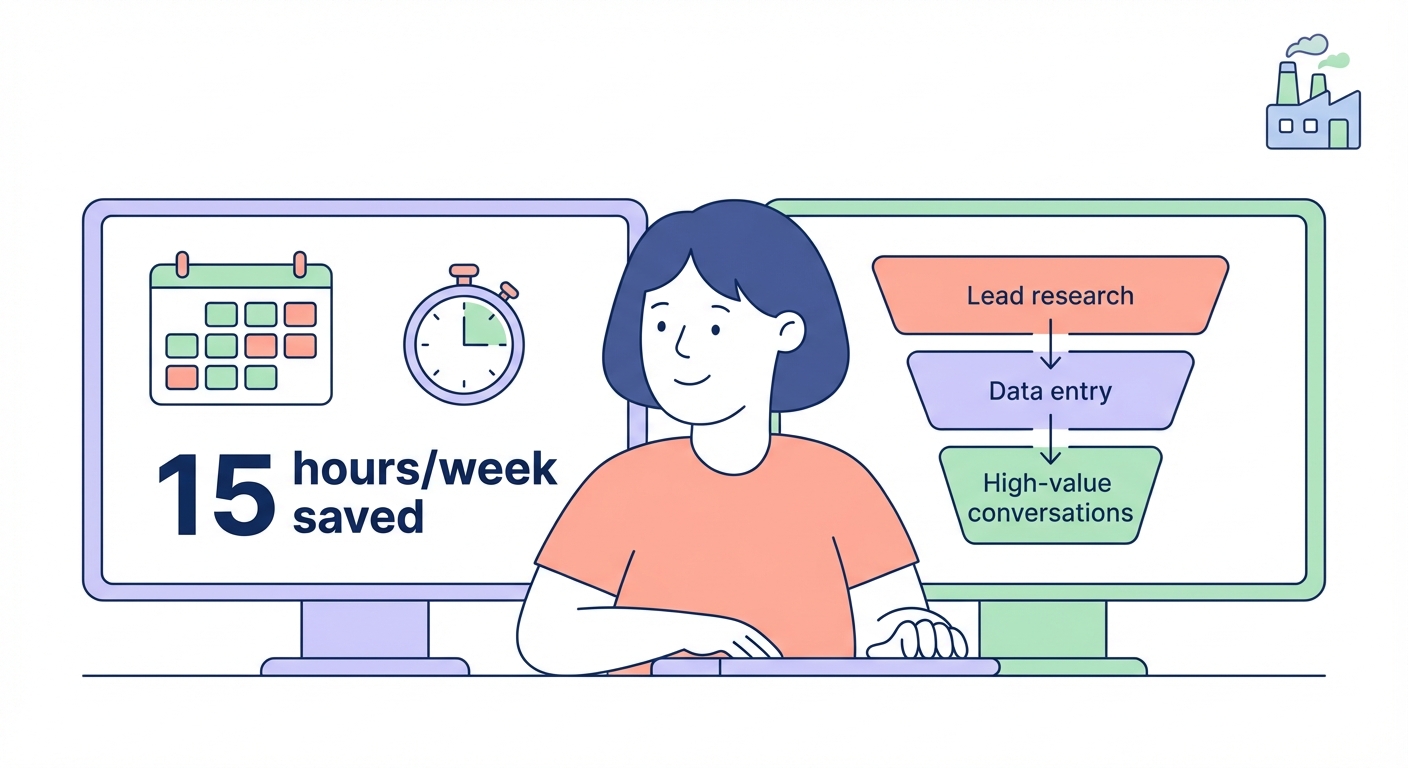
Modern manufacturing sales leaders are moving away from traditional “batch-and-blast” software. Instead, they are adopting AI-driven workflows that handle the groundwork – from tracking facility expansions to automating prospect scoring with AI – so their engineers and reps can focus on high-value conversations.
Prospecting and lead generation through intent signals
Traditional industrial prospecting often relies on outdated databases that fail to capture the nuance of a shifting market. AI tools now allow you to find leads based on real-time buying signals rather than just job titles. While Apollo.io serves as a robust entry point for firmographic data and basic intent signals, platforms like Clay offer deeper aggregation from over 100 sources. Clay allows you to build complex workflows that track specific triggers, such as a prospect announcing a new manufacturing plant or a leadership change.
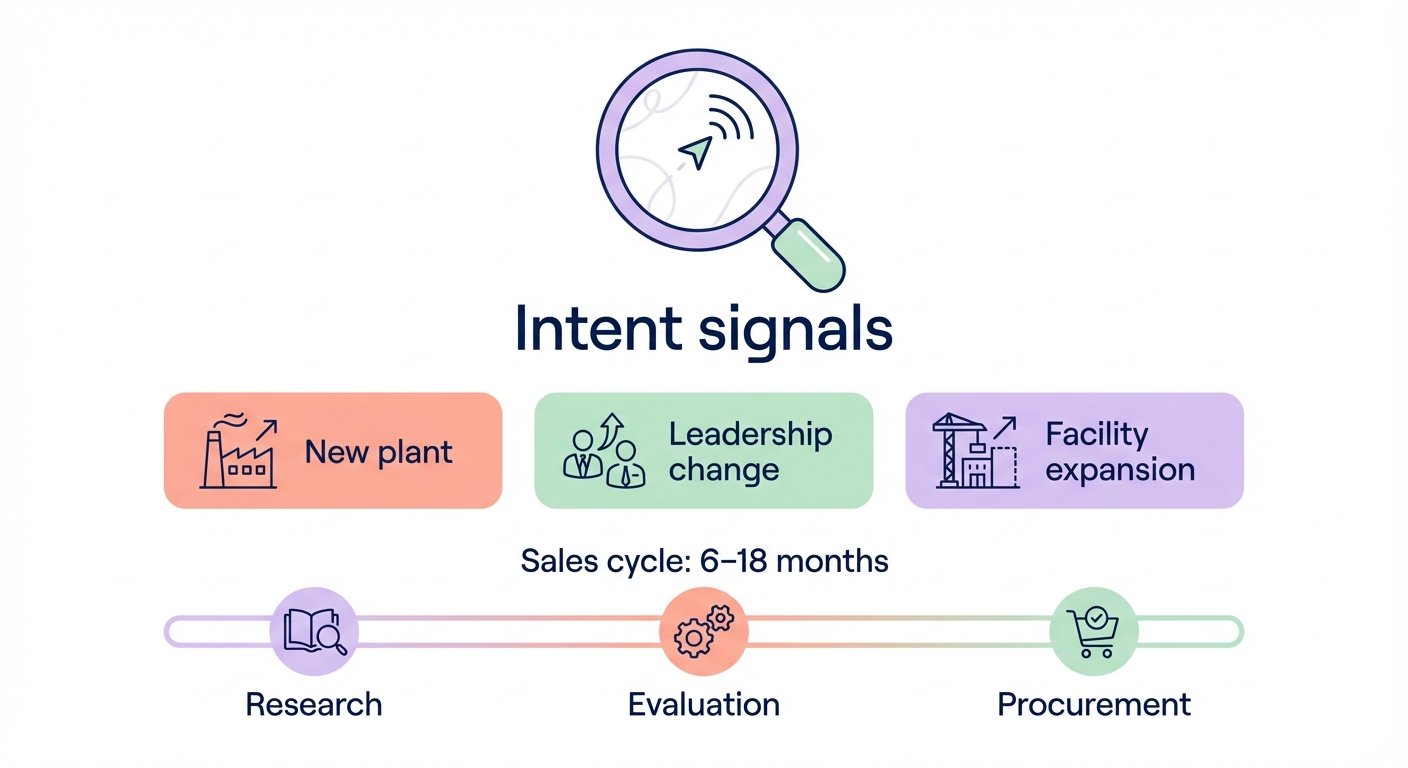
For teams specifically targeting the industrial sector, FuseAI integrates multi-channel outbound features and tracks facility-level announcements, recognizing that knowing when a prospect is expanding production is more valuable than simple filtering. However, these tools still require a human to build the lists and manage the logic. Sera’s List Building Agent removes this manual burden by scanning a database of 300 million companies to identify verified decision-makers who fit your technical ideal customer profile (ICP), requiring zero manual filtering from your team.
Personalization and deep technical research
Manufacturing buyers spend up to 95% of their journey researching anonymously before ever engaging with a salesperson. In this environment, generic AI copy fails because industrial sales require technical proof, specific certifications, and localized relevance. To bridge this gap, teams often use real-time prospect data analysis to anticipate needs before the first contact is even made.
Software like Claygent can visit prospect websites to extract specific information, such as ISO certifications or specialized equipment lists, and feed them into templates. While helpful, these tools still demand that an SDR “clicks” to run the process. Sera’s Research Analyst agent automates this by scanning LinkedIn, press releases, and web data to uncover specific timing angles. This ensures your outreach feels like a peer-to-peer technical consultation rather than a cold sales pitch, which is essential for building trust in conservative industries.
Protecting email deliverability and sender reputation
Research shows that roughly 17% of cold emails never reach the inbox. For industrial companies, burning your domain reputation can mean losing access to key procurement departments at major firms. Smartlead has become a popular choice for its “ESP matching” capabilities and variable sending volumes that mimic human behavior, helping users reach 94% inbox placement when combined with proper authentication.
Instantly offers a similar pool-level warm-up and an intuitive interface, though it lacks some of the advanced matching features found in Smartlead. For leaders who want to remove the technical management of email infrastructure entirely, Sera’s Deliverability Guard maintains a 99% deliverability rate by automatically warming new domains, validating every address, and optimizing send pacing. This level of protection is vital for overcoming email deliverability challenges that frequently plague high-volume outbound campaigns.
CRM integration and workflow automation
Manual CRM updates are a leading cause of “leaky” pipelines in manufacturing. Modern AI agents can now update CRM notes automatically, which can reclaim up to 30% of a sales representative’s time. Both HubSpot and Salesforce have introduced AI features that assist with tracking sales activities and reporting, ensuring that every interaction is logged without manual entry.
To further streamline the process, tools like AISDR automate follow-ups and conversation routing, which is particularly useful for complex industrial funnels involving multiple stakeholders. Successful teams are also integrating email outreach with CRM workflows to ensure that engagement signals, like a prospect opening a proposal three times in a day, trigger immediate high-priority tasks for the sales team.
Comparing point solutions versus Sera Autopilot
Many organizations struggle to choose between managing a complex stack of individual tools or adopting an all-in-one system. Below is a comparison of how these approaches typically perform:
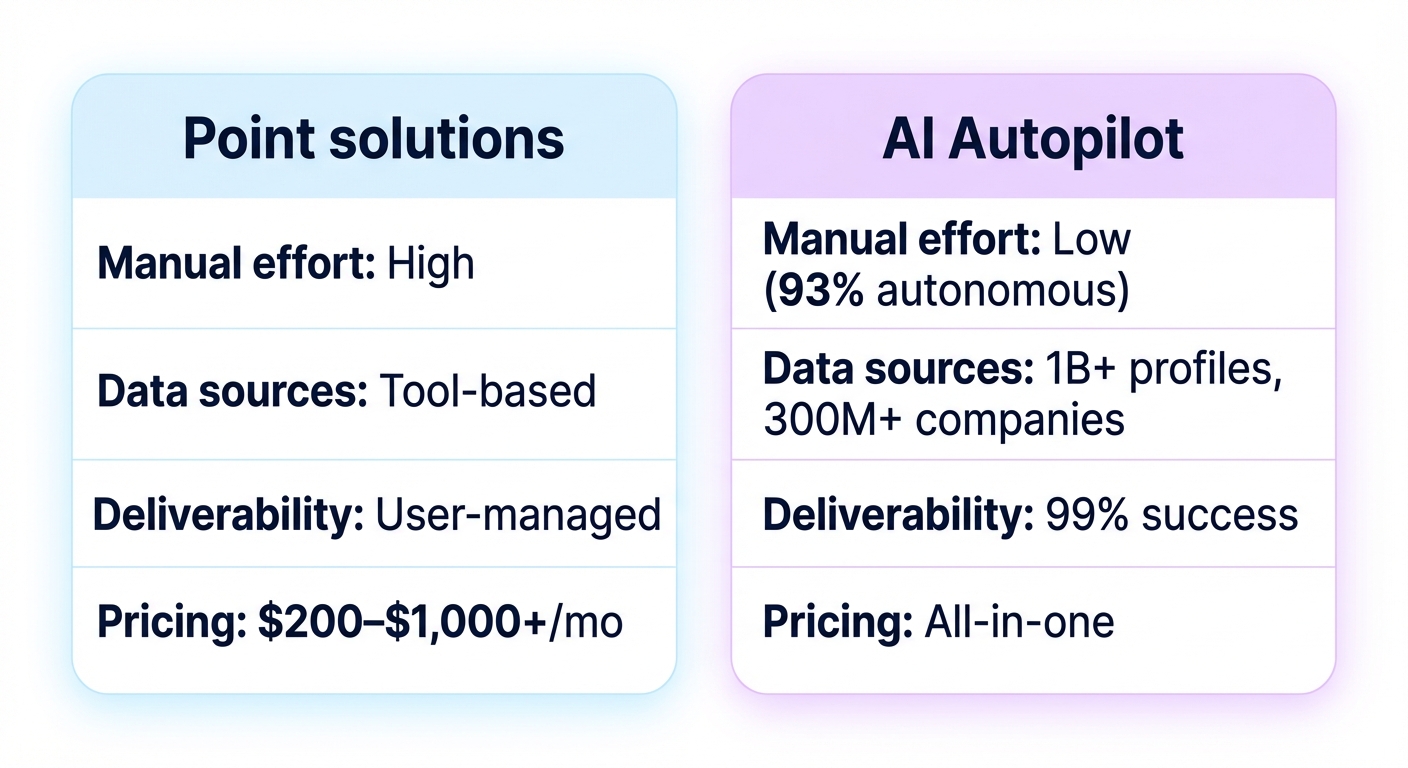
| Feature | Point Solutions (Clay/Apollo/Smartlead) | Sera AI Autopilot |
|---|---|---|
| Manual Effort | High (Requires setup and manual execution) | Low (93% autonomous, human-supervised) |
| Data Sources | Single or aggregated per tool | 1B+ profiles and 300M+ companies |
| Deliverability | User-managed and monitored | Automated Guard (99% success rate) |
| Research | Basic scraping and templates | Deep signal-based timing analysis |
| Pricing | Multiple subscriptions ($200 - $1,000+/mo) | All-in-one transparent service |
Why manufacturing leaders are moving to AI Autopilot
Traditional software requires your team to become experts in “tooling” rather than experts in selling. Sera’s Autopilot replaces the need for a complex stack by using six specialized AI agents that work in sync: a List Building Agent, an Enrichment Engine, a Research Analyst, a Decision Maker Identifier, a Deliverability Guard, and an Outreach Writer.
These agents handle the heavy lifting of list building, enrichment, and multilingual outreach in over 100 languages. While the AI executes the groundwork, human supervisors ensure every message matches your brand’s technical tone and certifications. This approach has helped manufacturers like Viking Window open deals across multiple European markets by focusing on low-volume, high-precision outreach.
By shifting the administrative burden to AI agents, your sales engineers can focus on what they do best: solving technical problems for your customers and closing high-value deals.
Book a free strategy call to see how Sera can automate your outbound pipeline.