


Do you actually know which sales activities are driving your revenue? For many manufacturers, sales remains a “black box,” but HubSpot changes that by making every call, email, and meeting visible. This transparency is the first step toward building a truly data-driven team.
Understanding what counts as a sales activity
In HubSpot, an activity is any specific interaction a sales representative has with a prospect. For manufacturing leaders, these activities are the engine of the pipeline. Because 80% of sales require at least five follow-up touches, tracking these interactions ensures no lead is left to go cold. HubSpot categorizes these efforts into several core types:
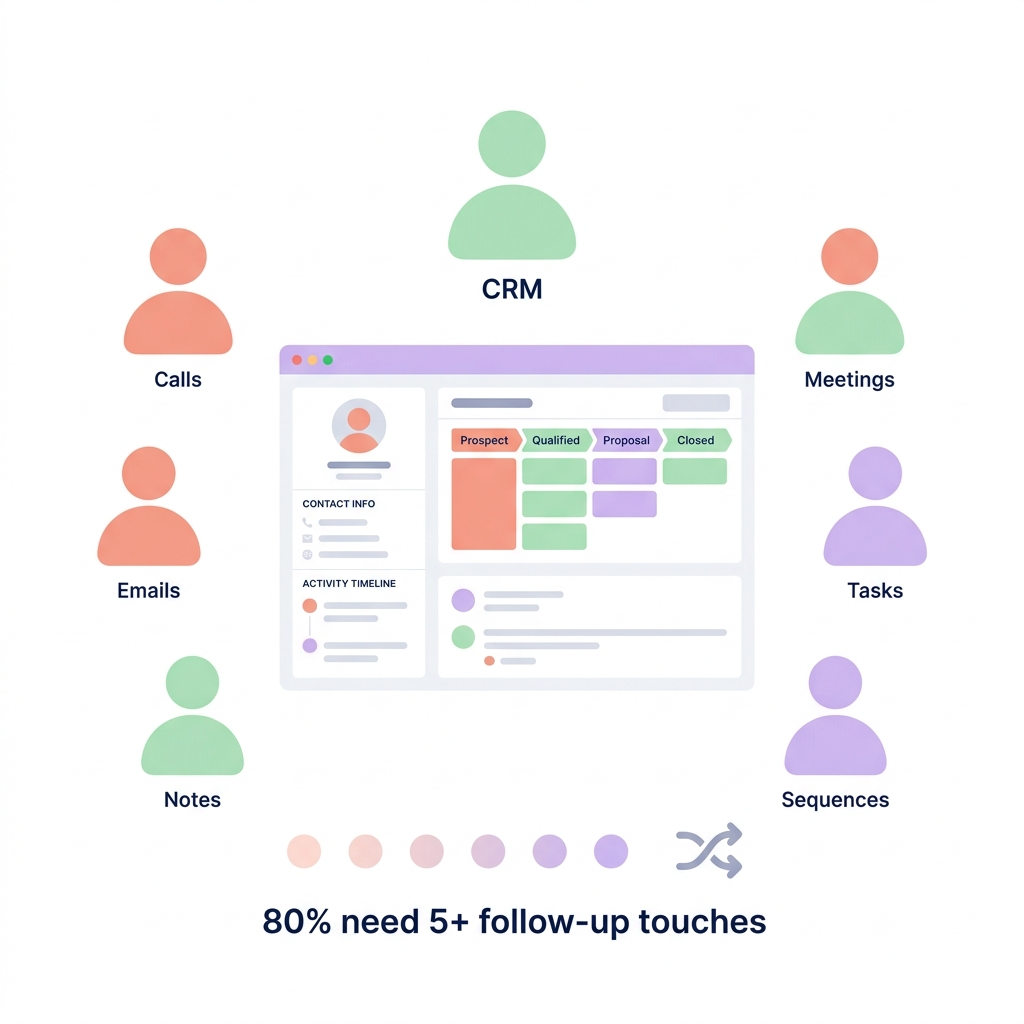
- Calls: Outbound and inbound phone conversations, often including automatic transcripts.
- Emails: Individual sales communications that track opens and clicks in real-time.
- Meetings: Scheduled appointments or technical consultations synced from calendars.
- Tasks: Actionable to-do items like following up on a quote or a site visit.
- Notes: Internal records of prospect research or offline conversations.
- Sequences: Automated outreach enrollments that track completion and outcomes.
By monitoring these touchpoints, you can move away from “gut-feel” management. Instead of wondering why a deal stalled, you can look at the activity history to see if the follow-up was too slow or if a critical technical meeting never occurred.
Automation versus manual logging
If your sales representatives spend hours every Friday manually typing in call logs, you are losing valuable selling time. Research shows that manual data entry can waste over 15 hours per week per representative. HubSpot addresses this by offering tools that capture data as the work happens.
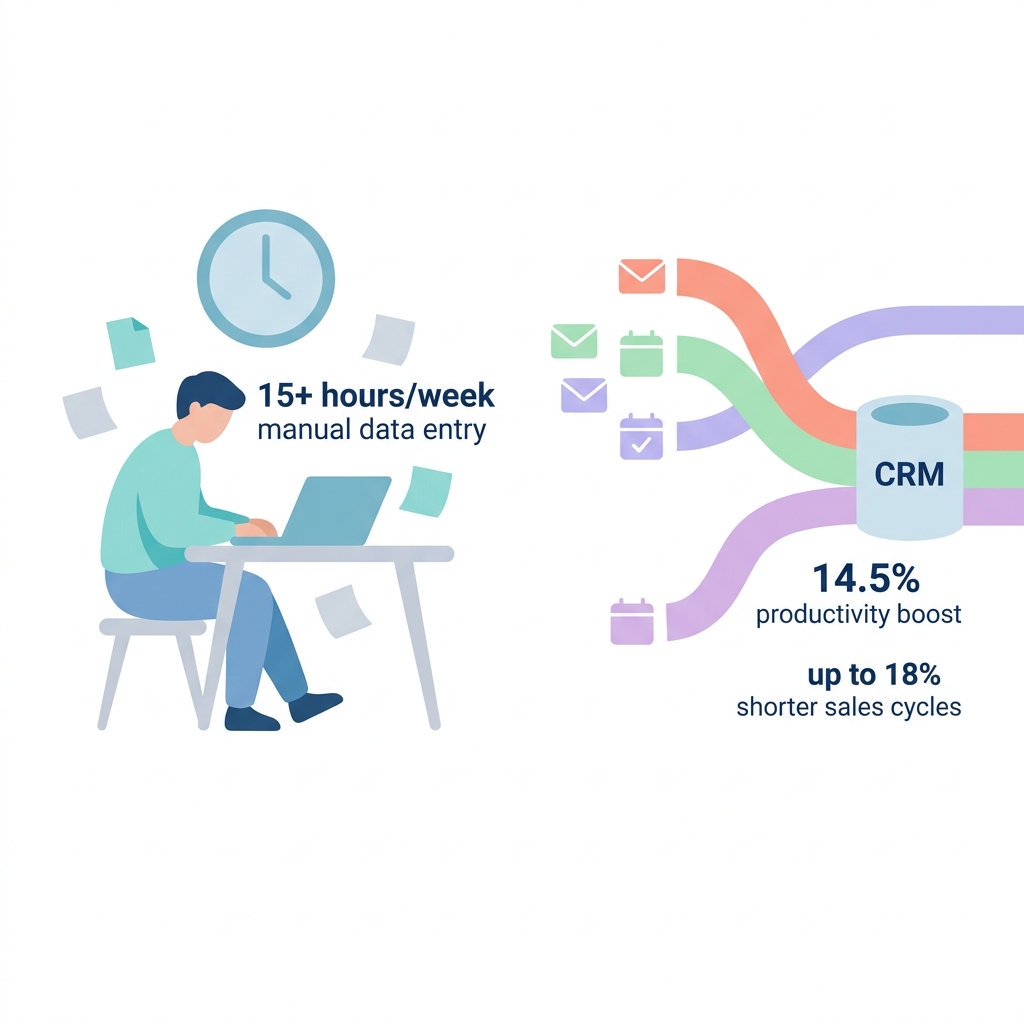
By using HubSpot Sales extensions, your team can automatically log every sent email and see exactly when a prospect opens a proposal. Similarly, calendar synchronization ensures that every meeting is recorded without human intervention. These automation tools have been shown to boost productivity by 14.5% and can shorten sales cycles by up to 18% for top manufacturers.
Manual logging should be reserved for offline moments, such as meeting a distributor at a trade show. In these cases, your team can quickly log a note or a call outcome on their mobile device to keep the record updated. When you reduce the administrative burden, your team can focus on building relationships rather than filling out spreadsheets.
Key activity properties for data-driven manufacturing
Every logged activity contains specific data points, known as properties, that provide the context needed for high-level reporting. For outbound manufacturing teams, these properties tell you the who, what, and when of the sales process. Critical properties include the activity date, the owner responsible for the task, and the outcome of the interaction.
Tracking the “outcome” property is particularly vital for calls. It allows you to see if a rep is actually connecting with decision-makers or just leaving voicemails. To ensure this data stays organized across your entire organization, you must implement proper CRM field mapping for manufacturers. Without correct mapping, your activity data can become siloed, making it impossible to see the full narrative of a deal from the first contact to the final signature.
Reporting on sales activity and team performance
Once your data is flowing into HubSpot, you can build dashboards that provide a clear view of team efficiency. A standard activity dashboard should move beyond simple volume and look at the quality of work. You can use bar charts to compare activity volume across the team and line graphs to spot trends before they become problems.
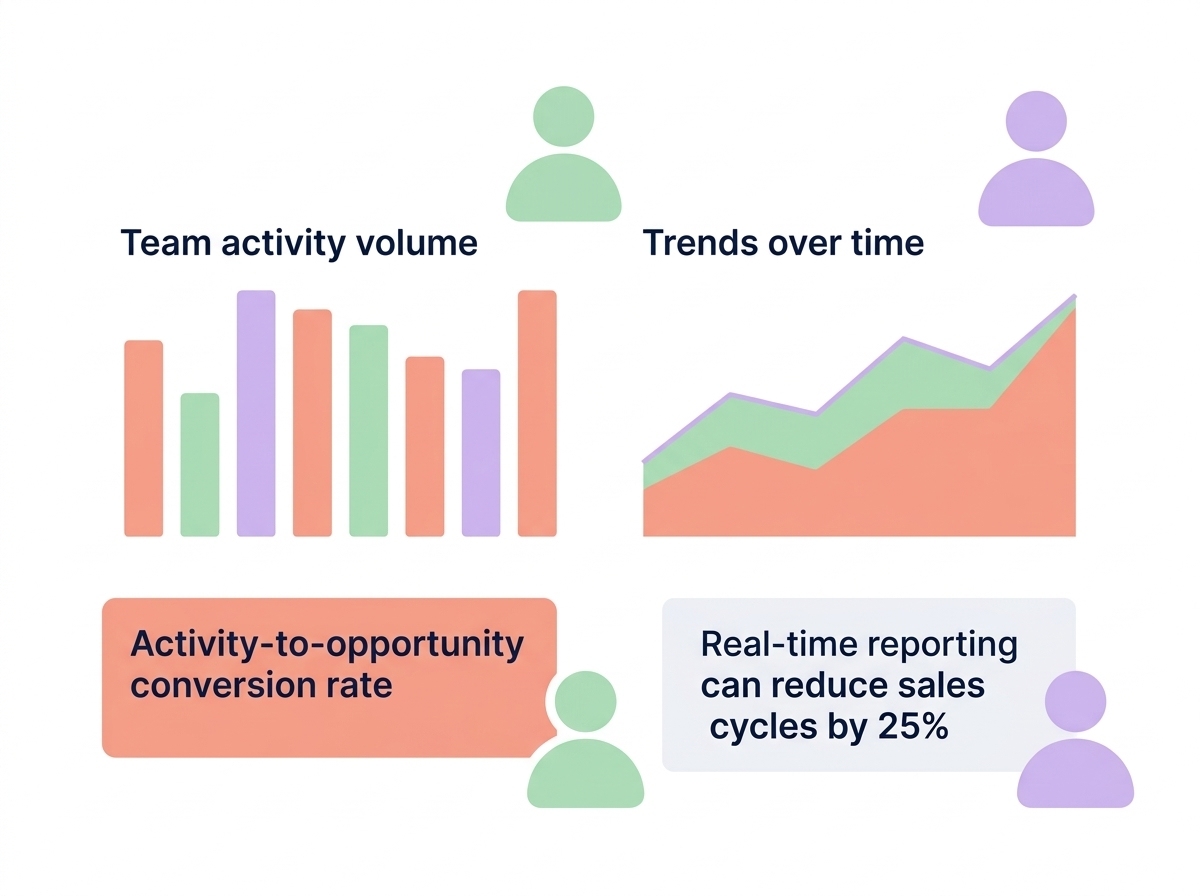
The most important metric for any manufacturing leader is the activity-to-opportunity conversion rate. By understanding key metrics for tracking prospect engagement, you can identify which reps are your high-performers and which need more coaching. Many firms have cut their sales cycles by 25% simply by identifying and addressing bottlenecks shown in these real-time reports.
Advanced users also leverage AI tools for sales performance tracking to predict deal closures with greater accuracy. When you have a real-time view of pipeline health, you can address stalled deals early and keep your production schedules aligned with upcoming sales.
Maximizing efficiency through integrations
To get the most out of your HubSpot activity tracking, you should connect it with the rest of your technical environment. For companies operating across multiple platforms, integrating CRM with sales tools ensures that data flows seamlessly between systems. This prevents duplicates and ensures that every interaction, whether it happens in a specialized quoting tool or a LinkedIn message, is captured in one place.
If your company also uses Salesforce for certain business units, a HubSpot Salesforce integration can create a bidirectional sync. This ensures that your marketing and sales teams are always working with the same information, which has been shown to increase booked meetings by up to 35%.
Tracking activities gives you the visibility needed to manage an outbound team effectively. However, even with perfect tracking, your reps may still be bogged down by the research required to find the right prospects. Sera’s AI-powered Autopilot handles the lead discovery and initial outreach for you, ensuring that the activities logged in your HubSpot CRM represent high-value conversations with decision-makers.
Discover how Sera’s AI agents can transform your outbound sales today.