


Did you know that roughly one in six outbound emails never actually reaches the inbox? For B2B executives targeting global markets, poor email deliverability silently drains your sales pipeline, wastes qualified leads, and distorts your performance metrics.
Why inbox placement matters more than send volumes
When your sales development representatives (SDRs) ramp up outbound campaigns, they often focus on raw send volumes. However, sending thousands of emails is meaningless if your messages land directly in the spam folder.
In 2024, global inbox placement averaged about 83.5%. This means nearly 17% of marketing and sales messages never hit the primary inbox. If your inbox placement rate drops from 84% to 70%, you are not just losing a small fraction of performance. You are losing 16.7% of your entire top-of-funnel revenue potential.
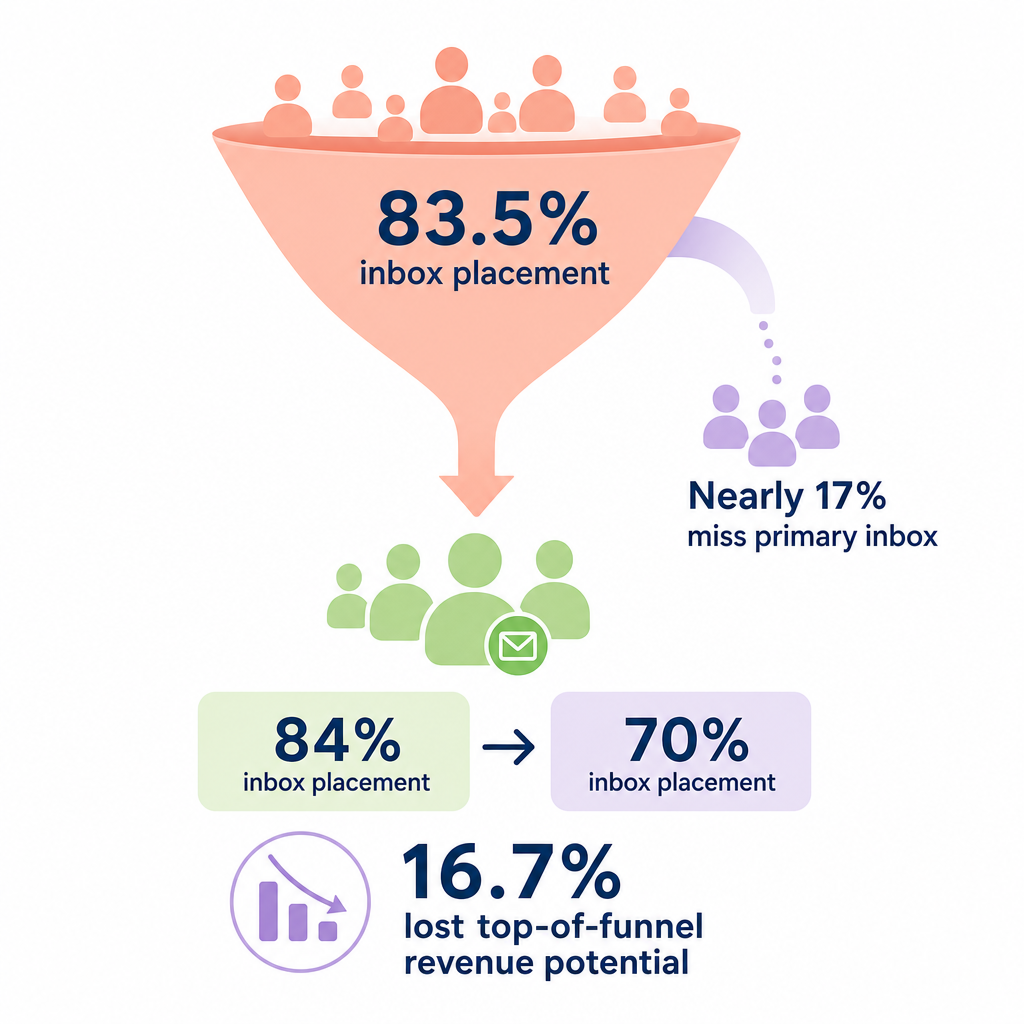
Conversely, moving your emails from the promotions tab or spam folder directly into the primary inbox can yield a 50% to 100% revenue lift. In fact, some brands have reported up to a 112% revenue increase simply by optimizing their inbox placement.
This makes email deliverability in international sales a core revenue lever rather than a minor IT concern. When you protect your sender reputation – which acts like a credit score for your email domain – you ensure your sales message gets seen.
The core pillars of email deliverability
Achieving high email deliverability for international campaigns relies on three technical and behavioral foundation pillars.
- Technical Authentication: Email service providers (ISPs) need to verify your identity. Implementing the “trinity” of SPF, DKIM, and DMARC is the most effective way to establish trust. SPF lists your authorized sending IPs. DKIM adds a cryptographic signature to prevent tampering. DMARC tells recipient servers how to handle emails that fail these checks. Setting up these protocols can improve your inbox placement by 20% to 30%.
- Engagement Signals: ISPs track how recipients interact with your emails. High open rates and replies signal to ISPs that your content is valuable. On the other hand, rapid deletes and spam complaints damage your domain health. Keeping your spam complaints below 0.1% is crucial. If complaints exceed this threshold, providers will start blocking your messages.
- List Hygiene: Sending emails to invalid or inactive addresses causes hard bounces. You must keep your permanent bounce rate below 2% to protect your reputation. A bounce rate over 5% violates acceptable use policies and can lead to immediate domain blocking. Regularly cleaning your lists can improve deliverability by up to 30%. For example, many UK retailers see a 20% improvement in inbox placement after implementing GDPR-compliant list cleaning.
Measuring how deliverability impacts your sales funnel
To understand how deliverability shapes your bottom line, you must connect technical placement with active opportunities. Many sales leaders use tools to measure global sales outreach effectiveness to track these correlations.
- Inbox Placement Rate (IPR): This is calculated by dividing the number of emails delivered to the primary inbox by the total number of emails sent.
- Spam Complaint Rate: Track how often recipients mark your messages as spam. Keep this strictly below 0.08% to avoid automated domain flags.
- Permanent Bounce Rate: Calculate permanent bounces divided by total sent emails. Keep this below 1% to meet modern standards for well-maintained lists.
- Response Metrics: By using tailored personalized outreach metrics, you can track response rates, customer acquisition cost (CAC), and customer lifetime value (CLV). Personalized outreach can increase overall conversion rates by up to 20%.
- Engagement-to-Action Ratio (EAR): This metric helps you understand the transition from simple opens to booked meetings and discovery calls.
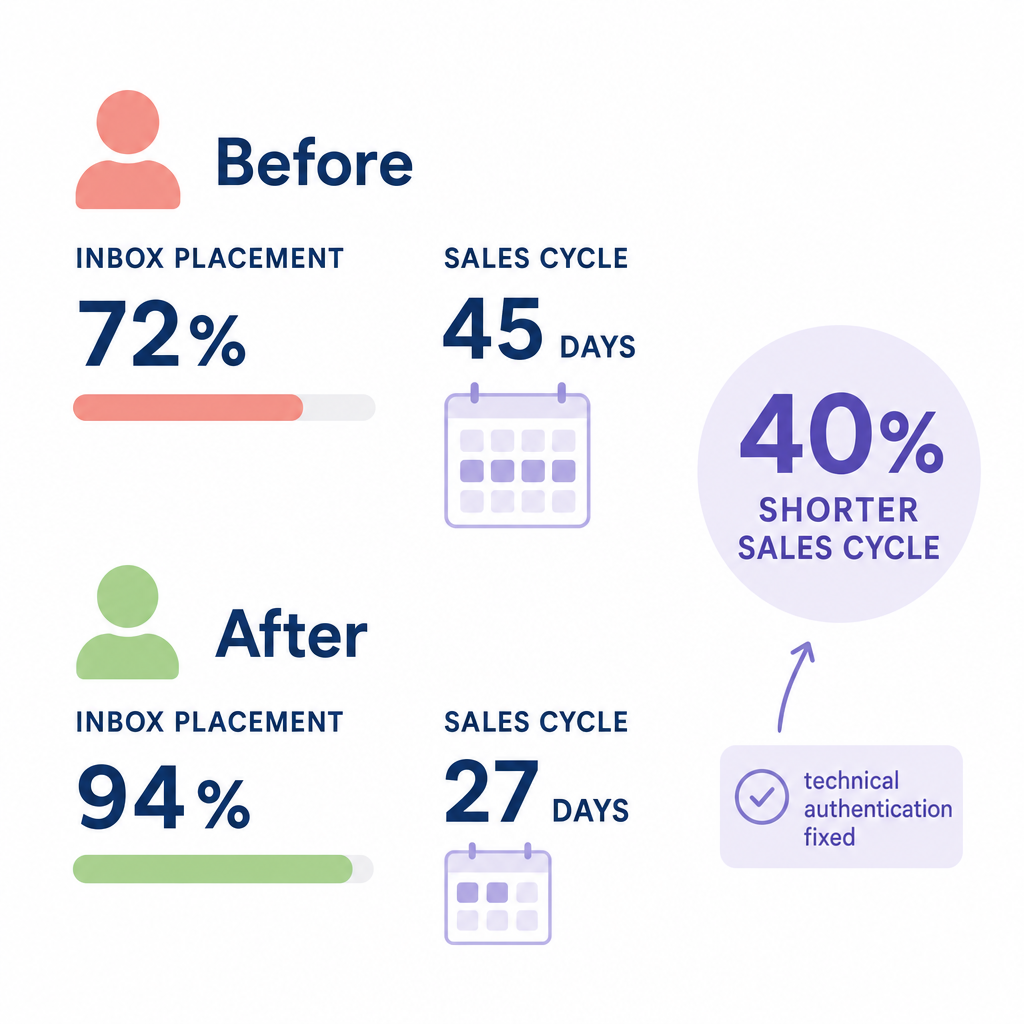
By integrating your email tools with your CRM, you can easily trace how improvements in domain health impact your pipeline velocity. For instance, a UK SaaS business successfully reduced its sales cycle by 40% – from 45 days down to 27 days – simply by fixing its technical authentication and lifting its inbox placement from 72% to 94%.
Handling regional delivery rules across global markets
Outbound campaigns targeting international clients must adapt to differing local laws and provider filters. You need to align your infrastructure with local regulations to avoid severe penalties and domain blocklists.
- European Union and UK: You must adhere to GDPR and PECR. This requires providing clear, one-click opt-out links and having a clear basis of legitimate interest. Non-compliance under GDPR can result in severe fines of up to £17 million or 4% of your annual global turnover.
- North America: Rules like CAN-SPAM and CASL require honest sender information and fast opt-out processing. Under CAN-SPAM, you must handle opt-out requests within 10 business days.
- Technical Thresholds: Major providers like Google, Microsoft, and Yahoo enforce strict rules for high-volume senders. For example, crossing certain domain authentication and sending rules can trigger immediate filtering if you send more than 5,000 emails per day without proper DMARC authentication.
- Cultural and Timing Differences: True localization goes beyond simple translation. Shifting your emails to match local time zones can drastically lift engagement. Shifting sends to a recipient’s local 10:00 AM has been shown to raise open rates by 35% and increase meeting bookings by 28%.
Scaling your outreach safely with AI and automation
Running global sales outreach manually makes it incredibly difficult to maintain deliverability. This is why forward-thinking GTM teams are enhancing international email deliverability with AI to run optimized, low-volume campaigns.
By overcoming email deliverability challenges with AI automation, you can maintain a stellar sender reputation while expanding into new markets. AI systems can automatically warm up new domains, run real-time list validation, and space out your emails using smart delays.
Furthermore, AI-driven personalization is crucial for avoiding spam filters. While generic blast emails trigger ISP blocks, highly tailored messages generate the positive engagement signals that keep your domain healthy. In fact, research shows that measuring the impact of personalized outreach on sales performance is the key to scaling your pipeline. Personalized outreach sequences can boost your conversion rates by up to 30% and deliver a 5% to 15% revenue lift.
Improving your email deliverability is one of the most direct ways to grow your sales pipeline without increasing your ad spend. Moving your inbox placement from an unoptimized baseline up to a healthy 95% or more unlocks a steady stream of new business conversations.
If you want to stop troubleshooting email technicalities and start booking more meetings, we can help. At Sera, our coordinated system of AI sales agents handles your entire outbound process on Autopilot. Our Deliverability Guard agent takes care of domain warming, real-time list hygiene, and technical compliance, maintaining a deliverability rate of up to 99%.
We help B2B manufacturers and services companies scale their revenue safely across global markets. Explore our B2B manufacturing and service use cases to see how brands like Viking Window use our system, or check out our flexible pricing options to find the right plan for your pipeline.
To see how we can secure five verified leads for your team in just three minutes, visit Sera and start your precision outreach journey today.