


Is your sales team wasting hours manually copying email data into your CRM? Connecting your email outreach directly to your CRM workflows can eliminate this manual entry, shorten your sales cycle, and ensure high-value industrial leads never slip through the cracks.
Why CRM integration matters for manufacturing
In the industrial sector, deals take time and involve multiple decision-makers. You cannot afford to lose track of quote requests or follow-up timelines. Connecting your outbound efforts to your CRM creates a unified record of every customer interaction.
Research shows that CRM integration leads to a 14.6% increase in sales productivity. It also reduces sales cycle lengths by 11.8% and improves collaboration across teams by 20%. By establishing a seamless flow of information, integrating CRM with automated lead generation systems helps sales teams focus on closing deals rather than managing data.
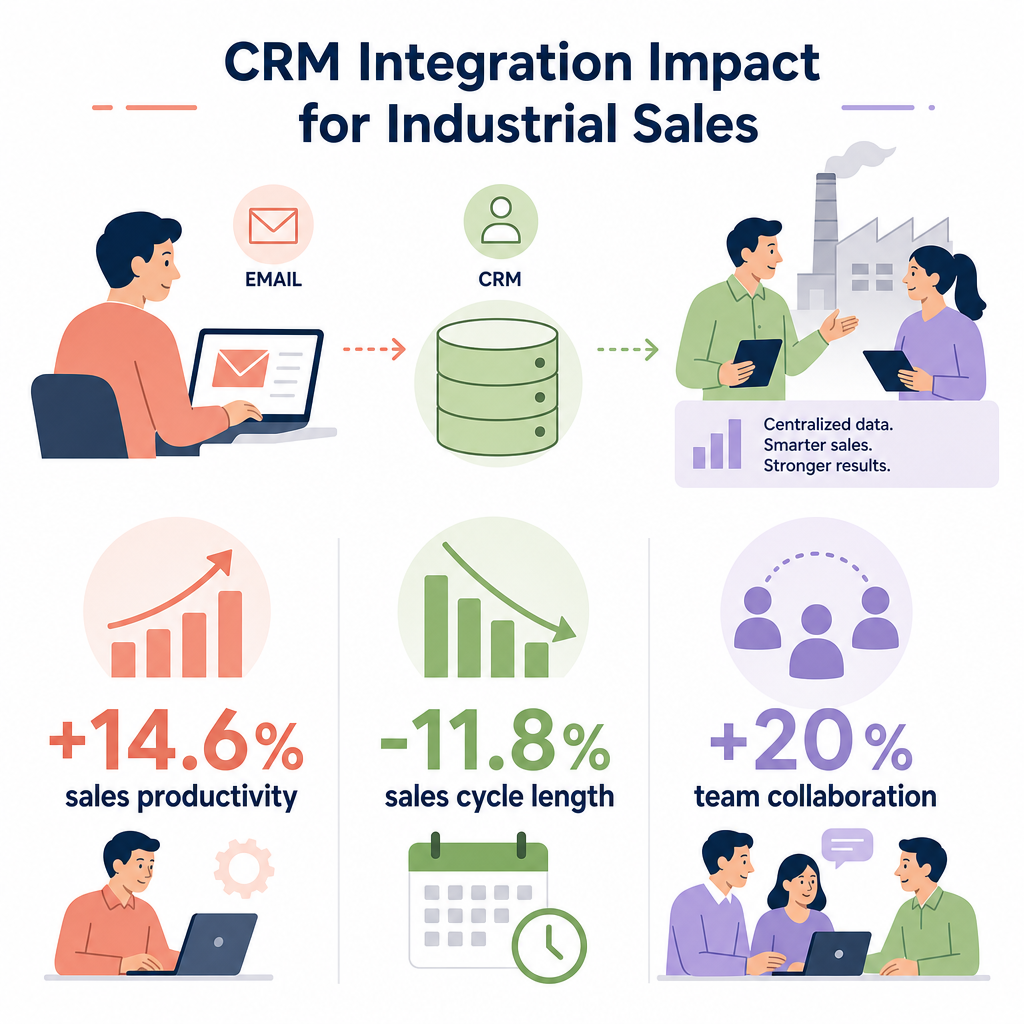
Implementing a structured system can boost overall sales by 29% and increase sales forecasting accuracy by 42%. Since 91% of companies with ten or more employees now use a CRM system to manage customer data, integrating your outreach processes is essential to stay competitive.
Technical essentials: Setting up your integration
Connecting your systems properly from the beginning avoids future data headaches. Focus on these critical setup steps:
Select your integration approach
Choose an integration method based on your available technical resources. You can opt for built-in native connections, third-party middleware connectors like Zapier, or custom API solutions. To find the right path for your technical setup, consult this step-by-step CRM integration guide.
Map your custom fields carefully
Industrial sales involve unique, domain-specific data such as minimum order quantities (MOQs), delivery lead times, and specific industry certifications. Standard contact fields are not enough. You must carefully configure your data mapping to keep these details aligned across platforms. For a deep dive into this topic, read our guide on CRM field mapping for manufacturers.
Clean your database and establish sync rules
Before linking your automated outreach tools, run a complete audit to clean up existing CRM records. This step prevents a cycle of “garbage in, garbage out” that can corrupt your reporting. Decide how data flows between systems:
- Choose if data should sync in real-time or on a set schedule.
- Establish bidirectional sync rules so updates in your email tool reflect in your CRM.
- Set clear rules for conflict resolution when data mismatches occur.
- Decide which platform serves as the ultimate primary source of truth.
Secure deliverability and authentication
Industrial buyers expect secure communication. Ensure your SPF, DKIM, and DMARC records are correctly validated. Proper authentication helps your outreach bypass spam filters and land reliably in your prospect’s primary inbox.
Creating high-impact automated workflows
Once your CRM and email systems communicate smoothly, you can build automation workflows that drive pipeline activity.
Automated lead nurturing and follow-ups
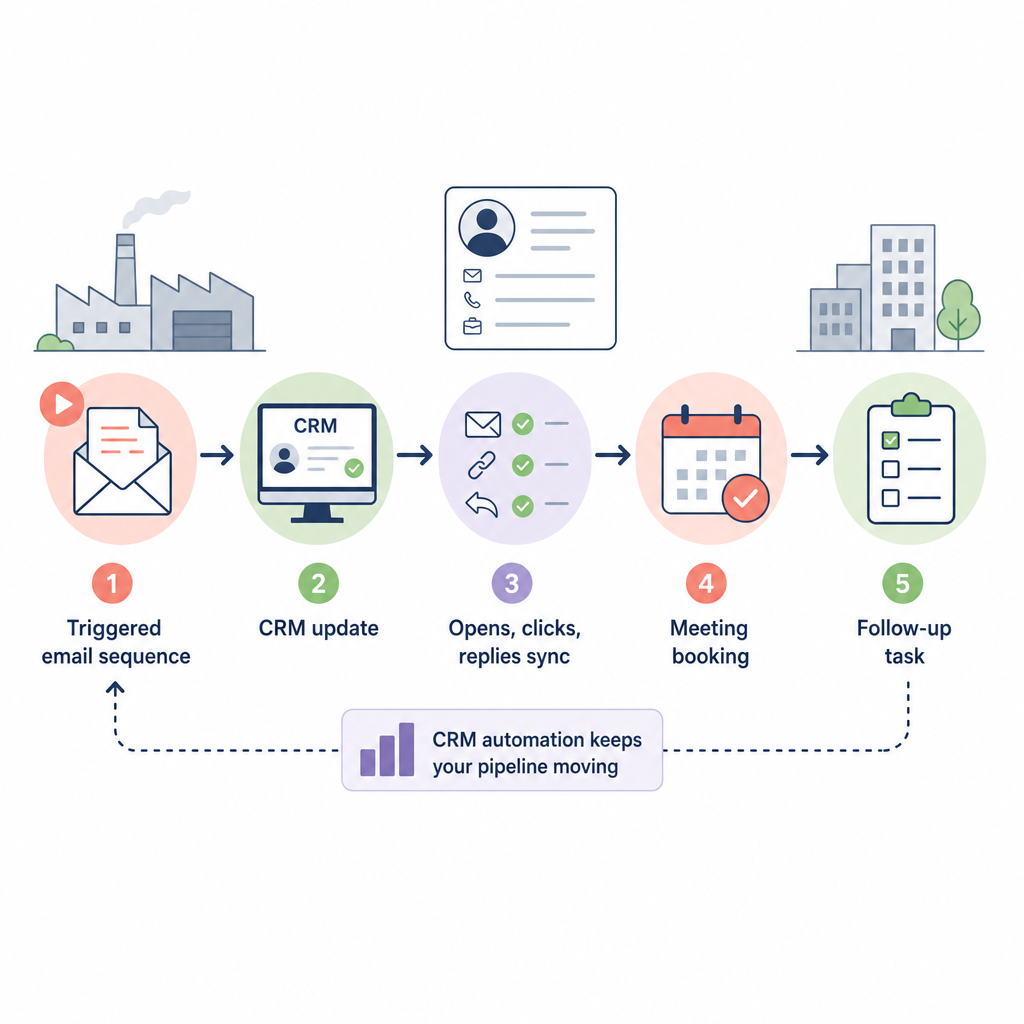
You can set up triggered email sequences based on real-time CRM updates. For example, you can launch welcome sequences for new manufacturing leads or send educational resources based on website browsing behavior. You can also implement targeted re-engagement campaigns for inactive accounts.
Automated follow-ups are highly effective. To set these up properly, read about automating follow-up emails in sales workflows to see how automated tracking helps close deals faster.
Real-time activity synchronization
Make sure all interactions sync back to customer records automatically:
- Record email opens, clicks, and replies in your CRM timeline.
- Log attachment downloads as engagement and intent signals.
- Instantly schedule booked meetings on team calendars.
- Automatically honor unsubscribe requests across both systems.
Precise segmentation and personalization
Use your CRM data to tailor your outbound messaging. You can segment lists by industry, corporate role, company size, or past interaction history. Learn more about designing these campaigns in our guide to personalized outreach sequence automation.
Using specialized automation tools for personalized outreach allows you to scale these tailored conversations across regions and languages without losing a personal touch.
Choosing the right software connections
Different CRM tools offer varied options for connecting your outreach. For example, the Pipedrive outreach integration allows teams to automatically import contacts, log social selling touchpoints, and schedule follow-ups based on pipeline changes. Other systems like Salesforce or Microsoft Dynamics offer deep native integrations with tools like LinkedIn Sales Navigator to help identify and track key manufacturing decision-makers.
Enhancing workflows with AI-driven insights
Integrating your CRM with modern artificial intelligence is the next step to optimize your sales outreach. By integrating CRM data with AI prospect insights, industrial sales teams can use predictive lead scoring to identify which buyers are most likely to convert. AI helps target prospects who are actively researching suppliers, helping you reach the right buyer at the exact moment they need your products.
Maintaining compliance and privacy standards
Data privacy compliance is essential when automating your outreach, particularly if you work with global partners. Ensure all automated templates include easy opt-out links. Maintain strict consent records in your CRM database, and establish clean retention policies to purge outdated or unused contact data automatically.
Drive higher conversions with smart integration
Connecting your outreach automation to your CRM is one of the most effective ways to boost industrial sales productivity. By eliminating repetitive manual data entry, your sales engineering and account management teams can focus on what they do best: building trusted relationships and closing high-value contracts.
Ready to eliminate manual data entry and scale your industrial sales outreach? Learn how Sera uses advanced AI agents to automate high-quality B2B lead generation, personalize outreach, and keep your CRM perfectly synced.