


Are you still paying your sales team to manually click through databases and manage endless email sequences? In 2026, the gap between having contact data and actually booking meetings is wider than ever for old-school industrial firms.
The manual prospecting bottleneck in 2026
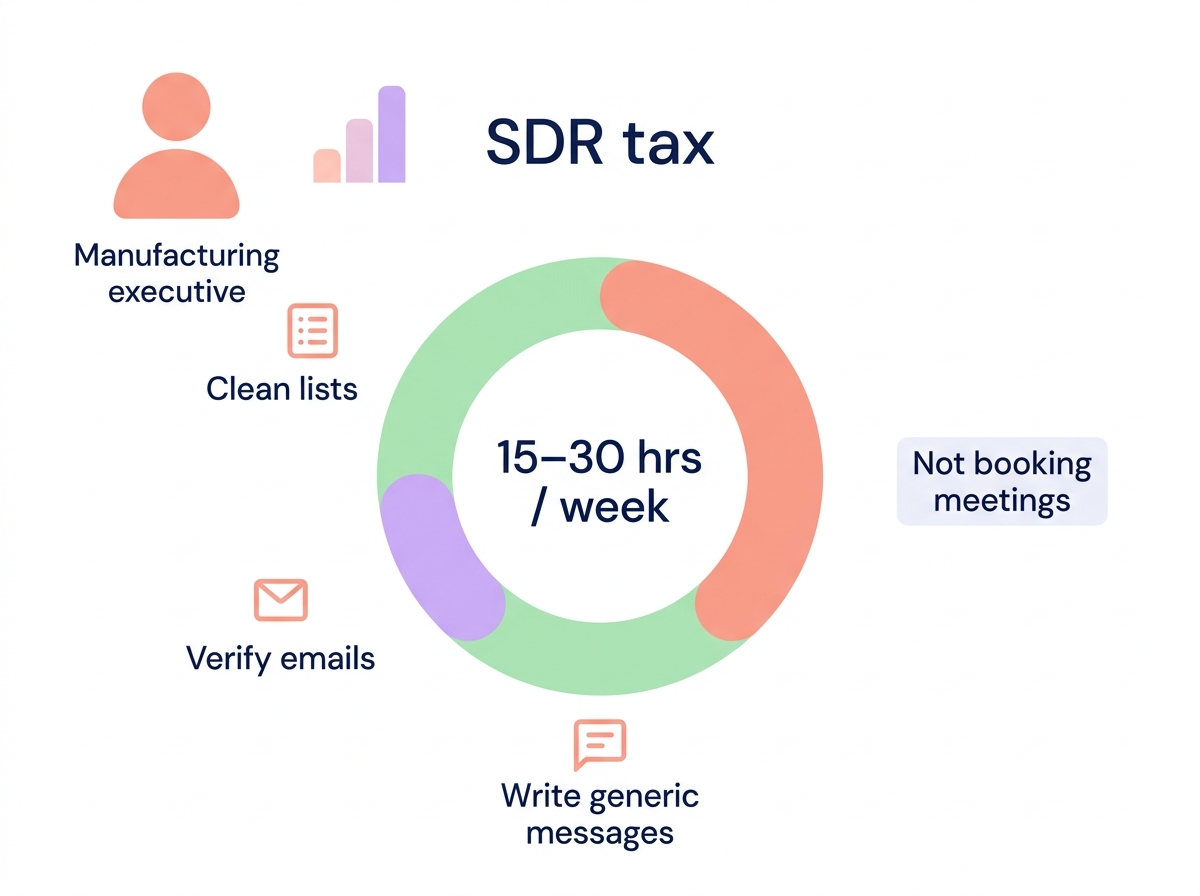
For a manufacturing executive, the problem isn’t a lack of information. You likely already have access to millions of rows of data. The real challenge is the “SDR tax” – the 15 to 30 hours per week your team spends cleaning lists, verifying emails, and writing generic messages that get ignored. While both Apollo.io and Lusha are household names in the sales world, they remain manual tools that require human operators to function.
As you evaluate your integrated sales tech stack for manufacturers, you must decide if you want to buy another database for your staff to manage, or if you want to automate the entire outreach lifecycle.
Apollo.io: the all-in-one engagement engine
Apollo.io has evolved into a massive “cockpit” for sales teams. It combines a proprietary database of 275 million professionals with a native execution layer. For a lean team of one to five reps, it offers a simplified way to start prospecting within an hour.
Strengths for industrial sales teams
Apollo is particularly strong for North American manufacturing because of its deep filtering capabilities. You can filter by NAICS codes, specific job titles, and even the technology a company uses on its factory floor or website.
- The platform offers a free tier with 100 credits, while paid plans range from $59 to $149 per user each month.
- The Organization plan now includes custom LLM API access for 2026, allowing for smarter data enrichment.
- Native two-way CRM sync with Salesforce and HubSpot keeps your records updated without manual entry.
- Built-in A/B testing and international dialers help teams refine their pitch across different territories.
The hidden costs of volume
The main risk with Apollo is its “volume over value” approach. Because it is so easy to send thousands of emails, many teams accidentally damage their domain reputation. Without careful deliverability safeguards, your messages often land in spam folders. While it is more affordable than enterprise alternatives like ZoomInfo, the labor required to clean lists and monitor inbox health can increase your total cost of ownership.
Lusha: precision contact lookup for lean teams
Lusha takes a different path, focusing on speed and “crowdsourced” data accuracy. It is often the preferred choice for solo sellers who need a quick phone number or email address while browsing LinkedIn.
Where Lusha wins
If your team focuses on high-touch, low-volume calling, Lusha is often more efficient. It provides high-accuracy direct dials and mobile numbers that bypass the company front desk.
- Pricing starts at approximately $52.45 per user per month when billed annually.
- The onboarding process is faster than Apollo, making it ideal for teams that need immediate contact lookups.
- It offers strong compliance features for US-based prospecting, though it faces more friction in European markets compared to specialized providers like Cognism.
- The browser extension allows reps to pull data instantly without leaving their current workflow.
The credit ceiling problem
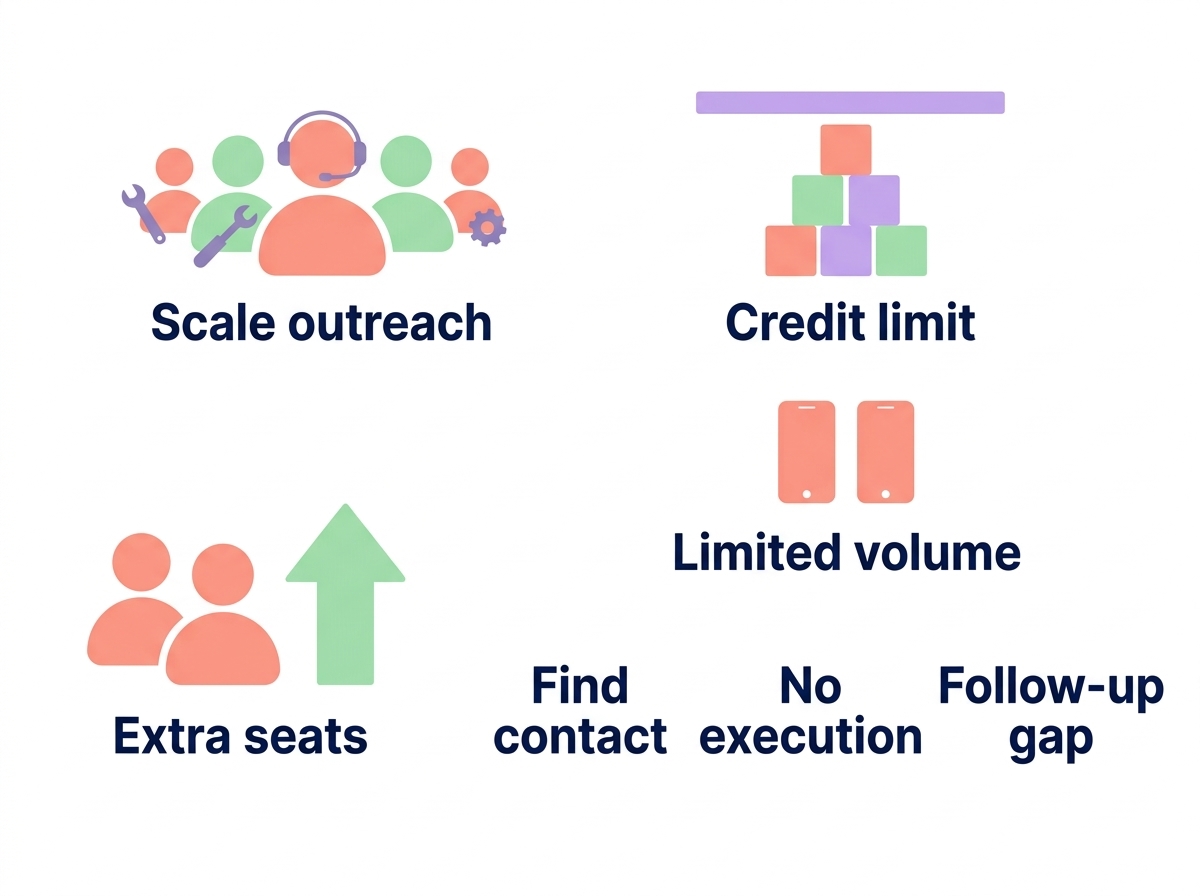
The primary limitation of Lusha is its credit-based model. For manufacturing firms looking to scale their outreach, these credit caps often become a bottleneck. You may find yourself paying for extra seats just to get the volume of mobile numbers your team needs. Furthermore, Lusha lacks a native “execution” layer. It helps you find the person, but it doesn’t help you start the conversation or manage the follow-up, creating a gap in your sales process compared to comprehensive tools like ZoomInfo.
Why data access is no longer your biggest hurdle
By 2026, owning contact data is just the baseline. Stricter inbox defenses and AI-powered spam filters mean that even a “verified” email often fails to reach a decision-maker. In the manufacturing sector, where sales cycles typically last 90 to 180 days, you cannot afford to burn your reputation with generic, high-volume blasts.
Many executives are realizing that the real ROI comes from automated prospect scoring and research-driven outreach rather than just having a larger list. While tools like Clay offer superior data aggregation for technical roles, they often require significant technical expertise to set up correctly. This leaves many firms stuck between simple tools that don’t scale and complex tools they can’t manage.
Moving beyond databases to an AI-driven autopilot
The most significant shift in 2026 is the move from manual software to autonomous AI agents. Instead of paying for a database seat and a human to operate it, manufacturers are turning to “Autopilots” that handle the entire prospecting lifecycle.
Sera provides a human-supervised AI service that replaces the need for manual list building and outreach management. While Apollo and Lusha provide the data, Sera’s six specialized AI agents perform 93% of the actual work.
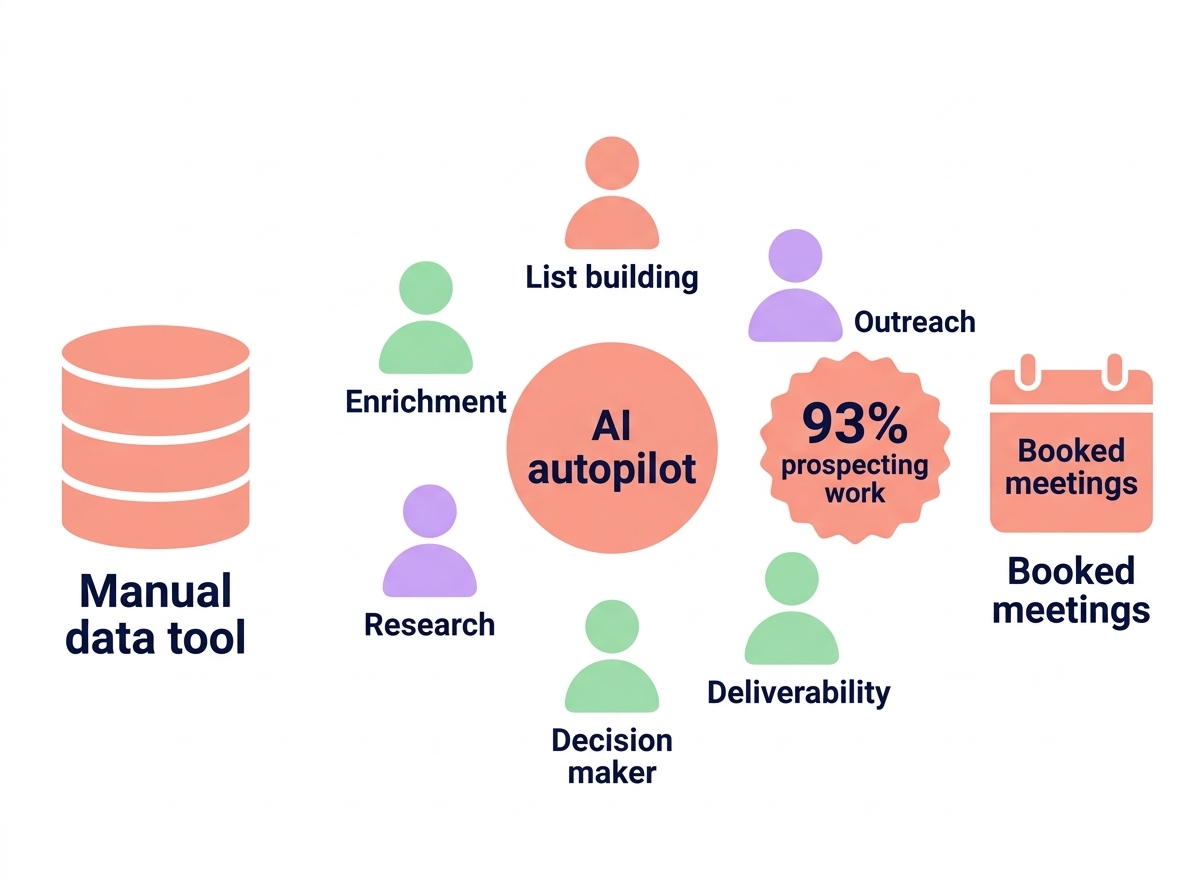
- A List Building Agent and Enrichment Engine source data from over 1 billion professional profiles to find your ideal buyers.
- A Research Analyst finds specific buying signals, such as new factory openings or recent funding.
- A Decision Maker Identifier confirms you are talking to the person with budget authority.
- A Deliverability Guard maintains a 99% inbox placement rate, protecting your company’s domain reputation.
- An Outreach Writer crafts human-sounding messages in over 100 languages, allowing you to enter new markets without hiring native speakers.
This approach has helped companies like Viking Window and Montonio expand into new regions like Germany and Finland without increasing their sales headcount. By focusing on low-volume, high-precision outreach, you ensure that every message sent is relevant and professional.
Choosing the right path for your revenue goals
Your decision depends on your current team structure and your growth targets. If you have a dedicated sales operations person who can spend all day managing a database and monitoring deliverability, Apollo.io is a capable all-in-one tool. It works well for lean teams that need to get moving quickly and want to own the entire manual workflow.
Lusha is the right choice if your reps primarily need a “lookup tool” for one-off calls and you already have a successful outreach process in place. It is a simple, effective way to get mobile numbers for North American enterprise accounts without a complex setup.
However, if your priority is booking meetings for deals worth €10k or more, you should consider moving away from manual software entirely. In 2026, the most successful manufacturing firms are those that automate the groundwork and let their sales professionals focus on what they do best: closing deals.
Stop managing databases and start booking meetings. Explore how Sera’s AI agents can automate your manufacturing outreach and deliver qualified leads directly to your calendar today.