


Did you know your sales reps spend only 28% of their time actually selling? For B2B manufacturing executives, watching highly skilled technical sales engineers waste hours on repetitive manual tasks is a costly frustration. AI-driven automation is changing this dynamic.
The heavy burden of manual front-office tasks
Just as inefficiencies on the factory floor drag down overall equipment effectiveness, administrative bottlenecks in your sales office quietly erode your bottom line. B2B sales professionals spend 26% of their week on low-value administrative tasks. To make matters worse, the average sales representative spends 5.5 hours every single week on data entry tasks like updating records in the company CRM.
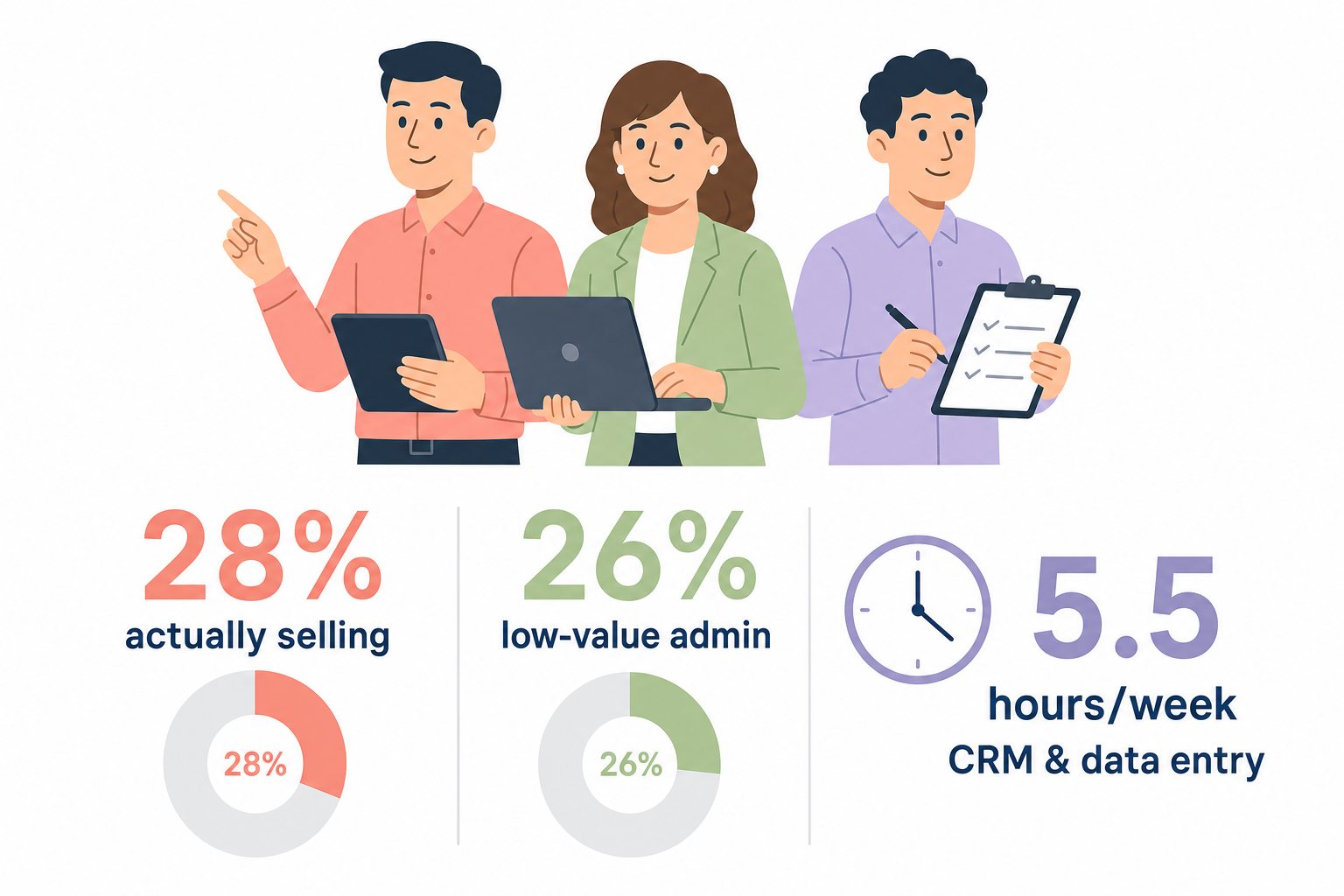
Research shows that 32% of sales representatives spend an hour or more every day typing data into their sales tools. When your highly paid technical experts are acting as data entry clerks, they are not building relationships with distributors or closing complex enterprise deals.
This is why forward-thinking manufacturers are taking a page from their operations manual: they are automating the repetitive inputs to maximize high-value human output.
A hybrid approach: 70% AI, 30% human
You do not need to replace your sales team with robots. The manufacturing industry is shifting toward a hybrid model where AI handles the repetitive tasks of prospecting and research, while human experts focus on closing.
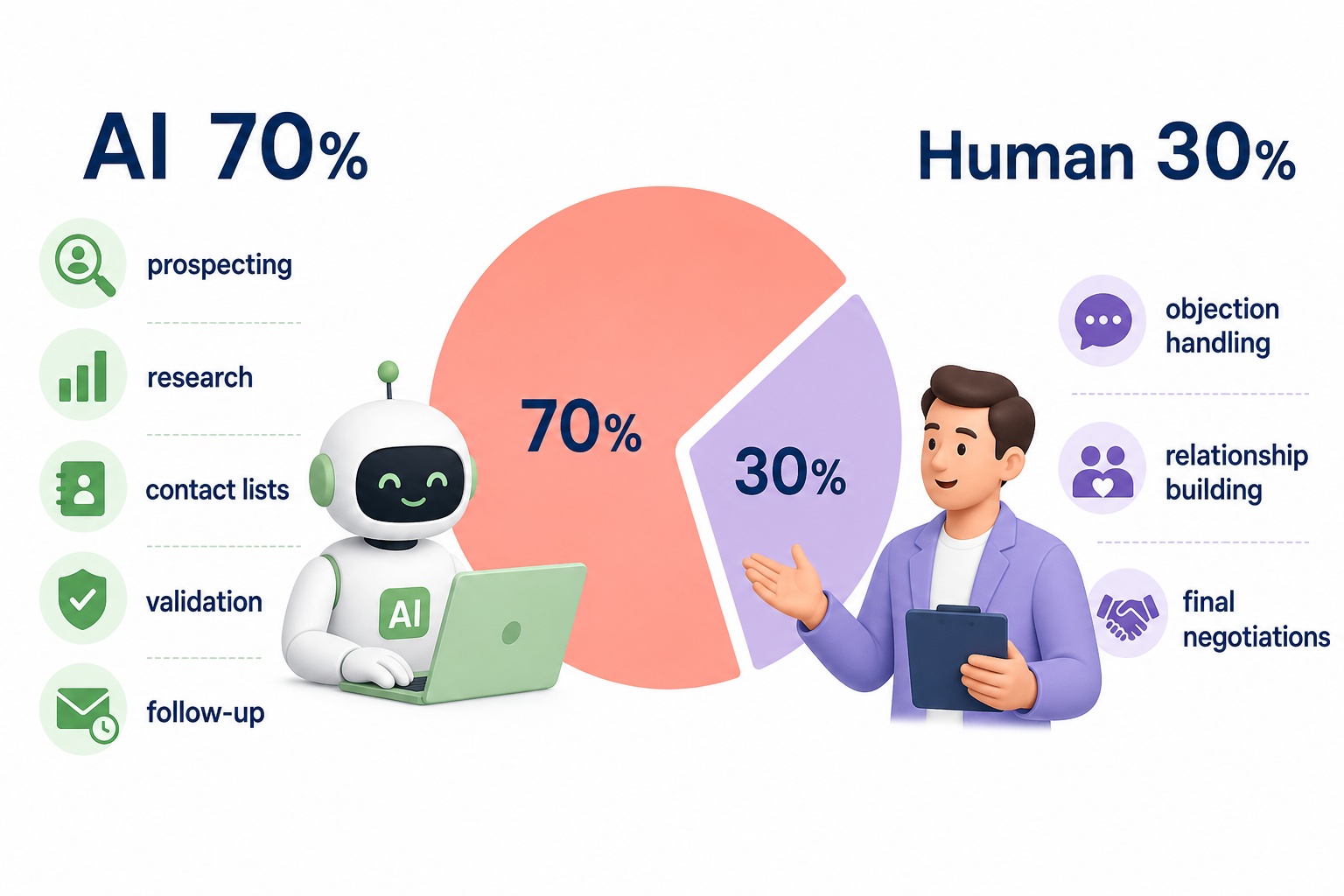
Successful implementations typically automate approximately 70% of the sales process. This includes:
- Generating initial contact lists and validating business data
- Conducting early research and firmographic profiling
- Managing basic follow-up sequences
This leaves the remaining 30% – the complex objection handling, deep relationship nurturing, and final contract negotiations – entirely in the hands of your experienced sales professionals.
Deploying this hybrid strategy helps manufacturers achieve a massive impact of sales workflow automation on team productivity, reducing manual sales overhead by 60% and allowing sales executives to stop acting like data researchers.
Key areas where AI eliminates manual work
Applying automation to key areas of your sales process yields immediate, compounding dividends.
Intelligent lead qualification
In the industrial sector, identifying the right buyers is notoriously difficult. Instead of having reps manually crawl directories, automated lead scoring systems analyze corporate firmographics, buying signals, and online behavior.
Implementing this type of intelligent lead qualification can increase qualified leads by up to 451% and generate 20% more sales opportunities. To learn how to build this system for your team, read our guide on how to optimize lead qualification with automation.
Automated CRM updates
Manual CRM upkeep is highly prone to human error and easily neglected. AI automation tools eliminate manual entry by automatically updating CRM records after customer interactions, syncing data across platforms, and logging activities without human input. Discover how to connect these systems seamlessly in our resource on reducing manual sales tasks through end-to-end automation.
Continuous follow-up sequences
Deals in the manufacturing sector often stall because reps fail to follow up consistently. AI-driven tools can automatically deploy personalized follow-up sequences triggered by specific prospect behaviors, ensuring no warm opportunity goes cold. You can read more about setting up these sequences in our article on automating follow-up emails in sales workflows.
Building your manufacturing automation blueprint
To successfully bring automation into your sales office without disrupting existing operations, follow these practical implementation steps:
- Audit your current pipeline: Identify exactly where your sales team is losing time, whether on prospecting, contact enrichment, or scheduling.
- Analyze your best buyers: Review your historical data to pinpoint your highest-converting industries, regions, and decision-maker roles.
- Focus on one vertical first: Build and test your automated sequences on one specific target audience before scaling it across other sectors.
- Choose integration-friendly platforms: Select automation tools that plug directly into your current setup. To see how to align these systems, explore our step-by-step guide on how to integrate AI tools into existing sales workflows.
Direct impact on your revenue
This technological shift is delivering substantial, measurable results. Businesses that successfully integrate AI into their sales pipelines experience a 10% to 30% increase in revenue. These AI-powered sales tools boost overall sales productivity by 25% to 40% while cutting qualification times by 40% to 60%.
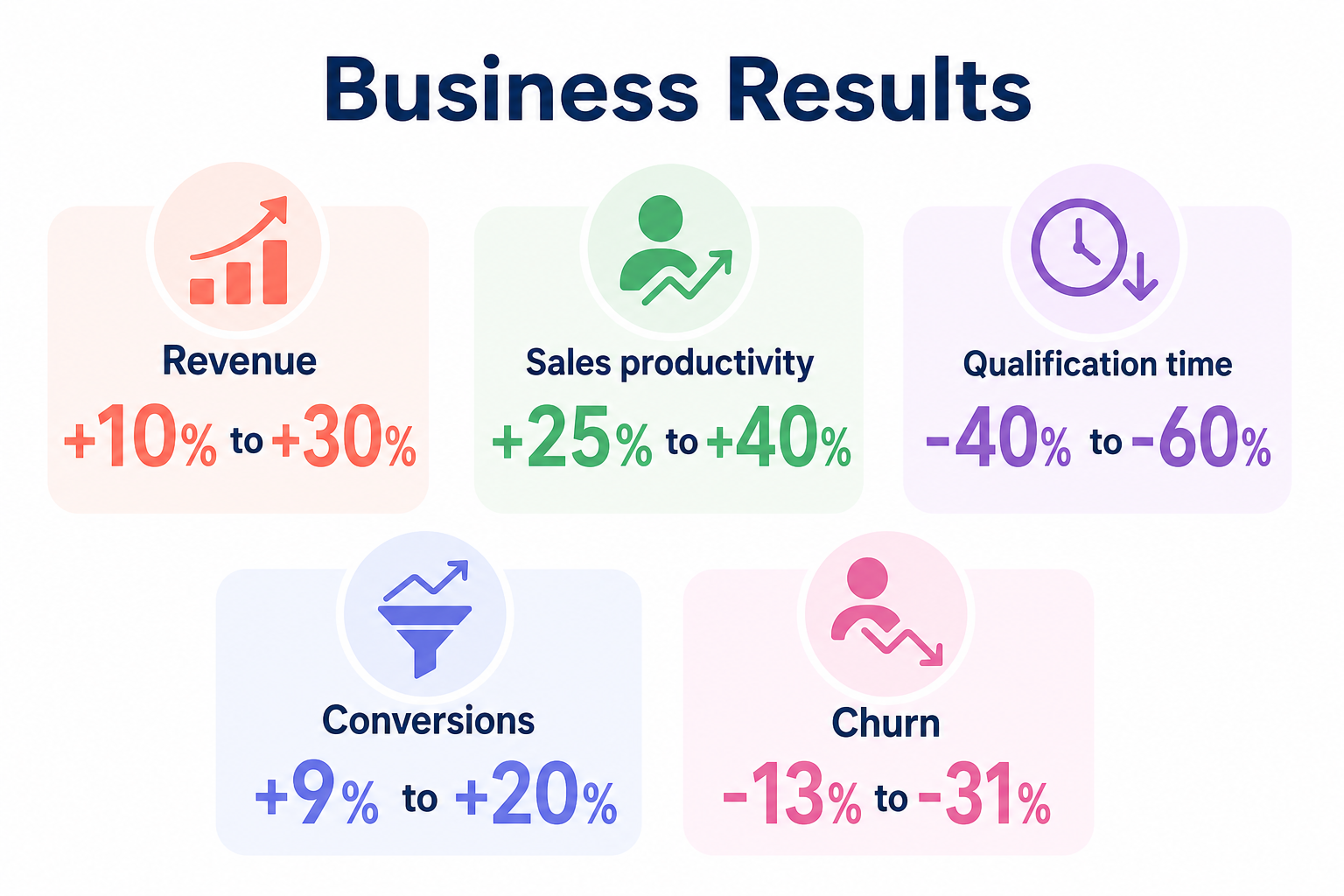
By utilizing automated lead scoring, companies can improve marketing conversions by 9% to 20% and reduce churn rates by 13% to 31%.
Leading manufacturers are already using modern systems to scale their outreach. For instance, European manufacturing firms utilize automated, research-driven platforms to source verified contacts and open deals across multiple international markets without expanding their internal headcount.
Stop wasting engineering talent on data entry
Your highly trained sales engineers and technical representatives should be doing what they do best: talking to prospective buyers, solving complex technical problems, and winning deals. They should not be wasting half of their working hours on manual prospecting, email drafting, and CRM maintenance.
By automating the boring, repetitive parts of B2B sales development, you free your team to focus exclusively on closing.
To see how you can put your outbound lead generation and prospecting on autopilot, book a discovery demo with Sera today.