


Are your sales reps spending more time clicking “reveal” than actually talking to buyers? In 2026, the real cost of B2B data is the hours of manual labor required to turn a contact list into a real meeting.
Understanding Lusha’s pricing tiers for 2026
Lusha continues to operate on a seat-based model that prioritizes self-service for small teams. While the platform offers an accessible entry point for solo sellers, the costs scale as your manufacturing or technical service team grows. Each plan is designed with specific credit limits that dictate how much data your team can access each month.
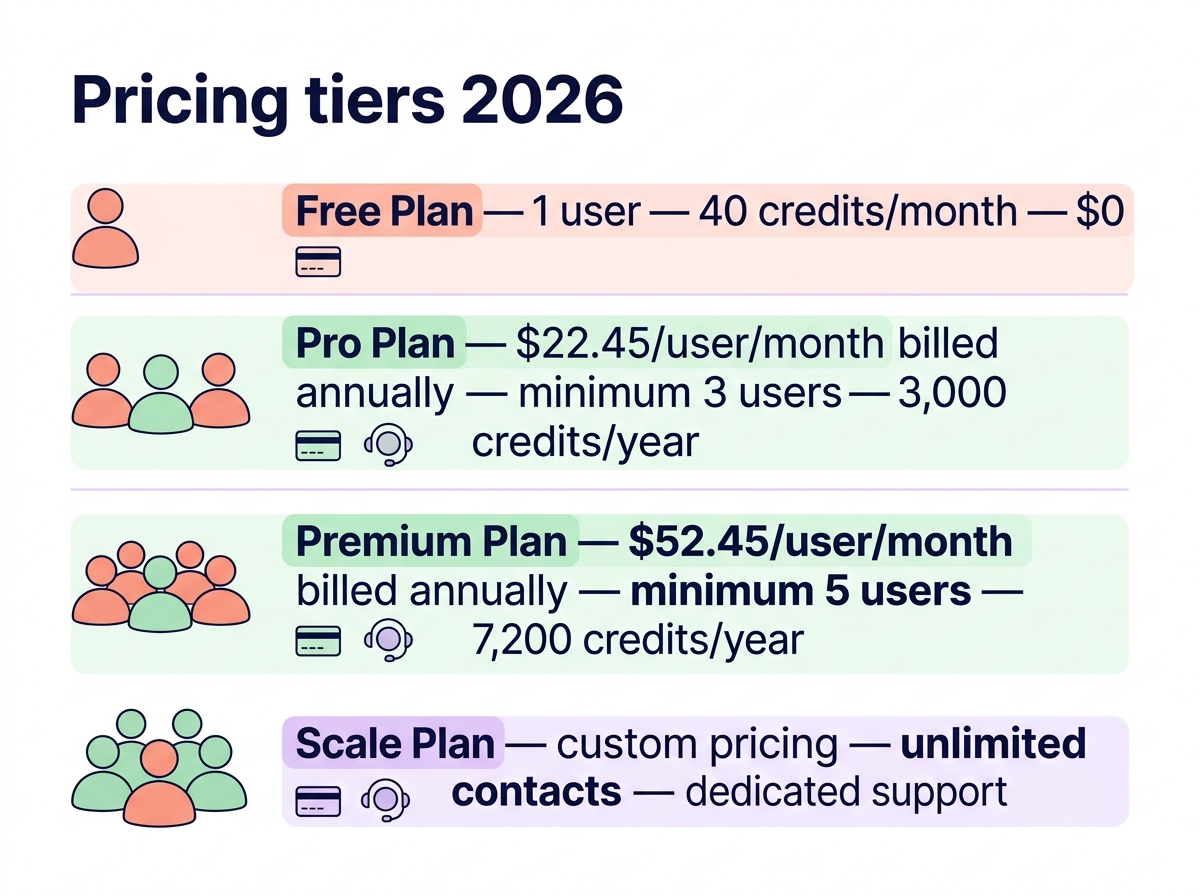
The Lusha pricing 2026 structure includes four main tiers:
- Free Plan: This allows one user to test data accuracy with 40 credits per month at no cost.
- Pro Plan: Priced at $22.45 per user per month on an annual basis, requiring a minimum of three users and providing 3,000 credits per year.
- Premium Plan: Priced at $52.45 per user per month on an annual basis, requiring a minimum of five users and providing 7,200 credits per year along with advanced analytics.
- Scale Plan: A custom enterprise tier offering unlimited contacts and dedicated support for organizations with high-volume requirements.
While these plans provide a clear framework, many managers find that the credit limits can become a bottleneck. If your team exhausts their credits mid-month, you often cannot simply “top up” on the Pro plan and may be forced to upgrade your entire tier.
The true cost of the manual credit system
In 2026, the way you spend credits is as important as the subscription fee itself. Lusha uses a specific consumption model where different types of data carry different weights. Revealing a single email address costs one credit, while finding a verified mobile number costs five credits. For manufacturing sales teams that rely heavily on direct dials to reach busy plant managers, these credits can vanish quickly.
This model creates a “manual reveal” bottleneck. Research shows that sales teams often spend over 15 hours per week on repetitive tasks like data entry and lead cleaning instead of selling. Every time a representative clicks “reveal” or exports a list to a CRM, they are performing admin work that keeps them away from high-value conversations. This friction is a significant factor when calculating the true return on investment for your sales stack.
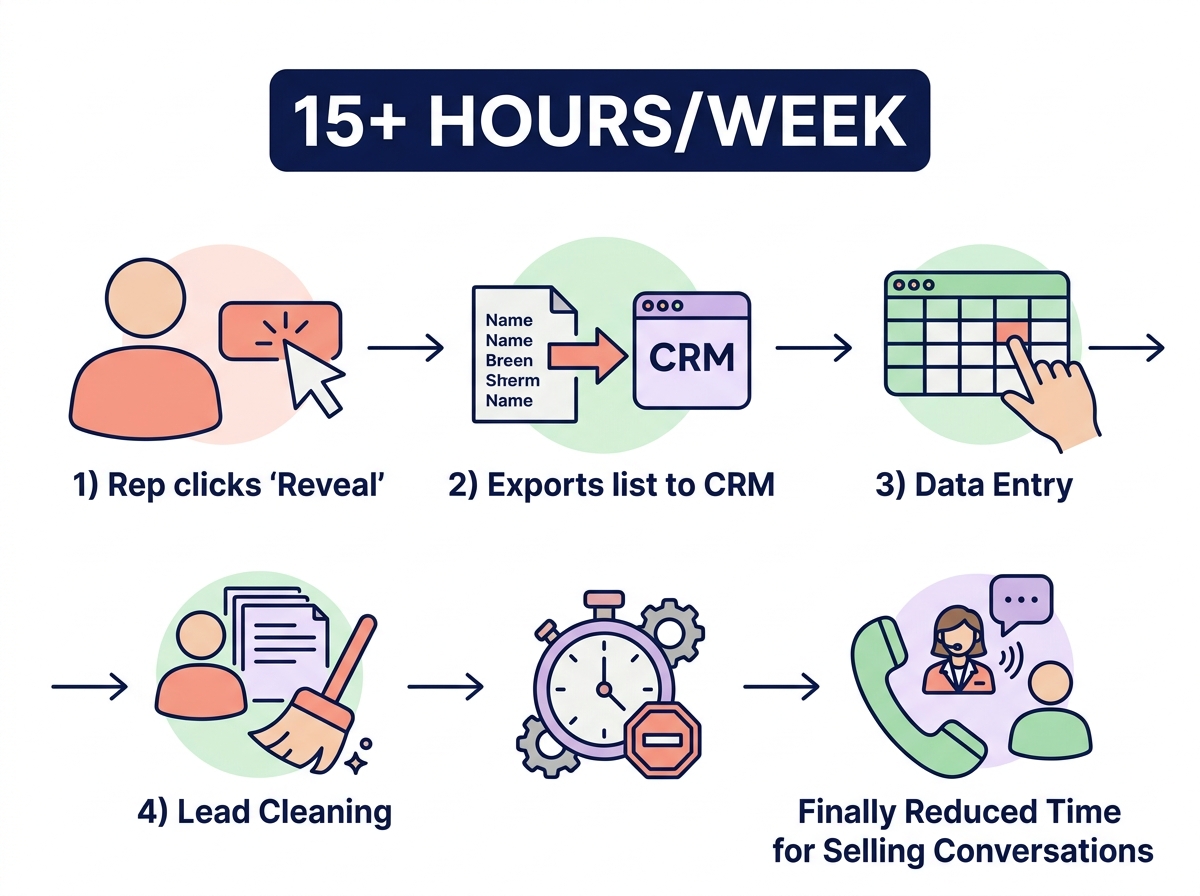
The manual burden also extends to list management. Lusha is highly effective at finding North American contacts, with more than 60% of its database focused on the US market. However, it lacks an integrated outreach layer. This means your team must still handle the research, personalization, and deliverability monitoring themselves after they have used their credits to find the data.
Comparing Lusha to alternatives like Apollo and Cognism
When deciding on a data provider, many industrial firms look at the differences between Apollo.io vs Lusha 2026. Lusha is often praised for its user-friendly Chrome extension and mobile phone accuracy, but it does not offer the full engagement suite that Apollo provides. Apollo includes built-in sequencing and email tracking, though it often requires more technical oversight to maintain a healthy sender reputation.
If your growth strategy involves European markets or requires strict compliance, you might also compare Cognism vs Lusha 2026. Cognism tends to offer better coverage in EMEA and APAC regions with a focus on DNC-compliant mobile data. For larger enterprises with complex corporate hierarchies, looking at Lusha vs ZoomInfo 2026 is standard, as ZoomInfo provides deeper firmographic insights but at a significantly higher annual commitment.
Regardless of the database you choose, the challenge remains the same: data alone does not book meetings. In a landscape where nearly half of all email traffic is classified as spam, simply having a “verified” email address is no longer enough to ensure your message reaches the inbox of a decision-maker.
Moving from manual data to autonomous outreach
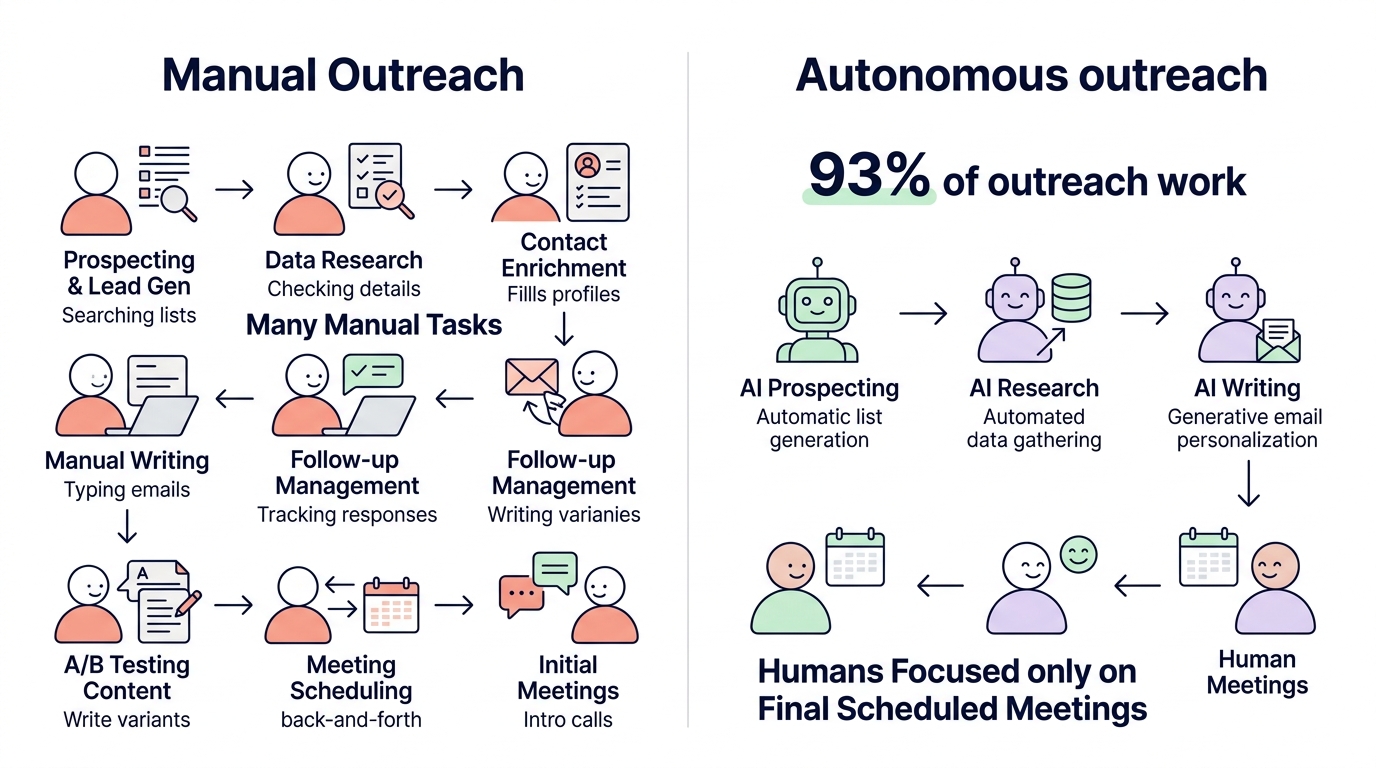
Instead of managing seat limits and clicking through databases, forward-thinking manufacturers are shifting toward autonomous systems. While Lusha provides the data, it leaves the actual work of prospecting, researching, and writing to your human staff. This gap is where most sales departments lose efficiency and momentum.
Sera offers a modern alternative by acting as a human-supervised AI outreach autopilot. Rather than just giving you a list of names, Sera uses six specialized AI agents to handle the entire process from end to end:
- A List Building Agent that sources high-intent leads from a database of over 1 billion professionals.
- An Enrichment Engine that adds deep firmographic data and insights about your prospects.
- A Research Analyst that finds specific timing and relevance triggers to make outreach personal.
- A Decision Maker Identifier that confirms exactly who has the authority to approve large deals.
- A Deliverability Guard that protects your reputation and ensures a 99% email deliverability rate.
- An Outreach Writer that crafts human-sounding messages in over 100 different languages.
This coordinated system performs roughly 93% of the manual outreach work, allowing your technical staff to focus solely on the final scheduled meetings. Whether you are looking for specific use cases in manufacturing or simply want to get leads without the admin headache, moving toward an agentic model eliminates the “credit anxiety” found in traditional tools.
Stop spending your budget on static databases that require constant manual maintenance. If you are ready to automate your research and fill your calendar with qualified meetings, explore Sera pricing or book a free discovery call to see how AI agents can transform your outreach.
Discover how Sera’s AI agents can automate your manufacturing outreach today