
 Taavid Mikomägi, Head of Growth
Are you tired of watching high-value industrial deals slip away simply because your team didn’t follow up fast enough? When a prospect shows interest, a delay of even thirty minutes can mean the difference between a booked meeting and a cold shoulder.
The high cost of delayed sales responses
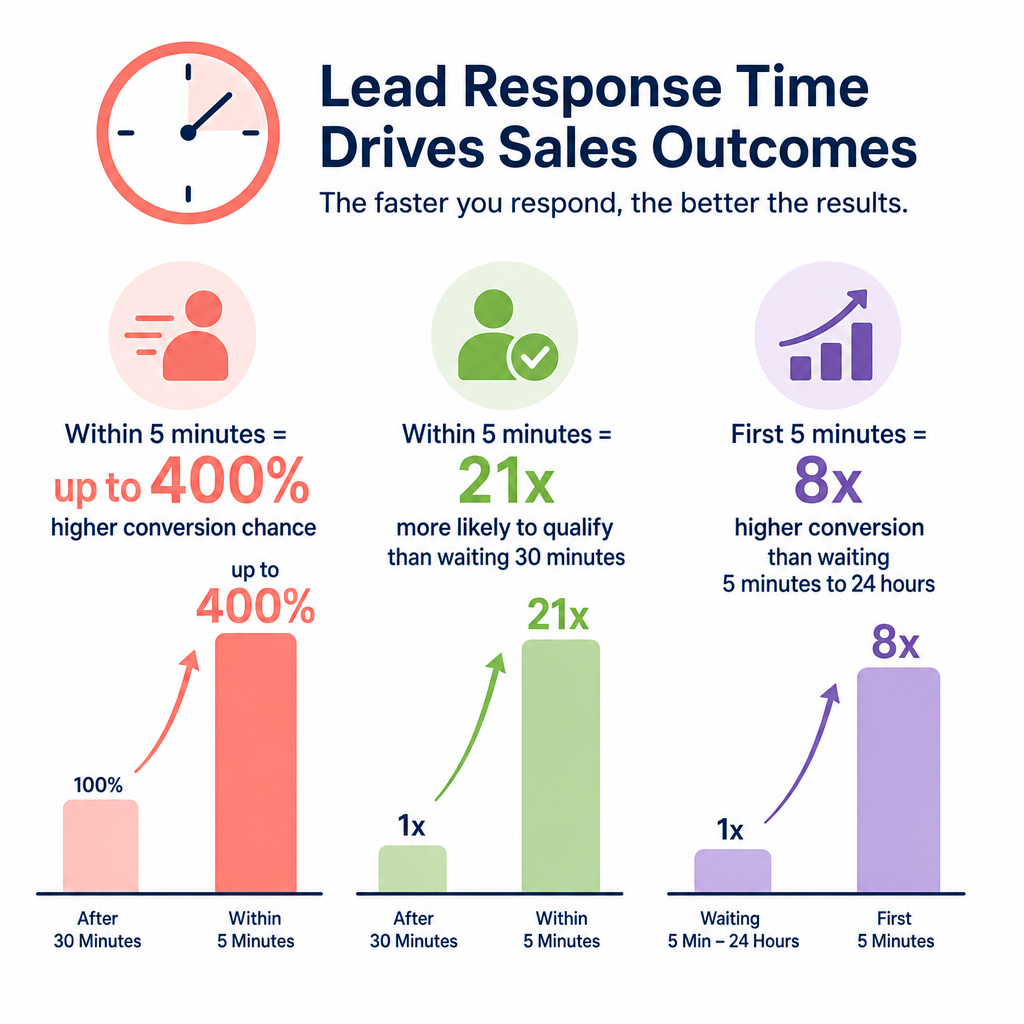
In traditional business-to-business sectors like manufacturing, following up manually is often slow and inconsistent. Modern research shows that response time directly dictates your sales success:
- Responding to a lead within the first five minutes can increase your chances of conversion by up to 400%.
- You are 21 times more likely to qualify a lead if you respond within five minutes compared to waiting thirty minutes.
- Conversion rates are eight times higher in the first five minutes of submission compared to waiting between five minutes and 24 hours.
When sales representatives spend their days manually tracking email opens and matching calendars, they lose valuable selling time. Coordinating calendars and sending manual reminders takes up to fifteen hours per week for the average sales representative. By transitioning to reducing manual outreach with AI-driven meeting scheduling, you can reclaim this lost time and focus on closing deals.
How behavior-triggered follow-up automation works
Behavior-triggered automation monitors how prospects interact with your digital touchpoints. Instead of sending generic emails at arbitrary intervals, the system reacts to active buying signals, such as:
- Visiting specific pricing or product specification pages.
- Opening an email multiple times or clicking high-intent links.
- Downloading technical case studies or product brochures.
- Abandoning a demo request form halfway through.
By using AI-driven automation to reduce manual sales tasks, you create a system that acts as an always-on sales assistant. This setup ensures that high-intent behaviors trigger immediate, relevant follow-up without manual intervention.
Setting up your automated follow-up system
To build an effective system, you need a clear strategy that connects your tools, maps your prospect journeys, and personalizes your messaging.
Connect your email and calendars
Before automating your outreach, make sure your scheduling tools work directly with your existing setup. A seamless integration of meeting scheduling with email clients allows prospects to book times instantly, resolving time zone conflicts automatically.
Map prospect behaviors to follow-up actions
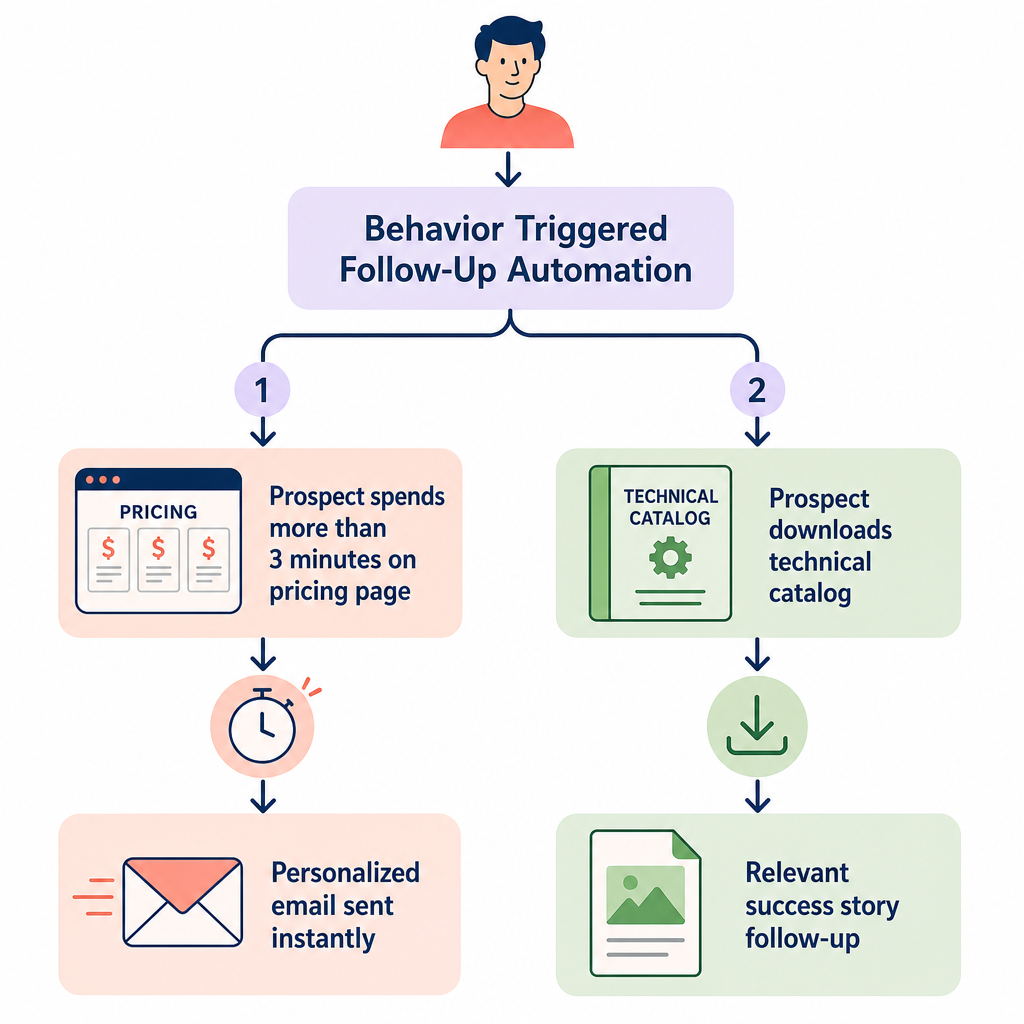
Define exactly how your system should respond to different prospect actions. For example, if a prospect spends more than three minutes on your pricing page, your workflow can instantly trigger a personalized email. If they download a technical catalog, the system can follow up with relevant success stories. You can optimize this process by configuring sales automation for different sales stages to keep your pipeline moving.
Build automated email and CRM workflows
Once your triggers are mapped, set up the sequences in your platform. When integrating email outreach automation with CRM workflows, every interaction – from opens to clicks – is logged automatically. This ensures your sales data remains clean and up to date without manual entry.
For post-meeting situations, using dedicated tools and tactics for automating post-meeting sales follow-ups prevents promising conversations from going cold. You can design multi-touch sequences that share technical specifications or customer testimonials over a ten-day period.
Guard your inbox and stay compliant
When executing personalized outreach sequence automation, compliance with GDPR is essential for UK and European sales teams. Make sure you:
- Obtain clear consent for behavioral and email tracking.
- Provide a straightforward, one-click opt-out option in every communication.
- Maintain your domain health by regularly validating SPF, DKIM, and DMARC records to ensure your emails reach the primary inbox rather than the spam folder.
Reducing no-shows and speeding up cycles
UK sales departments using automated scheduling systems report a 14.5% overall productivity boost and close 30% more deals compared to teams stuck with manual processes. Furthermore, implementing automated meeting scheduling to boost sales conversion helps organizations achieve up to a 25% reduction in their sales cycles.
No-shows are another common friction point in B2B sales. By automating appointment reminders, companies can reduce no-shows by 20% to 30%. This simple step keeps your sales representatives focused on active, high-value conversations instead of waiting in empty digital meeting rooms.
Real-world industrial success
Industrial and manufacturing companies often see the fastest returns from these automation workflows. For instance, a UK manufacturing firm integrated behavior-triggered follow-ups and automated technical specification delivery after initial product demos. This strategic shift led to a 15% reduction in sales cycle duration and a 22% increase in close rates.
By automating the tedious, repetitive phases of the sales cycle, their representatives could spend their energy on building deep relationships during final negotiations.
Elevate your industrial sales process
If you are ready to remove the manual burden from your sales team, modern AI technology offers a complete solution. You can shift from manually tracking leads to running your outbound efforts on autopilot.
With Sera, you gain access to a coordinated AI agents system that finds ready-to-buy prospects, creates hyper-personalized outreach, and books meetings directly into your calendar. Trusted by manufacturers through tailored manufacturing use cases like Viking Window, as well as high-growth firms like Bolt and Montonio, Sera helps you expand your market reach without the administrative headache.
Explore how our platform can transform your outreach and help you scale your operations. Book a demo with Sera today to put your lead generation and scheduling on autopilot.