


Your last cold email tool promised inbox placement but delivered spam folders. For manufacturing leaders, a thin sales pipeline is a risk you can’t afford. While Smartlead and Instantly are popular, choosing the right infrastructure in 2026 requires understanding how they handle deliverability and automation.
Smartlead: best for technical deliverability
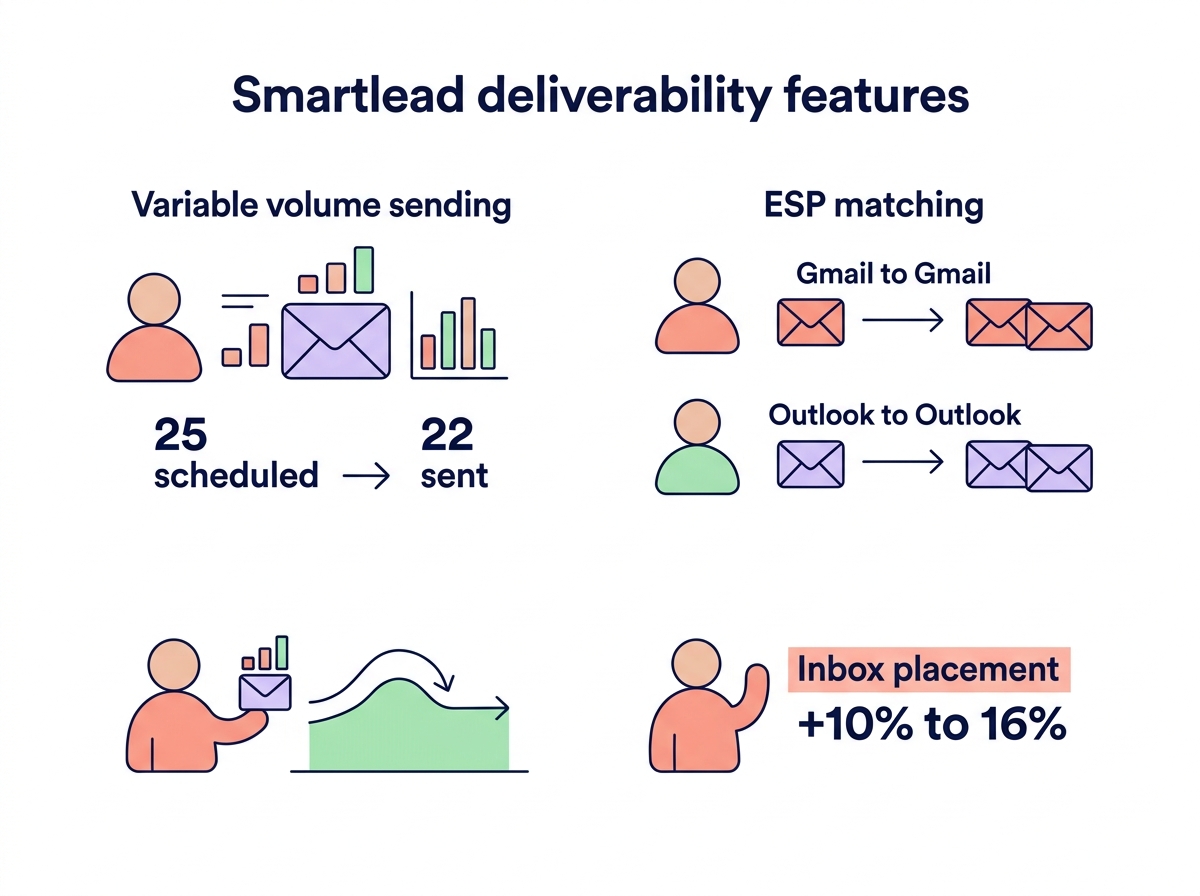
Smartlead stands out as an infrastructure-heavy tool designed for those who prioritize technical control. Its most significant advantage is the use of variable volume sending. Instead of sending exactly 25 emails when scheduled, it might send 22 to mimic human unpredictability. This randomization makes it significantly harder for spam algorithms to flag your account.
The platform also implements ESP matching, which routes Gmail-sent emails to Gmail recipients and Outlook emails to Outlook recipients. Research suggests this improves inbox placement by 10% to 16% because email providers naturally trust same-platform communication more than cross-platform messages. For a high-volume team, Smartlead’s $39 per month entry-level plan offers unlimited sender accounts, making it a cost-effective choice for scaling without per-mailbox fees. You can find more details on how it compares to other heritage tools in our Smartlead vs Lemlist 2026 comparison.
Instantly: best for ease of use and flat-fee scaling
Instantly focuses on a user-friendly interface and a flat-fee model that appeals to teams prioritizing simplicity. Its pool-level warm-up system means that the collective engagement of the entire network lifts the reputation of your individual mailboxes. This is particularly helpful for newer domains that need a quick reputation boost.
However, there are technical trade-offs to consider. Instantly often sends exact volumes at exact times, creating detectable patterns that modern Gmail algorithms can identify as robotic. Furthermore, because it does not use a Gmail-approved API, some users report deliverability hurdles that require manual troubleshooting. While it offers a strong alternative to tools like Lemlist, the responsibility for configuring complex sending patterns often falls on your shoulders.
The hidden cost of manual outreach tools
Whether you choose Smartlead or Instantly, both remain infrastructure tools that require significant human oversight. Your sales team will still spend roughly 15 hours per week on manual prospecting, lead cleaning, and sequence management. In the long-cycle manufacturing world, where reaching a specific plant manager or procurement head is vital, mass-blasting generic templates often leads to burned domains and missed quotas.
These platforms provide the “pipes” for your emails but do not help you decide who to contact or what to say. You are still responsible for identifying leads, researching company signals like facility expansions, and writing personalized follow-ups. For many executives, this creates a “software management” burden rather than a sales solution, often resulting in a 20% error rate in human data entry and inconsistent follow-up.
Why autonomous AI agents are the 2026 standard
The landscape has shifted from simple automation to autonomous AI agents. Unlike traditional tools that just send emails, AI agents act as digital employees that research accounts and handle objection handling within minutes. Transitioning to an autonomous model can lead to a 60% reduction in manual work and a 77% higher conversion rate through more consistent, research-backed follow-ups.
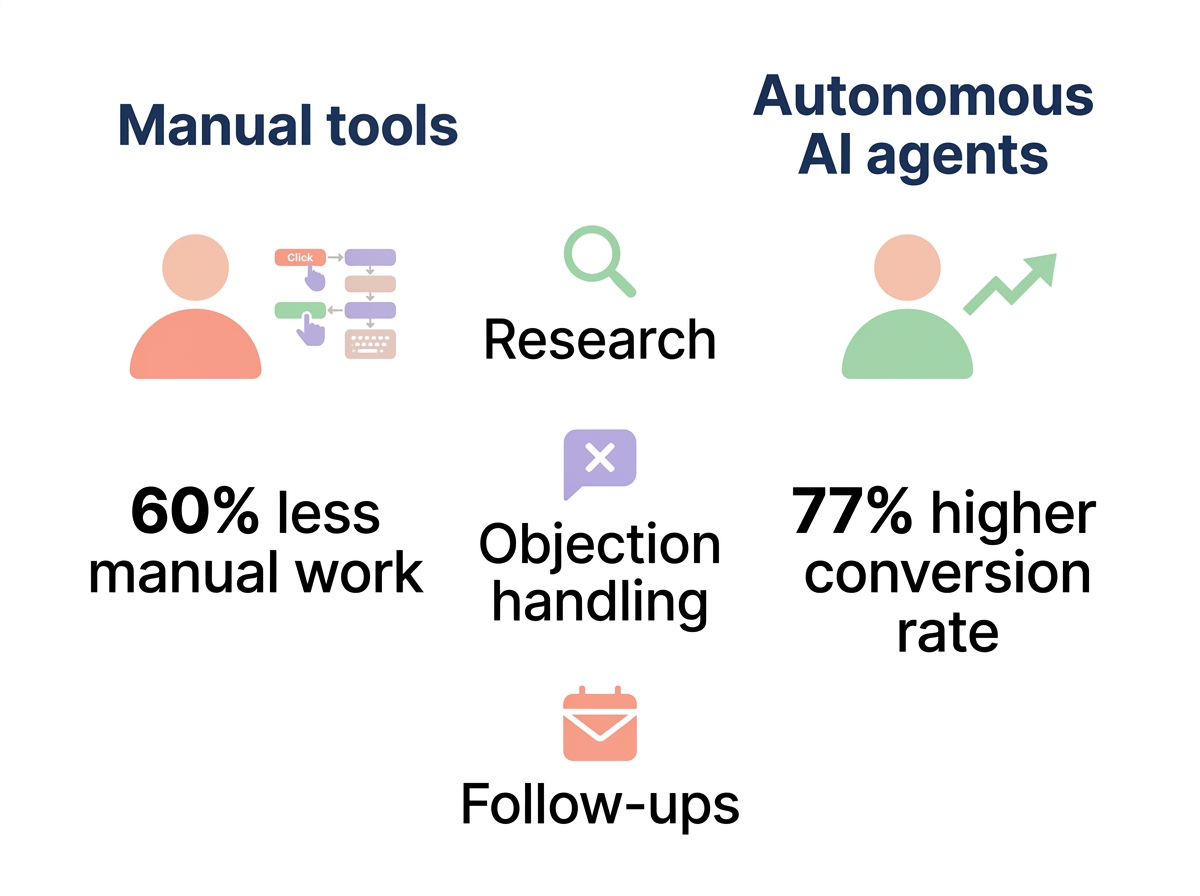
While tools like Smartlead and Instantly are effective for basic sequencing, they lack the ability to autonomously identify decision-makers or handle multi-channel outreach without human input. Advanced platforms like Artisan’s AI BDR show the potential for automation, but they often come with steep price tags and long implementation times. This is why many manufacturers are moving toward supervised AI systems that offer both machine speed and human quality control.
How Sera Autopilot transforms manufacturing outreach
Sera provides an end-to-end outreach service that replaces the need for manual campaign management. Instead of you operating a dashboard, our system uses six specialized AI agents that perform 93% of the outreach tasks while humans supervise the quality. This ensures that your messages sound like they were written by a technical expert, not a bot.
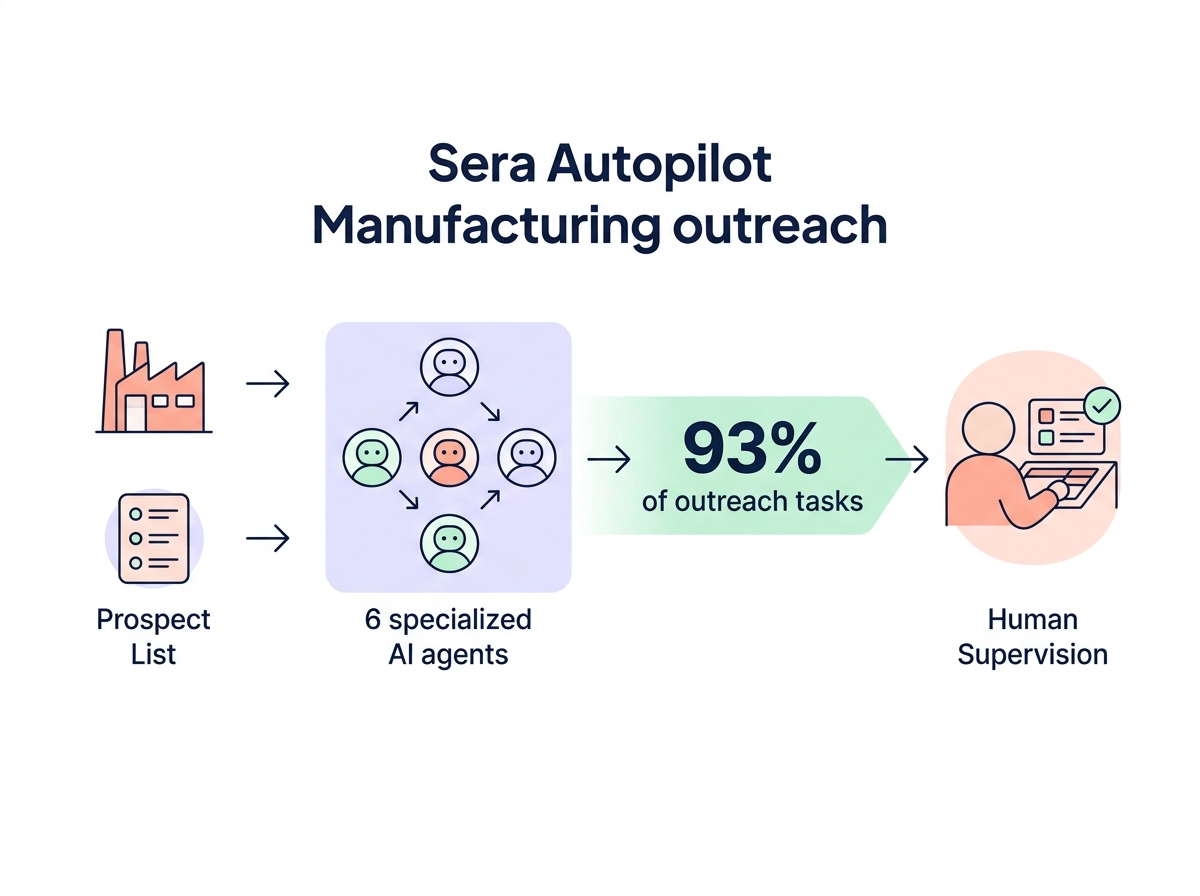
The Sera system includes:
- A List Building Agent that sources verified decision-makers from a database of over 1 billion professionals.
- An Enrichment Engine that adds technical firmographics and specific market insights to every prospect.
- A Research Analyst that scans LinkedIn and the web for genuine buying signals and timing.
- A Decision Maker Identifier that confirms the specific individual with contract approval authority.
- A Deliverability Guard that manages domain warming and technical essentials to maintain 99% inbox placement.
- An Outreach Writer capable of crafting human-sounding, multilingual emails in over 100 languages.
This approach is specifically designed for the high-value deals common in manufacturing, where a single connection can be worth €10,000 or more. By focusing on low-volume, high-precision outreach, Sera protects your sender reputation while filling your calendar with qualified meetings. You can explore our specialized AI agents to see how this coordinated system handles the heavy lifting of modern B2B sales.
Stop managing cold email infrastructure and start focusing on closing technical negotiations. If you are ready to move beyond manual tools and see how autonomous outreach can scale your revenue, book a free consultation with Sera today.