


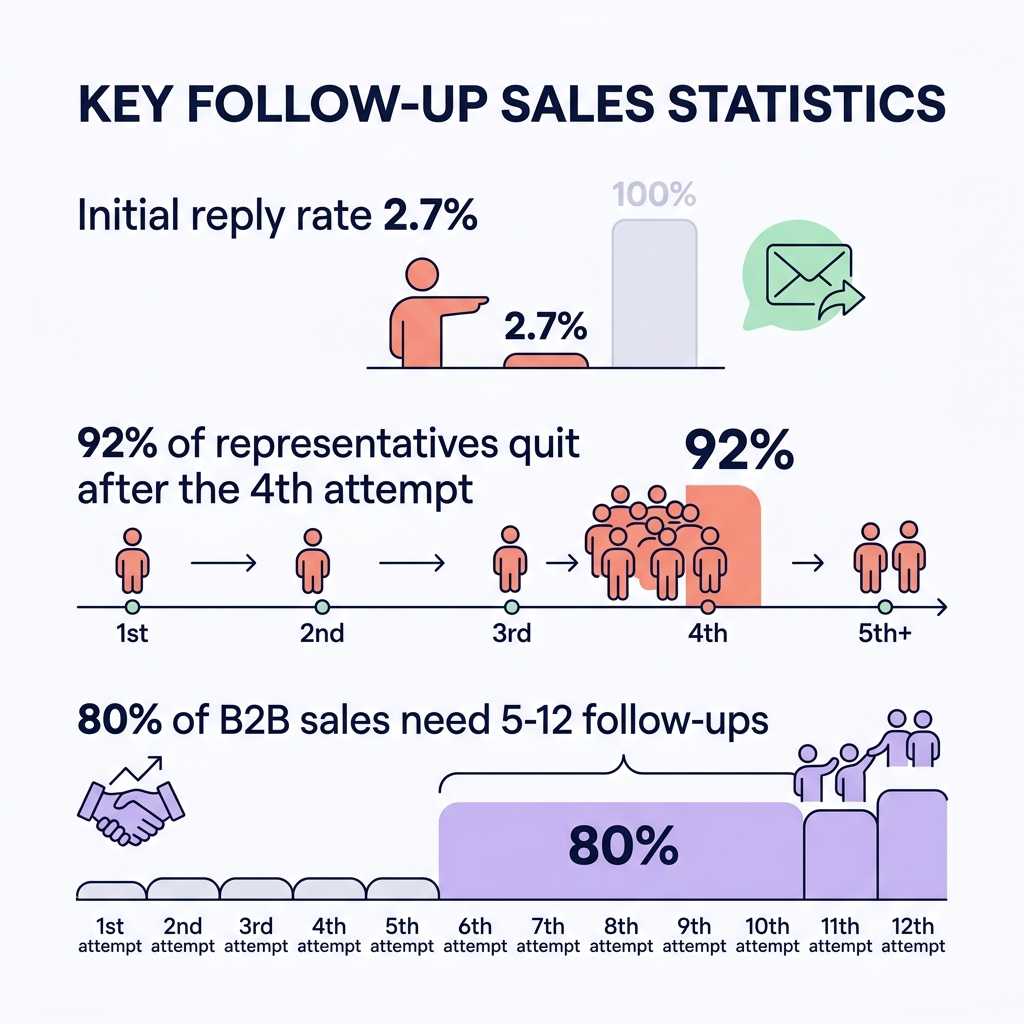
Did you know that 80% of B2B sales require five to twelve follow-ups to close? If you stop after the first silence, you are likely leaving most of your potential revenue on the table. Here is how to re-engage busy prospects without sounding pushy.
Why silence rarely means no
In the world of manufacturing and industrial GTM, a “no response” rarely indicates a lack of interest. Most often, your prospect is simply busy on the shop floor or managing a complex supply chain. Research shows that 48% of sales representatives send no follow-ups at all, missing out on over 50% of potential engagement opportunities.
Persistence is the primary driver of conversion. While initial email reply rates often hover around 2.7%, effective follow-up strategies in sales automation can significantly bridge the gap. Since 92% of representatives quit after the fourth attempt, staying in the game longer than your competitors provides a massive competitive advantage.
Timing your follow-up for maximum impact
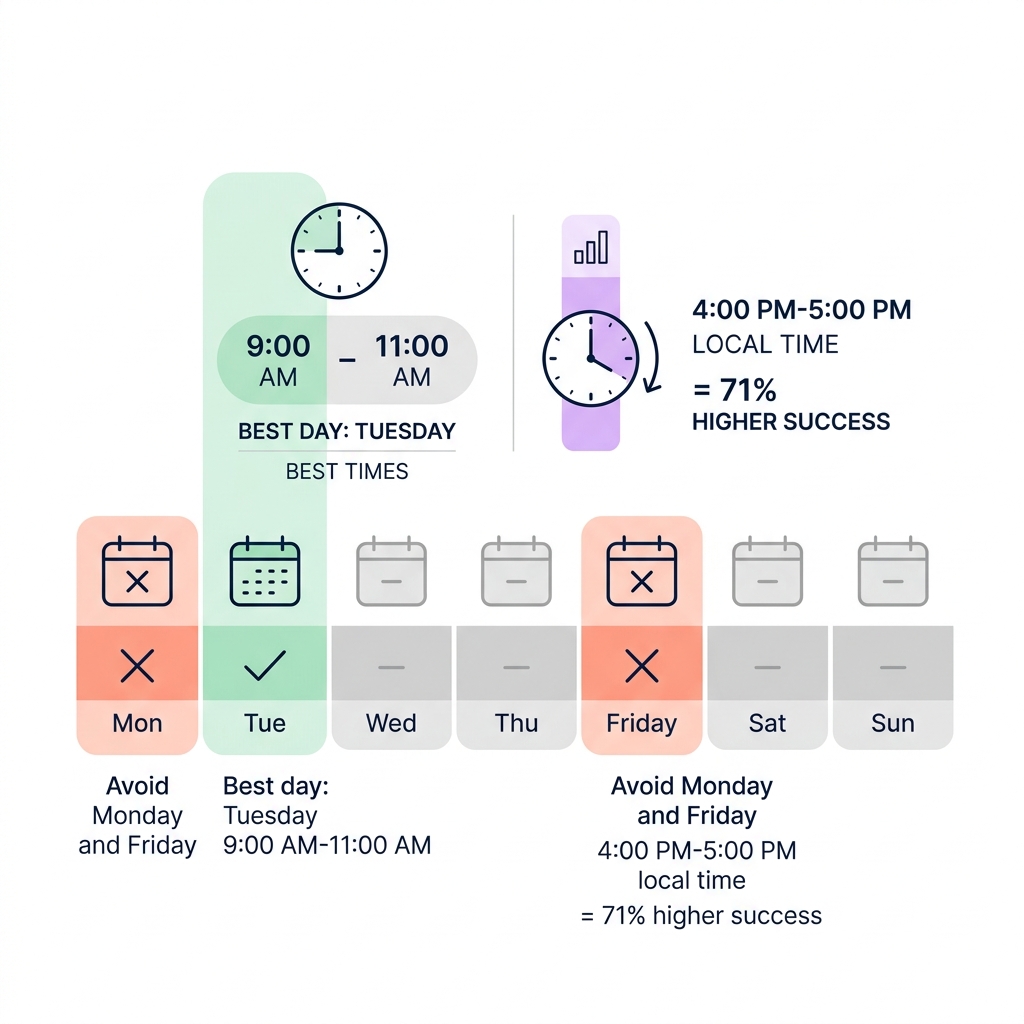
Timing is the difference between being a helpful partner and a nuisance. For cold outreach, a cadence of 8-12 touches over four weeks is a reliable benchmark. Your first follow-up should arrive 3-5 days after your initial message to give the recipient enough time to manage their daily operations without forgetting your previous conversation.
Data suggests you should generally avoid sending outreach on Mondays or Fridays. Instead, aim for Tuesdays between 9:00 AM and 11:00 AM. Reaching out between 4:00 PM and 5:00 PM local time can also increase success by 71%, as decision-makers are often clearing their inboxes before the end of the day. Utilizing automated follow-up scheduling based on prospect behavior ensures your message hits the inbox at the exact moment a prospect is most likely to engage.
Crafting subject lines that earn opens
Your subject line is your only chance to make a second impression. You should avoid generic phrases like “checking in” or “following up,” as these often look like automated spam and are quickly deleted. Instead, focus on b2b sales email subject lines that use personalization to stand out.
Adding a first name or a specific company name can boost open rates by up to 29%. To ensure your full message is visible on mobile devices, keep your text under 60 characters. Using direct questions about a prospect’s specific facility or a recent industry event creates a sense of peer-to-peer communication rather than a standard sales pitch.
Adding value instead of bumping threads
Every follow-up must provide new information or solve a specific problem. Repeating your previous message adds no value and can frustrate a busy executive. Instead, try sharing a relevant case study, an ROI tool, or an industry report that addresses their specific pain points.
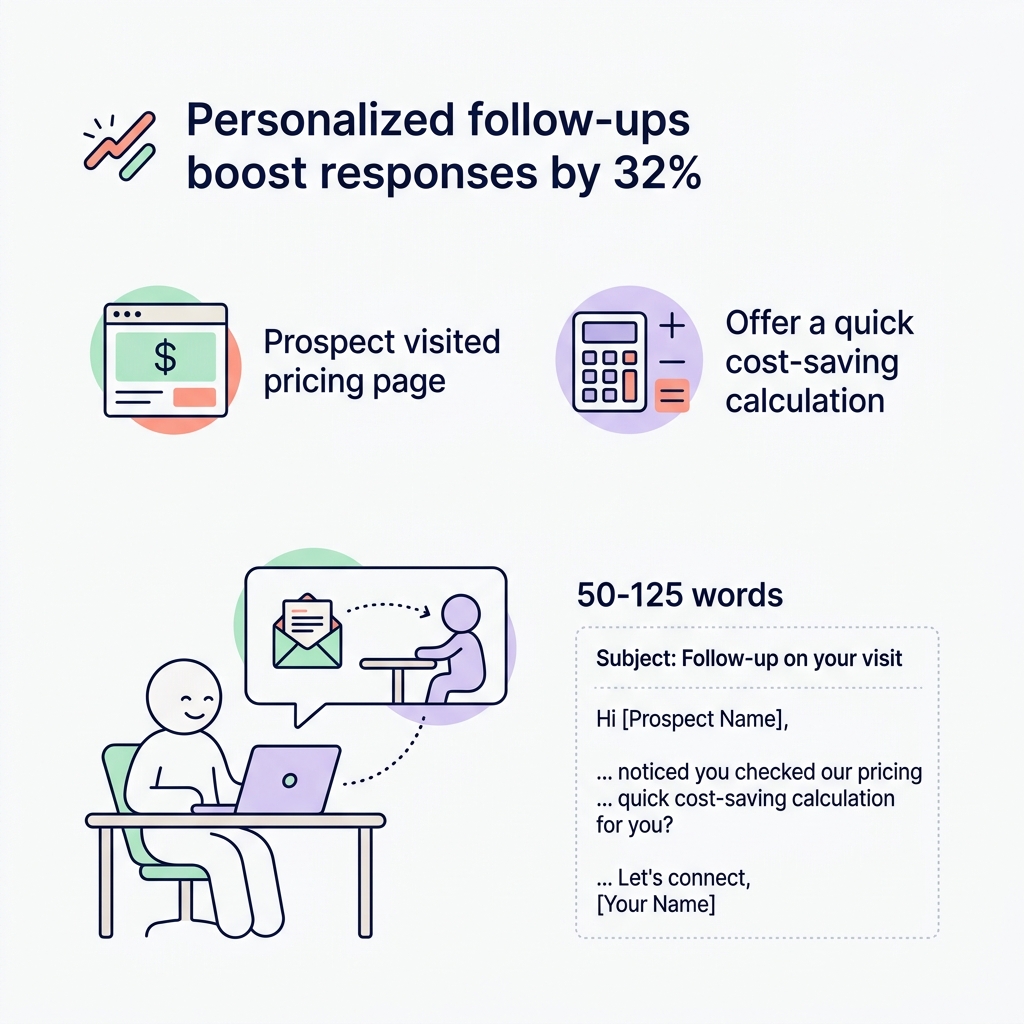
Personalized follow-up strategies that reference specific prospect behavior can boost responses by 32%. For example, if a prospect has visited your pricing page, a follow-up offering a quick cost-saving calculation is far more effective than a polite reminder. When drafting these messages, aim for a length of 50 to 125 words to respect the recipient’s limited time.
- The Value-Add Angle: Mention a case study where a similar manufacturer reduced delivery delays or defect rates. Ask if they are still looking to optimize that specific process this quarter.
- The Timing Check: Acknowledge that things are likely busy at their specific plant location. Offer to share a brief two-minute version of how you helped a competitor solve a common industry pain point.
- The Resource Offer: Send a technical data sheet or an industry report related to their department goals. This maintains contact without requiring an immediate commitment for a meeting.
Scaling your outreach with AI
Managing dozens of individual follow-up sequences manually is a recipe for burnout and human error. High-performing GTM teams are automating follow-up emails in sales workflows to reclaim up to 15 hours of selling time per week. This allows your team to focus on closing deals rather than managing administrative tasks.
Modern AI tools can now handle the heavy lifting of research and writing. By using AI to personalize cold email campaigns, you can maintain a “low volume, high precision” approach that protects your deliverability. This technology allows you to send human-sounding, multilingual messages to decision-makers across the globe while ensuring your sender reputation remains pristine.
Success in B2B sales depends on your ability to stay top-of-mind without becoming a distraction. By combining strategic timing, personalized subject lines, and value-driven content, you can transform a silent thread into a productive partnership. Most sales occur during the follow-up phase, so your persistence is your greatest asset in closing more deals.
To see how AI can automate your high-precision outreach and handle the research for you, explore Sera’s AI agents today.