

Are your sales reps spending more time managing software than closing manufacturing contracts? In 2026, the gap between having data and actually booking meetings is wide, and legacy engagement platforms often create more digital noise than actual revenue.
Manufacturing and industrial companies operate in a world of technical validation and long buying cycles that typically last six to eighteen months. Traditional sales engagement tools often fail this sector because they focus on high-volume automation that can damage a brand’s reputation with technical buyers. To win in 2026, you need a strategy that prioritizes precision over noise. The following alternatives are categorized by how they help your revenue team focus on closing high-value deals.
Sera: The AI-driven outreach autopilot
If you want to skip the software management entirely, Sera is the modern alternative to the traditional “list plus sequence” model. Instead of giving your team another complex tool to operate, Sera provides a human-supervised AI service that handles the entire outbound process from end to end. This system is specifically designed for manufacturers seeking deals of €10,000 or more without the overhead of hiring more specialists.
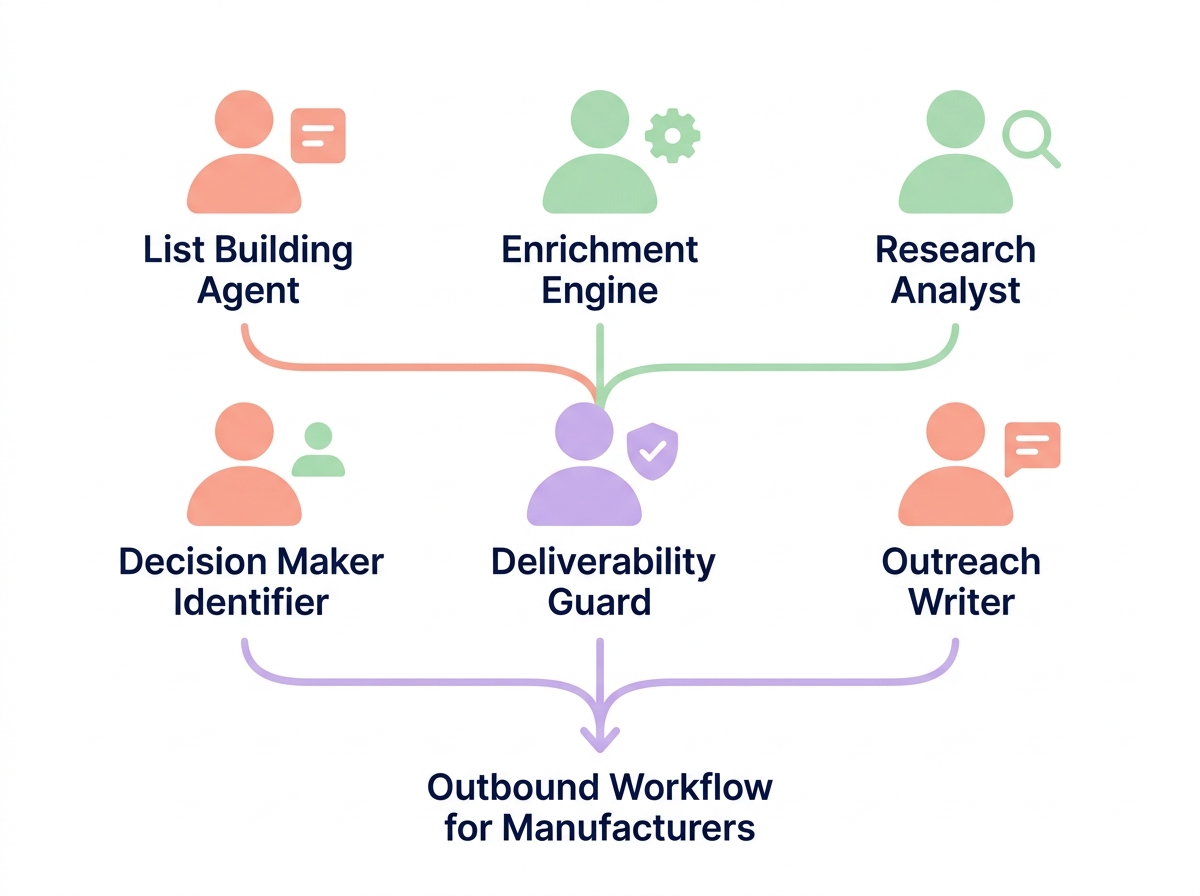
Sera’s Autopilot is powered by six specialist AI agents working together as one cohesive system. A List Building Agent creates ultra-targeted lead lists, while an Enrichment Engine adds rich firmographics and technical insights. The Research Analyst finds timing and relevance, and the Decision Maker Identifier confirms the right buyer. To ensure your messages actually reach the prospect, the Deliverability Guard protects your sender reputation, and the Outreach Writer crafts human-sounding, multilingual emails in over 100 languages.
This model allows for a low-volume, high-precision approach that currently achieves ROI benchmarks for AI SDR deployments that traditional software struggles to match. Because AI agents handle roughly 93% of the manual labor, your sales team can stop being software operators and return to being closers.
Outreach: The enterprise sales execution platform
Outreach remains the primary heavyweight competitor for large industrial organizations with complex reporting requirements. It has evolved into a complete sales execution platform that features Kaia, an AI conversation assistant that provides real-time call coaching and automated meeting summaries. For a large team, this offers deep visibility into the entire sales funnel and helps with accurate deal forecasting.
However, the enterprise nature of this tool comes with significant complexity. Most manufacturers find they need a dedicated sales operations professional to manage the setup and custom field mapping. Pricing typically starts between €10,000 and €15,000 annually for small teams, which is a significant investment compared to more agile solutions. You can find a deeper breakdown of these features in the Outreach vs Salesloft 2026 comparison.
HubSpot Sales Hub: The all-in-one CRM integration
For mid-market manufacturers already using HubSpot for their marketing, the Sales Hub is often the most intuitive choice. It offers the distinct advantage of a single source of truth for all customer data, including quoting tools and mobile apps that are helpful for sales engineers visiting factory floors. It is generally considered easier to use than Salesloft and has a lower entry cost for very small teams.
The challenge with HubSpot often lies in the scaling costs. While it starts affordably, advanced automation features are often locked behind professional tiers that cost roughly $450 per month for five users. While it simplifies the tech stack, it still requires your team to manually manage templates and clean lead lists, which can become a significant administrative burden as your prospecting volume grows.
Apollo.io: The data-first prospecting engine
Apollo has become a popular choice for lean teams because it combines a database of 275 million contacts with its own sending tools. This removes the friction of moving lists between different platforms and allows a new sales rep to start prospecting within an hour. It is particularly strong for finding technical decision-makers at industrial facilities across the globe.
While it is affordable, starting at approximately $49 per user per month, it often encourages a “volume over value” approach. According to a recent Apollo.io review for 2026, many teams incur a hidden tax of 15 to 30 hours per week on non-selling tasks like data cleaning and list management. If not handled with care, high-volume sequences can also lead to deliverability issues that damage your professional domain reputation.
Cognism: The European compliance specialist
If your manufacturing business is expanding across the UK or the European market, Cognism is often a more effective choice than US-centric tools. They specialize in GDPR-compliant, phone-verified data and provide “Diamond Data” mobile numbers that lead to higher connection rates. This is vital for reaching procurement officers or engineers in regions with strict privacy laws like Germany.
Cognism also integrates Bombora intent signals, allowing you to see which companies are currently researching specific industrial equipment or solutions. While it is an excellent data source, it is primarily a database rather than an execution platform. To turn this data into meetings, you will still need a separate system for outreach. For teams weighing their data options, the ZoomInfo vs Cognism 2026 review highlights how these signals impact conversion rates.
Why 2026 demands a shift away from manual software
The value of a sales tool is no longer measured by how many features it has, but by how much time it gives back to your team. Traditional platforms require your reps to spend hours using AI sales agents to book meetings and managing deliverability, which takes them away from high-value relationship building. Research shows that solo manufacturing reps often spend less than 40% of their time on active selling due to this administrative creep.
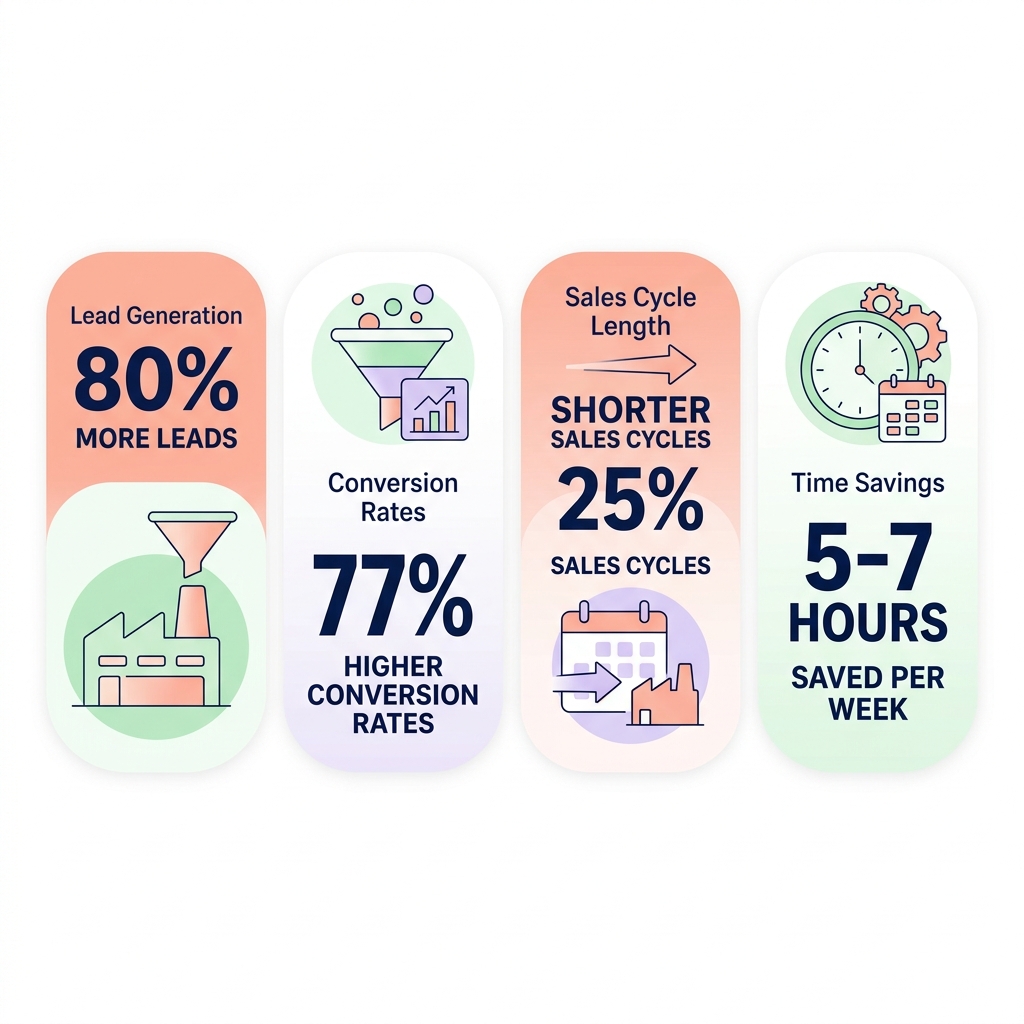
Companies that have moved toward autonomous automation report significant performance gains:
- Businesses using AI automation report 80% more leads and 77% higher conversion rates.
- AI-integrated analytics have helped teams achieve a 25% reduction in sales cycles.
- Automated systems save individual sales reps between five and seven hours per week on scheduling logistics alone.
- Industrial case studies show a return of £5.44 for every £1 invested in AI-driven lead generation.
In 2026, the goal is no longer to give your reps better tools to click, but to remove the clicking entirely. By shifting the repetitive groundwork of list building, research, and initial outreach to AI agents, your team can focus on the human-centric work of visiting clients and closing complex engineering contracts.
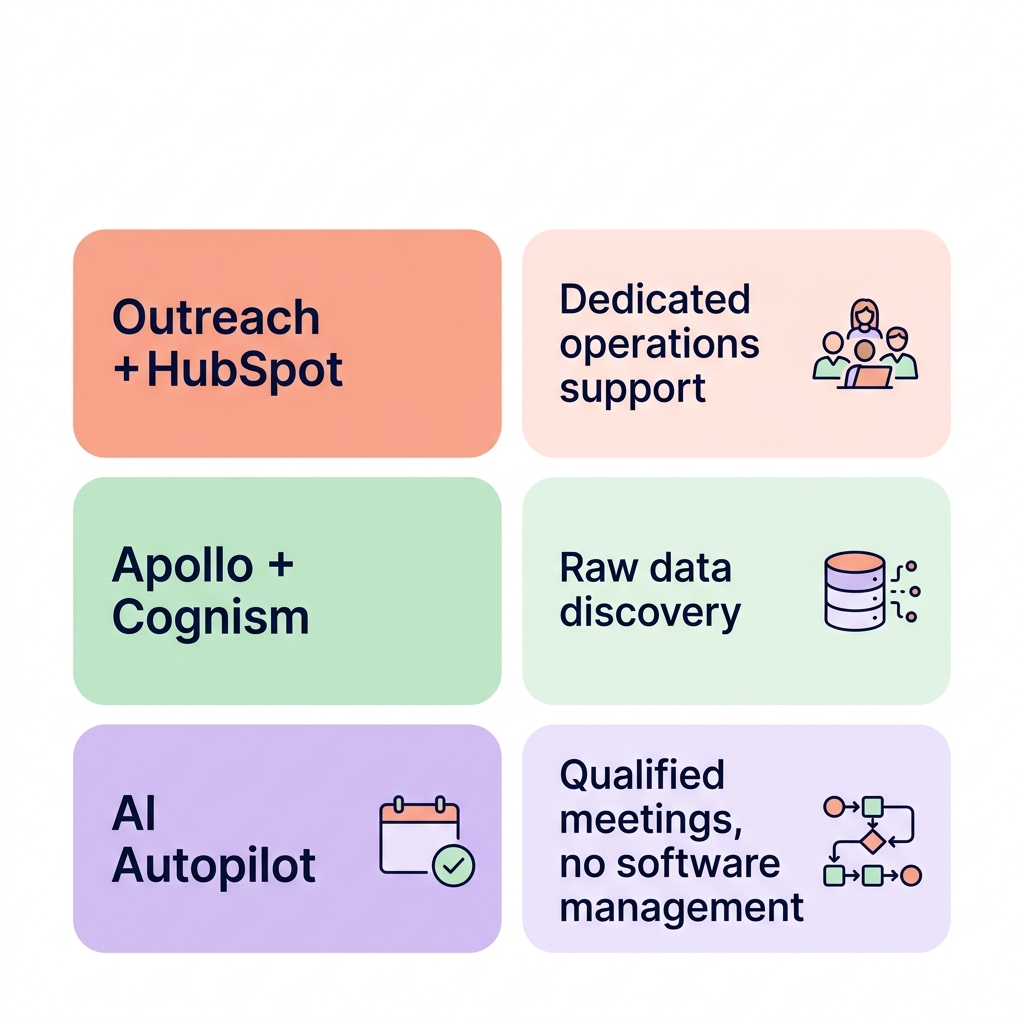
Selecting the right alternative depends on your goals: Outreach and HubSpot are reliable if you have a dedicated operations team to manage them, while Apollo and Cognism are market leaders for raw data discovery. However, if your goal is to fill your calendar with qualified meetings without the software management headache, an AI Autopilot is the most efficient choice for modern manufacturing growth.
Explore how Sera can handle your entire outreach process and grow your revenue today.