

Are you still paying your sales team to manually click through databases and manage endless email sequences? In 2026, the gap between having data and actually booking meetings is wider than ever, and choosing the wrong platform can leave your reps stuck in “admin mode” instead of closing deals.
Understanding the core differences between Clay and Apollo.io
Both platforms tackle the same essential job of finding prospects and enriching data, but they take fundamentally different approaches to the sales process. Apollo.io acts as an all-in-one cockpit, providing its own proprietary database of over 275 million contacts alongside built-in sequencing, a dialer, and CRM synchronization. It is designed for speed, allowing a new sales development representative to start prospecting within an hour.
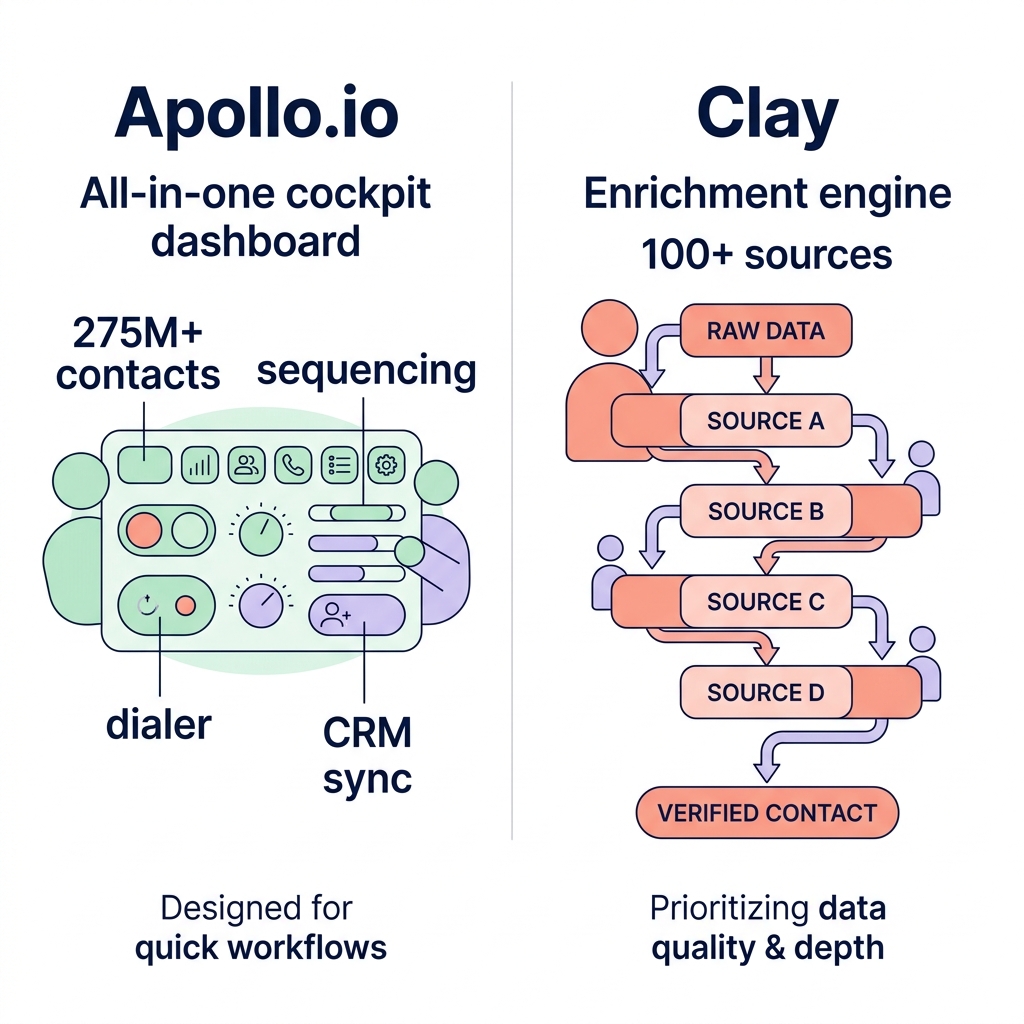
Clay, by contrast, does not own a proprietary database. Instead, it serves as a powerful enrichment and automation engine that aggregates data from over 100 sources, including Apollo, LinkedIn, and ZoomInfo. This “waterfall” enrichment process means Clay can cross-reference multiple providers to find the most accurate email or phone number. While this multi-source approach often leads to higher data quality, it comes with a steeper learning curve and requires a more technical setup to build effective workflows.
Data quality and enrichment for manufacturing sales
For manufacturing executives targeting specific roles like plant managers or procurement directors, the source of your data matters as much as the volume. Apollo.io maintains massive US coverage and provides solid firmographic and technographic data, making it a reliable choice for high-volume outreach. However, relying on a single database can occasionally lead to outdated information or gaps in specialized industrial niches.
Because Clay aggregates dozens of providers, it is often more effective at uncovering hard-to-find contacts in traditional industries. The platform uses a specialized research agent called Claygent to scrape websites and extract specific business signals, such as recent facility expansions or new equipment purchases. This level of detail is vital for manufacturing sales cycles that often last six to eighteen months and require a demonstrated understanding of the prospect’s operations. You can find a more detailed breakdown of these capabilities in our Apollo.io review for 2026 and our comparison of Clay alternatives.
The hidden cost of the SDR tax
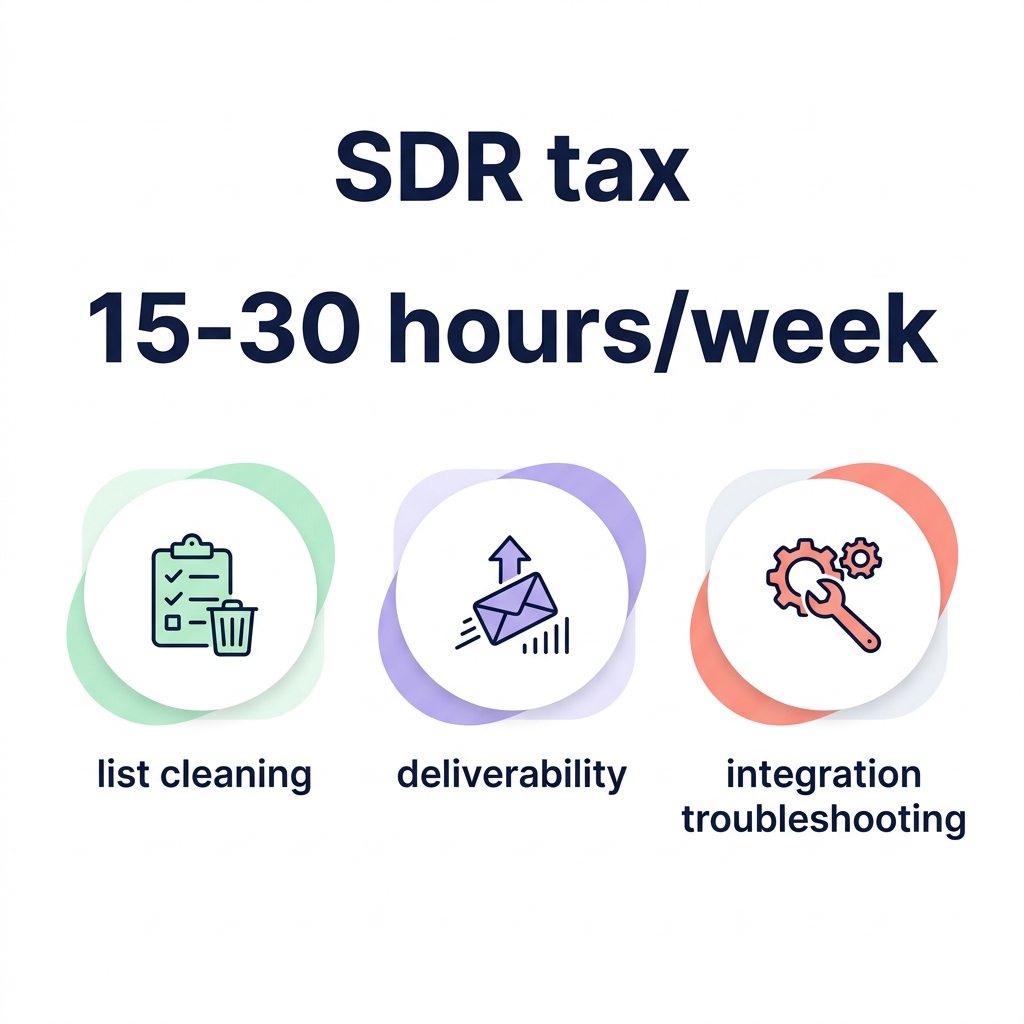
A major challenge with both platforms in 2026 is what industry experts call the “SDR tax.” This refers to the fifteen to thirty hours per week that sales reps spend on non-selling tasks, such as cleaning lists, managing deliverability, and troubleshooting software integrations. Even with advanced automation, these tools still require human operators to define targeting criteria, monitor domain health, and adjust messaging.
- Apollo.io simplifies the stack by keeping everything under one roof, but it often encourages high-volume sending that can harm your domain reputation.
- Clay offers superior research depth but requires significant manual effort to build and maintain complex “if-this-then-that” workflows.
- Both platforms use credit-based pricing that can become unpredictable as you scale your outreach across different regions or markets.
Comparing pricing and ROI in 2026
The financial decision between these two tools depends heavily on your team’s technical bandwidth and deal size. Apollo.io offers a more traditional per-user pricing model, starting with a free tier and moving into paid plans ranging from $59 to $149 per user per month. This makes it an attractive, predictable option for lean teams that need a straightforward tool to manage their daily outreach.
Clay uses a credit-based system that scales with your usage. While plans start around $149 per month, heavy use of its AI research agents and multiple data providers can quickly push costs to $500 or $1,000 per month. For many manufacturing firms, the true cost of ownership also includes the price of a separate sending tool, as Clay lacks native email sequencing. When evaluating the sales tech stack for manufacturers, it is essential to account for both software fees and the labor required to operate them.
Why AI agents are replacing manual tool management
As we move through 2026, the trend in B2B sales is shifting away from manual software management and toward autonomous AI for SDRs. Instead of paying for a database seat and a human to click the buttons, manufacturing firms are increasingly adopting “agentic” systems that handle the entire prospecting lifecycle.
Sera’s AI Autopilot is a human-supervised service that uses six specialized AI agents to manage your outreach from start to finish. Rather than just providing a list of names, this system researches buying triggers, identifies decision-makers, and writes personalized, human-sounding emails in over 100 languages. This approach is particularly effective for high-value manufacturing deals where brand reputation and precision are more important than mass volume.
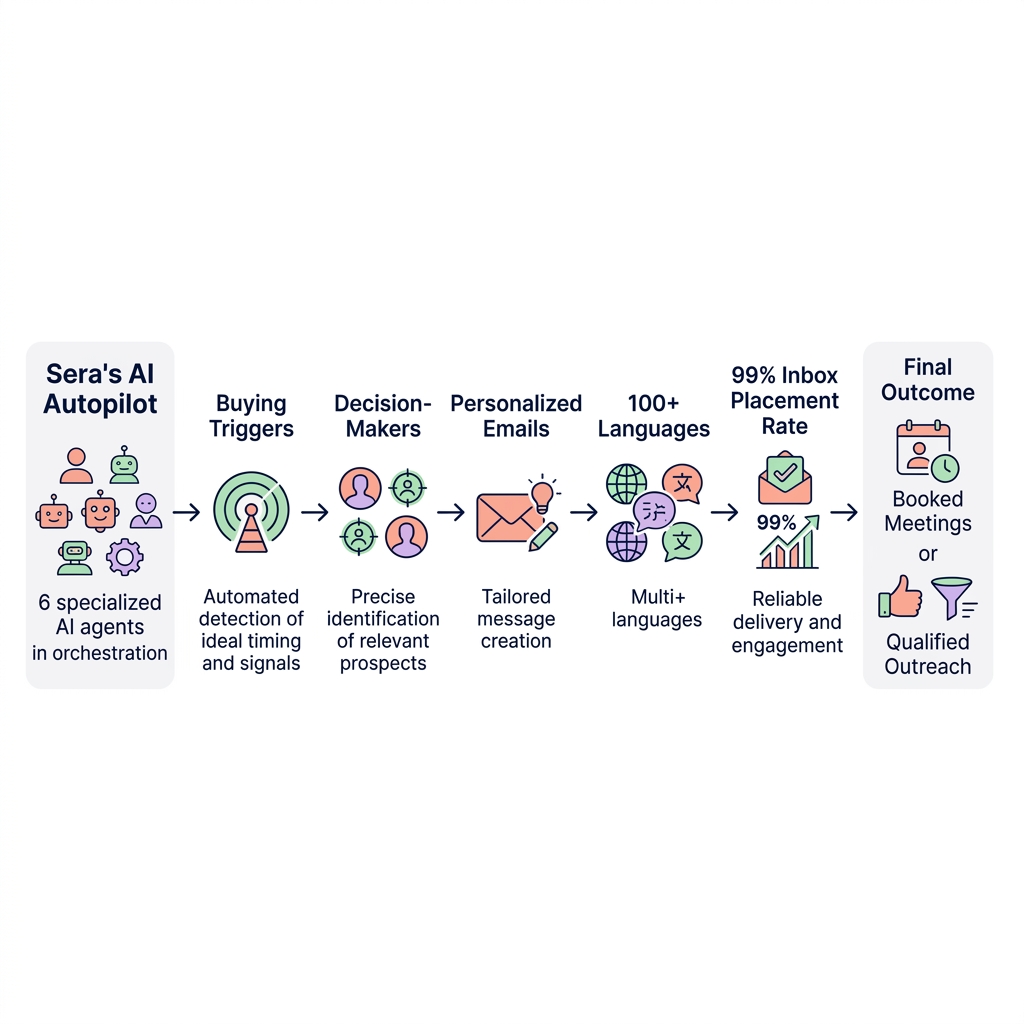
- A List Building Agent and Enrichment Engine create ultra-targeted lists using data from over 300 million companies.
- A Research Analyst finds specific relevance and timing signals to ensure your message arrives at the right moment.
- A Deliverability Guard protects your sender reputation, maintaining a 99% inbox placement rate by pacing outreach and warming domains.
- An Outreach Writer crafts multilingual messages that resonate with local buyers in their native language.
Choosing the right path for your revenue goals
If you have a dedicated sales operations team and need a highly customizable data engine, Clay is a powerful choice for building complex prospecting workflows. If you have a smaller team that needs an affordable, all-in-one engagement platform for high-volume outreach, Apollo.io remains a strong contender.
However, if your goal is to book meetings for high-value deals without adding more “SDR tax” to your team’s plate, an autonomous solution is more efficient. By shifting from being a software operator to a sales closer, you can focus on building relationships while AI handles the groundwork of finding and qualifying leads.
To see how you can automate your entire prospecting workflow and fill your calendar with qualified meetings, explore the capabilities of Sera’s AI agents or view our outreach pricing plans.
Ready to stop managing tools and start booking meetings? Book a free consultation with Sera today.