


Did you know the average B2B manufacturing sales cycle takes 130 days to convert a prospect into a customer? When you expand internationally, managing long sales cycles alongside complex cross-border outreach can quickly drain your GTM team’s resources.
Navigating long B2B sales cycles
B2B deal cycles are notoriously complex. Research shows that 87% of B2B technology purchases are completed within six months, but complex deals involving multiple decision-makers routinely drag on for months or even years. For industrial manufacturers, the timeline is even more daunting. A study by Focus Digital revealed that it takes an average of 130 days to convert a manufacturing prospect from a database contact into a customer.
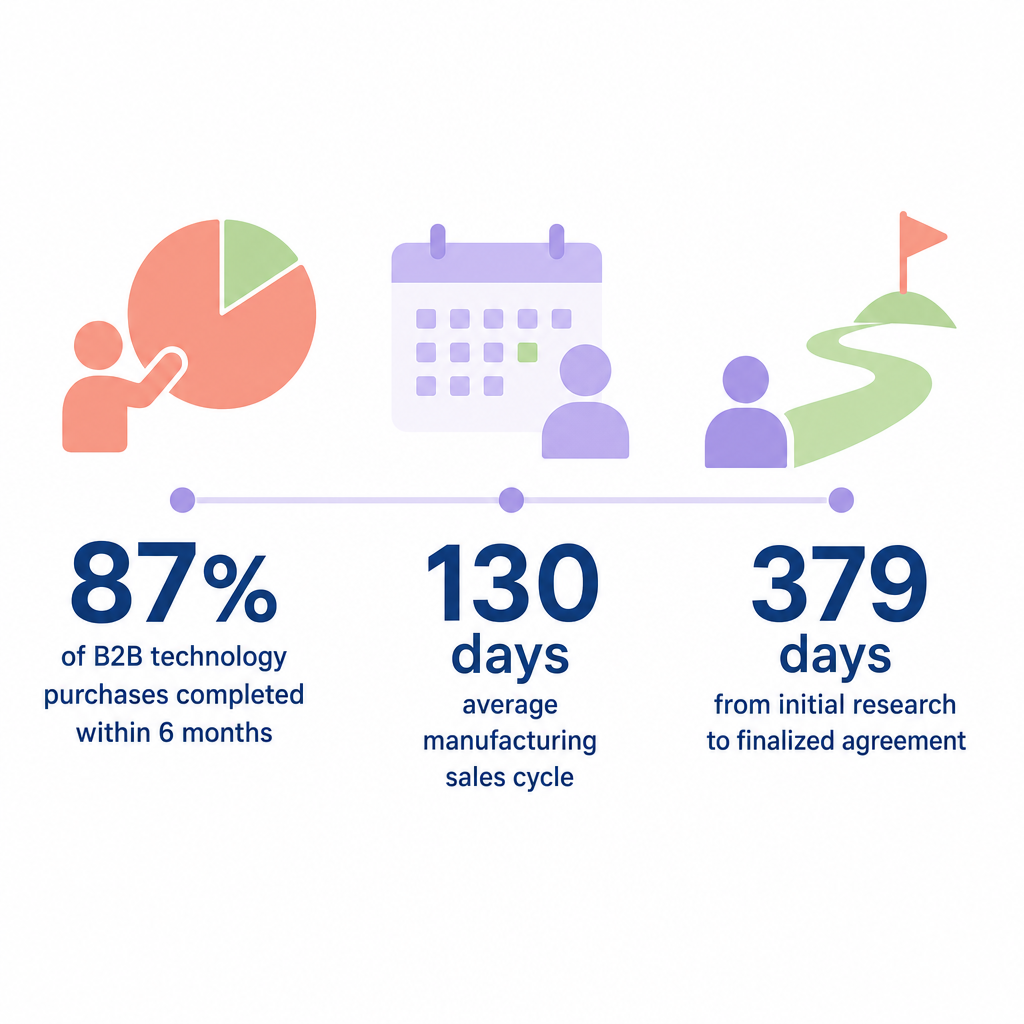
Furthermore, research by Dentsu shows that the journey from conducting “initial research” to a finalized agreement takes an average of 379 days. To manage these long timelines, you need a robust, scalable global sales strategy that maintains momentum without exhausting your sales representatives.
Overcoming language and cultural barriers
Expanding into new territories requires more than translating your English sales decks. Cultural differences directly dictate how buyers respond to your outreach, how long they take to evaluate a proposal, and whether they trust you.
Before launching any campaign, you must identify whether your target market is transactional or relationship-driven:
- Transactional cultures: Business moves rapidly with a heavy focus on immediate efficiency.
- Relationship cultures: Building trust and personal connections is essential before any commercial agreements can be finalized.
If you rush a deal to meet an internal deadline in a relationship culture, it can be perceived as distrustful. To avoid friction, adapt your messaging using these guidelines:
- Avoid slang and idioms: Shun buzzwords, jargon, and flowery talk. Phrases like “touching base” do not translate well and can be easily misinterpreted by non-native speakers.
- Tailor message depth: German prospects typically demand detailed technical specifications and data security compliance. Italian or French prospects respond better to relationship-building and local success stories.
- Localize your content: True localization goes beyond translation. Implementing strategies for multilingual sales messages helps ensure you respect regional business norms.
Managing time zone coordination across regions
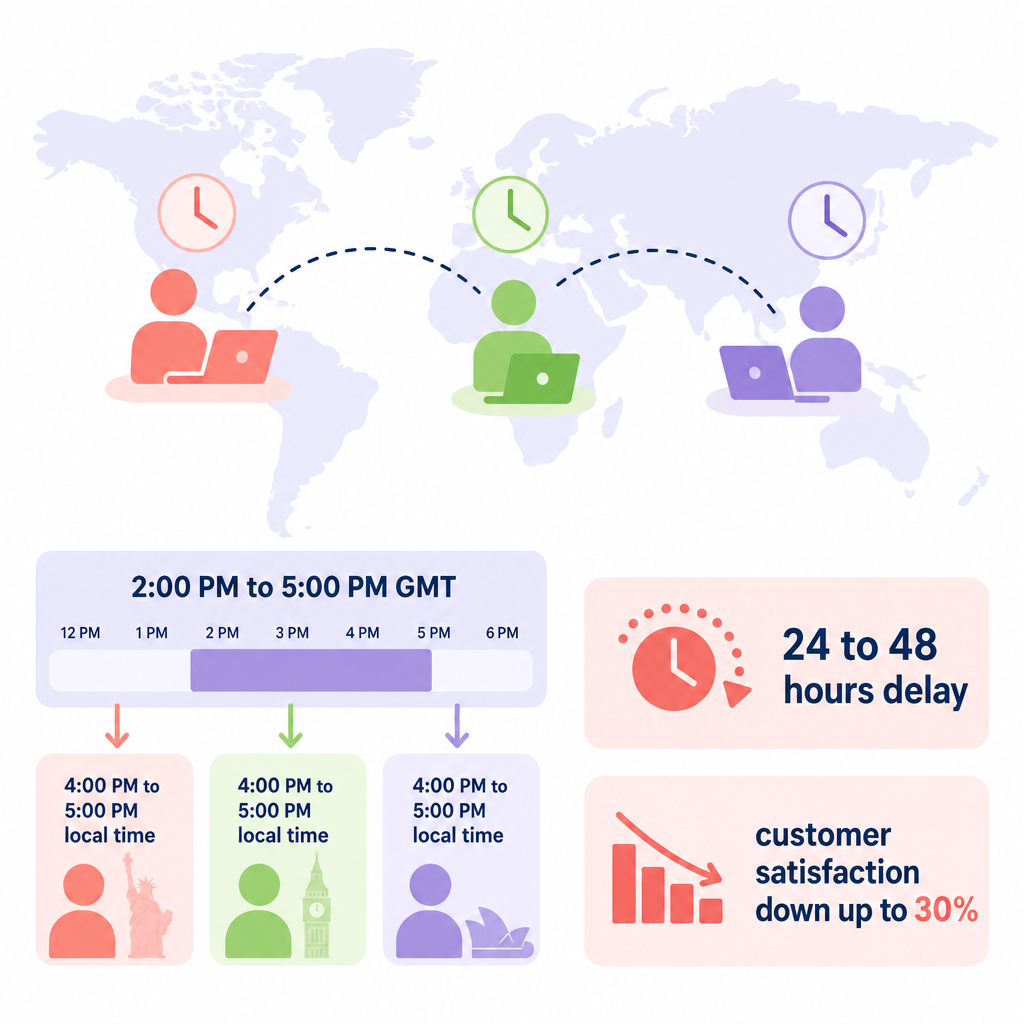
Operating across continents introduces scheduling and communication delays that can stall deals by 24 to 48 hours. This misalignment can damage sales momentum and lower customer satisfaction by up to 30% when buyers do not receive prompt responses.
To prevent these delays, your GTM team must master time zone management for global sales.
- Leverage optimal timing windows: Contacting prospects between 4:00 PM and 5:00 PM their local time can increase success rates by up to 71%.
- Schedule intelligently: If you are based in the UK and targeting the US East Coast, plan your outreach and calls between 2:00 PM and 5:00 PM GMT to maximize overlap.
- Automate scheduling: Use scheduling tools that adjust to your prospect’s local time zone, reducing friction and avoiding endless back-and-forth emails.
Keeping global outreach out of the spam folder
If your emails do not land in the inbox, your outreach volume is meaningless. Deliverability studies show that 17% of cold emails never reach the inbox due to poor technical authentication and domain setup.
To safeguard your sender reputation during international campaigns, you must implement a rigorous email deliverability strategy:
- Set up technical authentication: Ensure your SPF, DKIM, and DMARC records are correctly configured. Properly authenticated emails are up to 70% less likely to be marked as spam.
- Warm up new domains: Never send bulk outreach from a brand-new domain. Start with 10 to 20 emails daily and increase your volume by 10% to 15% weekly.
- Monitor your bounce and complaint rates: Keep your hard-bounce rate below 2% and your spam complaint rate below 0.1% to preserve your sender reputation.
For a specialized approach in industrial sectors, look at specific guidelines for cold outreach for manufacturing to ensure your technical infrastructure matches your target audience.
Balancing automation with the human touch
To scale without losing the personal connection required for complex industrial deals, you should adopt a balanced hybrid sales model. This approach divides your GTM activities between automated systems and human expertise:
- Automate initial touchpoints: Use AI-driven multi-channel outreach to handle lead generation, initial native-language outreach, and routine follow-ups.
- Reserve humans for high-value tasks: Let your experienced sales representatives focus on relationship-building, complex negotiations, and final cultural quality control of AI-generated content.
- Build structured sequences: Rather than relying on single cold emails, build an outreach sequence that includes 8 to 10 actions over 12 to 15 business days. Use a mix of channels, such as email, LinkedIn, and phone calls. This multi-channel approach can raise response rates by up to 40% compared to email alone.
Integrating regional data and systems
Fragmented data across regional CRMs remains a major bottleneck. When expanding, your marketing, sales, and localized CRM systems must be tightly integrated to avoid sending duplicate or irrelevant messages.
- Choose multilingual-capable systems: Your pipeline management tools should support multilingual AI for global lead generation.
- Consolidate prospect data: Maintain a single source of truth for your prospect interactions. For instance, manufacturers like Viking Window use unified systems to successfully open deals across diverse European markets like Germany, Poland, and Finland.
- Use intent signals: Track real-time buying signals like hiring, market activity, or regulatory changes to reach prospects when they are most likely to engage.
How to scale your global outreach
If your team is looking to expand globally, a phased approach will prevent common operational missteps:
- Audit your current CRM data sources and target markets.
- Select two or three high-priority language markets to run a pilot campaign.
- Implement specialized AI tools for multilingual sales messaging to manage localization without adding headcount.
- Measure performance indicators – such as regional conversion rates, response times, and sales cycles – against localized benchmarks rather than global averages.
Building a global GTM pipeline does not require massive manual effort or generic spam campaigns that alienate international buyers. By combining deep research, strict deliverability safeguards, and native-level multilingual messaging, you can scale your pipeline predictably while your reps focus purely on closing deals.
Sera offers a fully coordinated agentic sales system featuring six specialized AI agents that automate list building, enrichment, research, decision-maker identification, writing, and deliverability monitoring. To see how you can secure high-quality meetings across 100+ languages with zero manual SDR groundwork, book a free consultation with the Sera team today.