

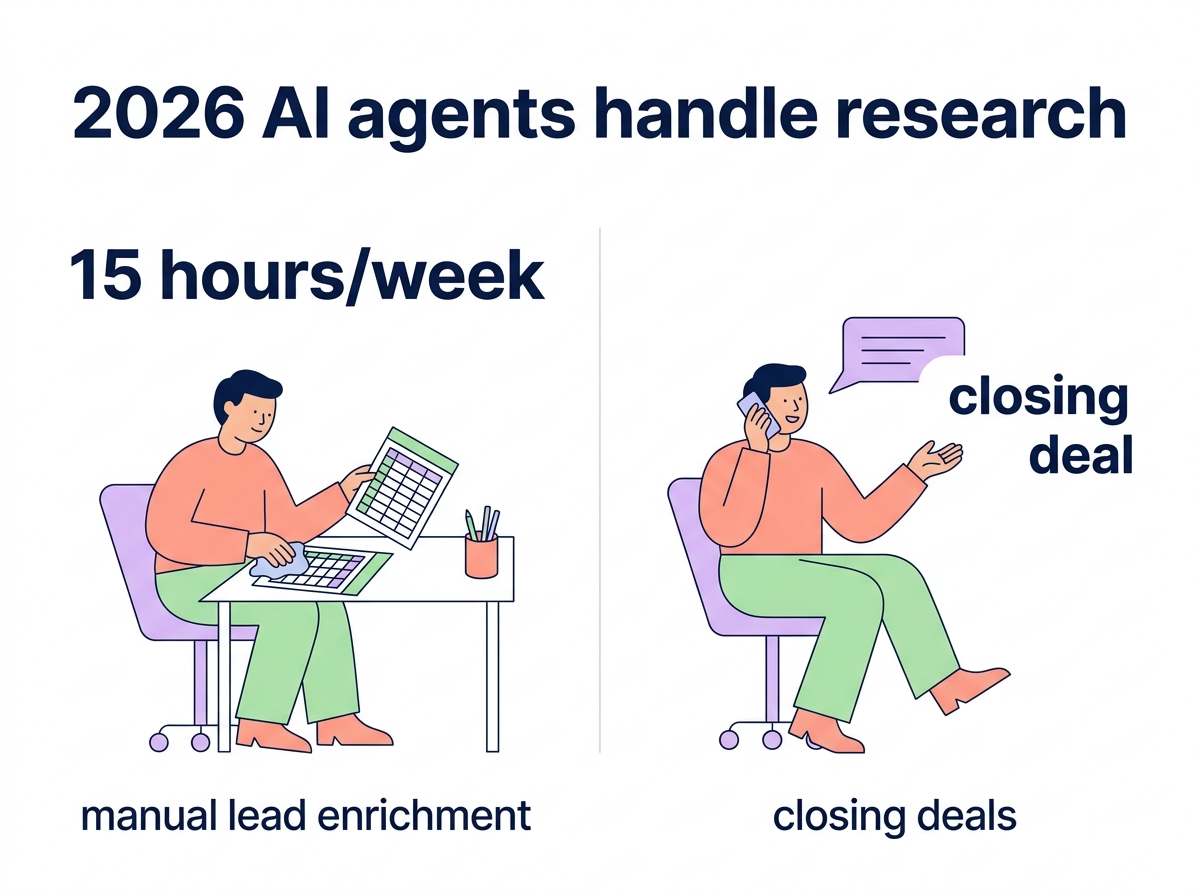
Are your sales reps spending 15 hours a week cleaning spreadsheets instead of closing deals? In 2026, manual lead enrichment is a bottleneck you can’t afford. Modern AI agents now handle the research, allowing your team to focus strictly on high-value conversations.
Why manufacturing leaders are moving beyond Clay
Clay has become a popular choice for sales teams due to its “waterfall” enrichment, which pulls data from over 130 sources. However, for many manufacturing firms, the platform introduces a high degree of technical complexity. You often need a dedicated operator just to manage the workflows. In an industry where sales cycles typically last 90 to 180 days, your team’s time is better spent building relationships with distributors and partners rather than debugging data scrapers.
The manual work required to verify industrial signals – like plant expansions or new equipment filings – often leads to what experts call an “SDR tax.” This is the hidden cost of paying a skilled salesperson to act as a data entry clerk. By 2026, the market has shifted toward agentic AI that doesn’t just find data but understands the context behind it.
The best alternatives to Clay in 2026
If you are looking for a prospecting solution that fits your specific industrial needs, several platforms offer different balances of data depth and automation.
Sera: The autonomous sales autopilot
Sera represents a shift from “tools you operate” to “systems that work for you.” Unlike Clay, which requires you to build the logic yourself, Sera is a human-supervised AI Autopilot. It uses six specialized AI agents to handle roughly 93% of the manual prospecting work.
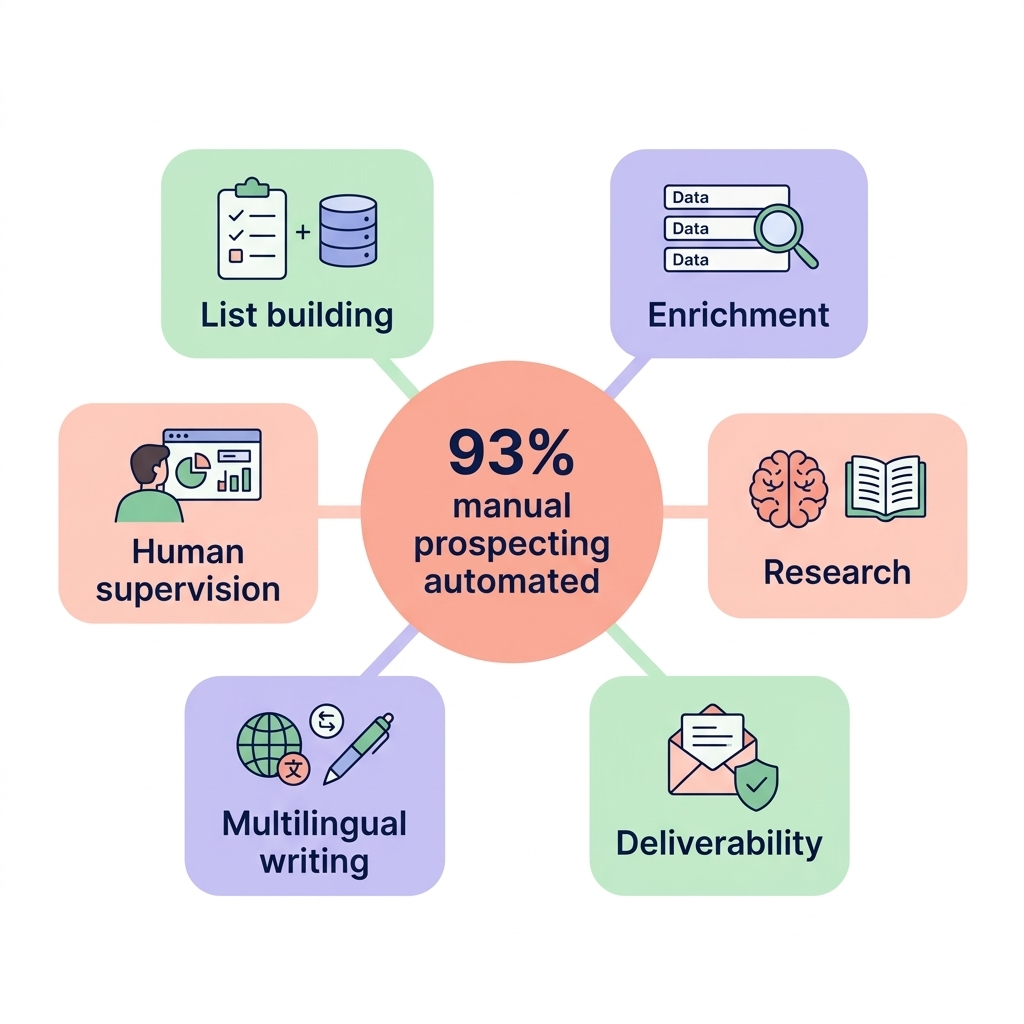
- A List Building Agent identifies ultra-targeted prospects from a database of over 1 billion professionals.
- An Enrichment Engine adds firmographics and technical data specific to your industry.
- The Research Analyst scans for genuine buying signals, such as facility upgrades or hiring trends.
- A Deliverability Guard maintains a 99% inbox placement rate, protecting your domain reputation from the risks of high-volume spam.
- The Outreach Writer crafts messages in over 100 languages, ensuring your international expansion feels local and professional.
This system is designed for deals worth €10k or more, where quality and research-heavy outreach matter more than mass-blasting generic emails.
Apollo.io: The all-in-one engagement platform
Apollo.io is a strong contender for mid-market teams that want their database and sequencing tools in a single place. While Clay requires you to export data to a separate sending tool, Apollo handles the entire lifecycle from discovery to the final email. It is often more affordable than enterprise options, with tiers starting around $49 to $149 per user.
However, it lacks the deep research automation of “Claygent,” the agent used by Clay to scrape specific website data. Many teams find that Apollo.io’s outreach features optimize for volume rather than the surgical precision required for complex manufacturing accounts. If your team has 1–5 reps and needs simplicity over deep customization, it remains a reliable choice.
Cognism: Precision data for international markets
For firms expanding into Europe or the UK, Cognism is often the gold standard. Unlike most American-centric databases, Cognism focuses on GDPR compliance and highly accurate mobile numbers. Their “Diamond Data” feature provides phone-verified contacts that are human-checked, leading to a reported 22% call connect rate.
While it does not offer the same workflow automation as Clay, it removes the need for manual data cleaning. The platform integrates deeply with Salesforce and offers flat, usage-unlimited pricing. This makes it a predictable investment for enterprise industrial sales teams who need to reach decision-makers without worrying about credit caps.
Lusha: Streamlined contact discovery
Lusha is built for speed. It is best known for its Chrome extension that allows sales reps to pull contact details directly from LinkedIn profiles or company websites. It is significantly easier to set up than Clay, making it a favorite for solo sellers or lean teams.
The trade-off is that Lusha is primarily a data provider, not a workflow tool. It lacks native sequencing and deliverability monitoring. If your goal is to quickly find a phone number for a plant manager, Lusha is highly effective, but you will still need a separate system to manage your outreach campaigns.
Artisan: The autonomous AI BDR
Artisan moves closer to the “AI employee” model with its flagship agent, “Ava.” Ava is designed to autonomously find leads, research them, and build multi-channel sequences across email and LinkedIn. For high-growth teams with large budgets, this can replace much of the early-stage prospecting labor.
This autonomy comes at a premium, with annual costs often starting around $24,000. While powerful, the platform’s high-volume approach can sometimes produce generic messaging. For manufacturers selling highly technical products, the Artisan review for 2026 suggests that human supervision is still necessary to ensure technical accuracy and maintain brand reputation.
ZoomInfo: The enterprise data warehouse
ZoomInfo remains the legacy leader for North American market coverage. It offers unparalleled depth in company profiles, org charts, and intent signals. For a large manufacturing conglomerate with a dedicated RevOps team, ZoomInfo provides the most comprehensive dataset available.
The barrier for many is the cost, which typically starts at $10,000 to $30,000 annually. It is a heavy platform that requires significant training. In the ZoomInfo vs Cognism comparison, it is clear that while ZoomInfo has the data, it still requires your team to perform the research and write the sequences manually.
Choosing the right prospecting strategy for 2026
The real decision in 2026 is no longer about which database has more names. It is about how much of the prospecting lifecycle you want your team to manage. If you have the technical resources to build complex data waterfalls, Clay is a powerful engine. If you need a fast, affordable way to get reps calling, Apollo or Lusha are safer bets.
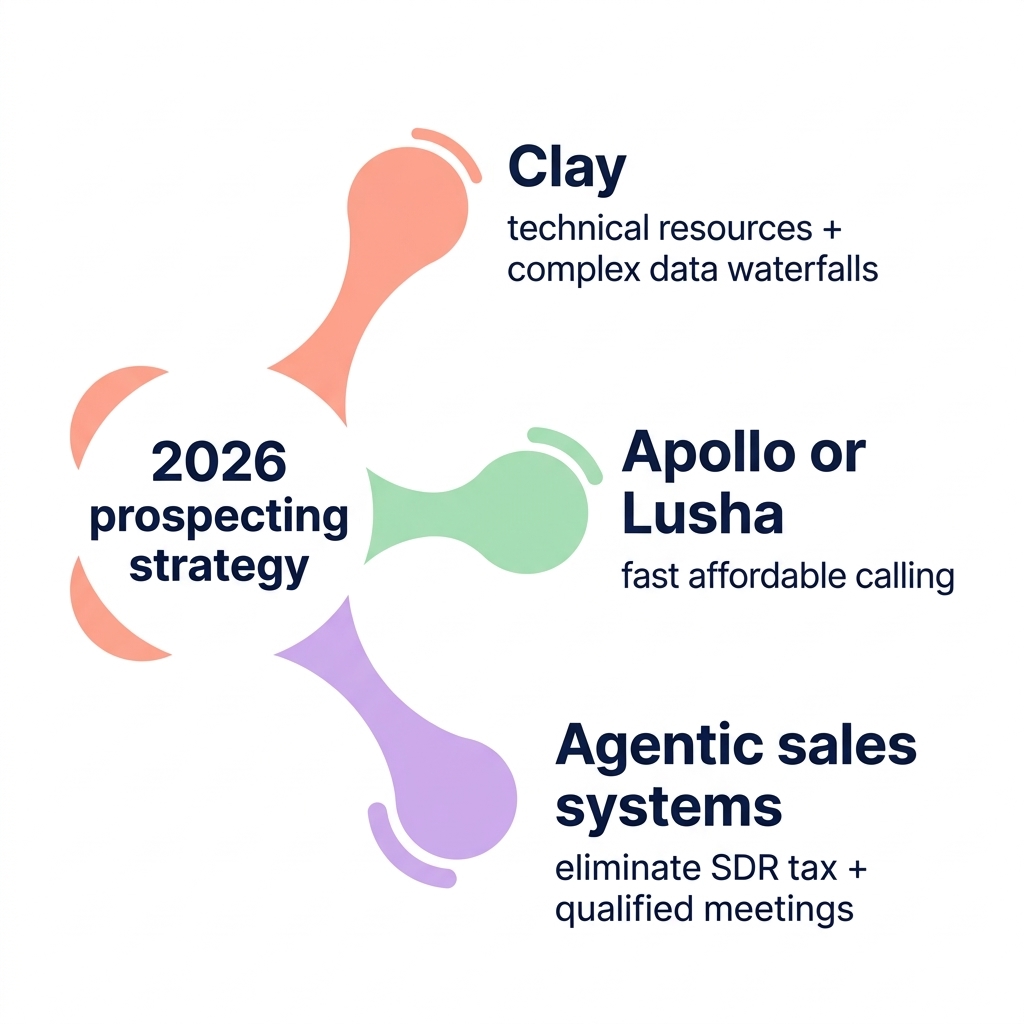
However, for manufacturing executives who want to eliminate the “SDR tax” entirely, the focus is shifting toward agentic sales systems. These systems don’t just hand you a list; they deliver a calendar full of qualified meetings. Instead of paying for a database and then paying a human to click through it, you invest in the outcome.
By automating the research, multilingual writing, and deliverability protection, you allow your technical sales engineers to focus on what they do best: solving customer problems and closing contracts.
Stop managing databases and start booking meetings. Discover how Sera can automate your manufacturing outreach and deliver qualified pipeline today.