

Are you tired of wading through vendor acronyms that all sound the same? Using the wrong document in your procurement process can waste weeks on useless data or lead to misaligned bids that stall your production line.
Understanding the request for information (RFI)
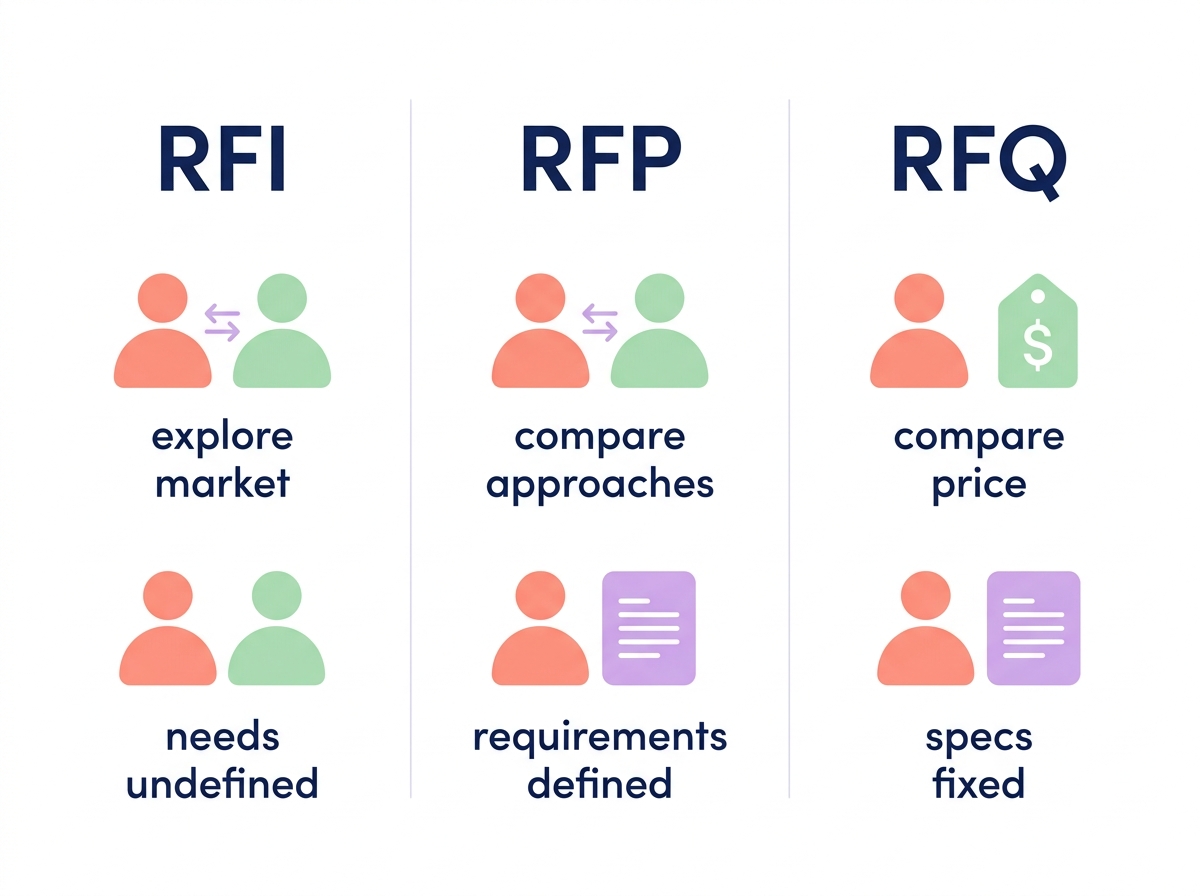
The RFI is your primary exploratory tool when you face a business challenge but are not yet sure what the solution looks like. It serves as a preliminary document to gather supplier capabilities and market data when your needs are still undefined. Think of it as a market scan that helps you understand what is possible before you commit to specific requirements.
In manufacturing, you might use an RFI when exploring new technology like collaborative robotics. You know you want to automate, but you need to see what safety features and integration capabilities exist in the current market. Suppliers typically respond with brochures, case studies, and high-level overviews of their experience. This phase is about discovery and narrowing down a long list of potential partners to those who actually have the expertise you need.
Moving to the request for proposal (RFP)
Once you have defined your requirements but realize that different vendors might take different approaches to the project, you move to the RFP. This document asks for detailed proposals that include methodology, timelines, and technical implementation plans. It is a mid-process tool used after you have used an RFI to filter your options.
An RFP is essential for complex projects like custom equipment manufacturing or a new ERP implementation. You are not just looking for a price; you are evaluating the vendor’s problem-solving skills and their ability to meet your specific objectives. Research shows that using structured documents like an RFP can improve lead qualification by 20% to 45%. It forces vendors to address your technical and financial requirements in a way that allows you to compare their strategies side-by-side rather than just their bottom lines.
Finalizing with the request for quotation (RFQ)
An RFQ is the most prescriptive and structured document in your toolkit. You use it when you have precise specifications, known quantities, and fixed delivery schedules. At this stage, the “how” is already decided, and you are focused almost entirely on price and compliance. It is the final step before signing a contract.
This is the standard approach for MRO supplies or raw materials where the product is commoditized. If you are buying a specific grade of steel sheet, you do not need a proposal on how the vendor will ship it; you just need to know the cost per ton and the delivery date. In more complex scenarios, such as choosing your channel strategy, you might use an RFQ for final volume pricing once you have qualified a partner’s capacity through an RFI.
How the documents work together in sequence
Most successful procurement cycles follow a natural progression to ensure the best fit for the company. Starting with an RFI allows you to learn about the market, which then informs the detailed requirements you put into an RFP. Finally, once you have narrowed the field to a few qualified candidates who have the right solution, the RFQ helps you secure the best possible pricing.
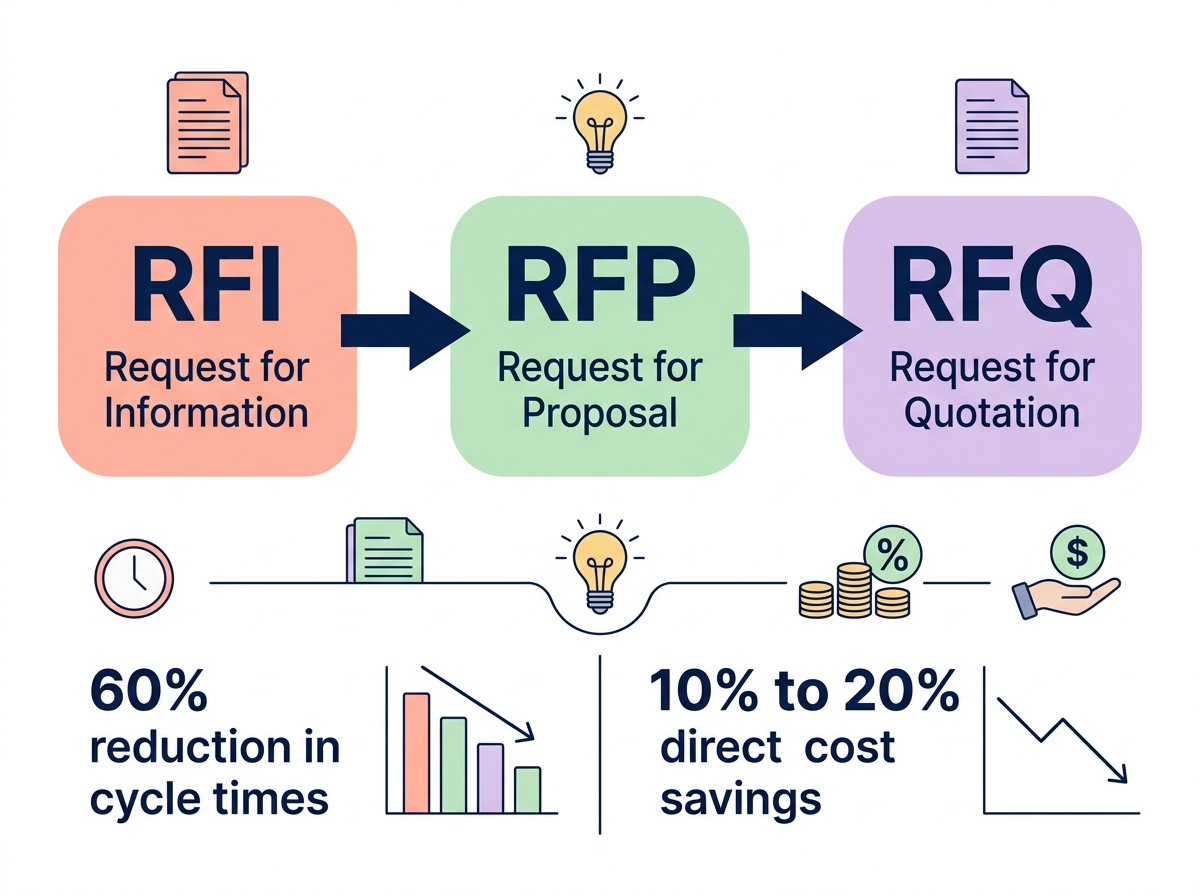
Data from the Hackett Group suggests that automating and structuring these processes can lead to a 60% reduction in cycle times. Furthermore, Deloitte research indicates that a data-driven sourcing strategy can yield 10% to 20% in direct cost savings. Following this sequence prevents you from making the common mistake of asking for a quote before you truly understand what you are buying.
Common pitfalls in manufacturing procurement
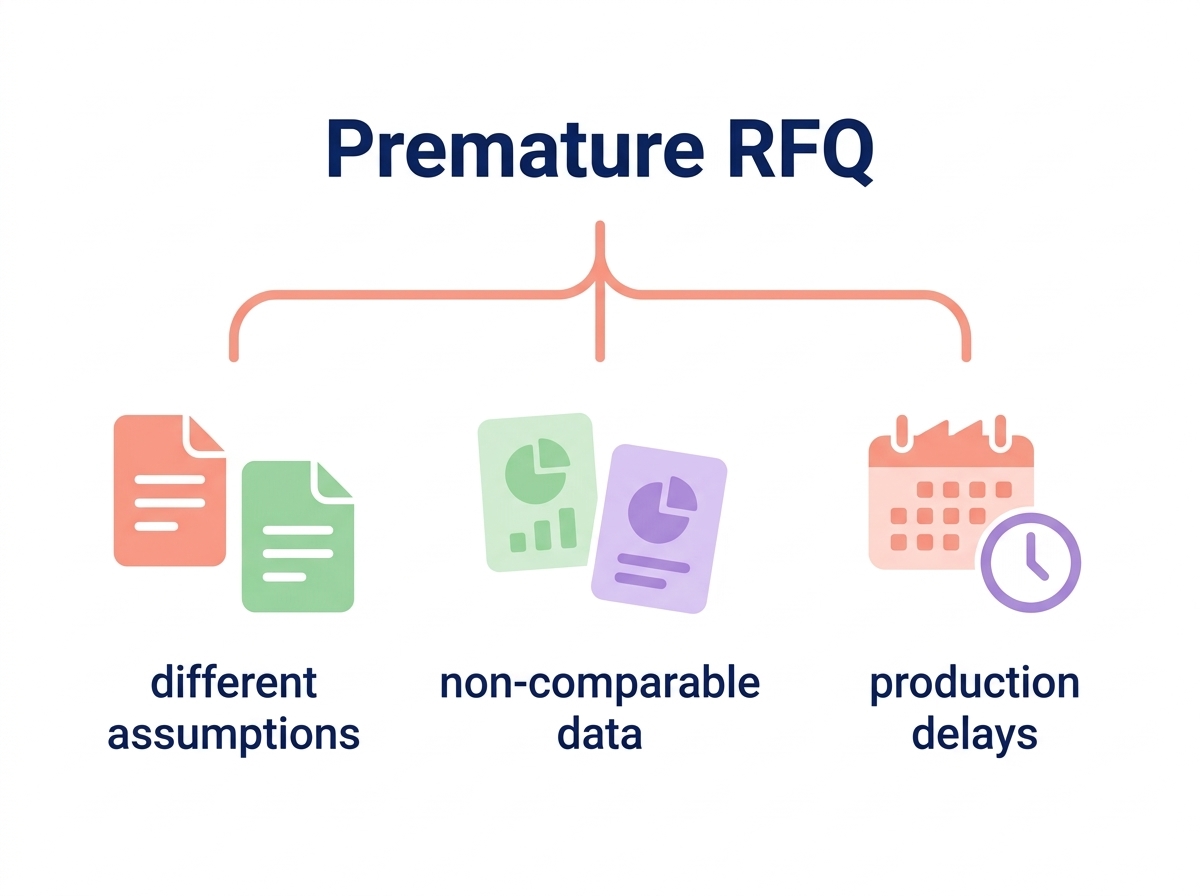
One of the most expensive errors a manufacturing executive can make is issuing an RFQ prematurely. If you ask for firm pricing before your specifications are finalized, you will receive bids based on different assumptions. This leads to non-comparable data, expensive rework, and significant production delays.
Skipping the RFI phase can be equally damaging. When you jump straight to an RFP, you risk receiving proposals that ignore your unstated needs because you didn’t take the time to understand what the market currently offers. On the other hand, using a full RFP for simple commodity items like standard fasteners is an administrative overkill that wastes time for both your team and your suppliers.
Scaling your vendor discovery
Managing these documents manually can quickly overwhelm a lean procurement team. Every RFI requires research, every RFP needs follow-up, and every RFQ must be tracked for accuracy. While you focus on the strategic decisions of vendor selection and contract negotiation, much of the initial legwork in identifying and contacting potential partners can be streamlined.
Sera’s Autopilot is powered by six specialist AI agents working together as one to handle the heavy lifting of outreach and research. A List Building Agent creates ultra-targeted lead lists, while an Enrichment Engine and Research Analyst find the timing and relevance needed to start meaningful conversations with new suppliers or distributors. This allows your team to skip the manual “cold” phase of discovery and move straight into evaluating the solutions that will actually move your business forward.
To see how you can reduce your manual workload and improve your vendor response rates, explore how Sera’s AI agents can automate your outreach.