

Is your sales team losing hours to dead-end calls and bounced emails? In 2026, Cognism and Lusha remain the top contenders for B2B data, but they serve very different goals. Here is how to choose the right platform for your manufacturing outreach without wasting budget.
Understanding the core differences in 2026
Both platforms provide access to massive B2B contact databases, yet they are designed for different types of sales operations. Cognism is built for mid-market and enterprise teams that require high-precision phone data and strict compliance across international markets. It focuses on human-verified records to ensure that your sales reps are actually speaking to decision-makers rather than hitting gatekeepers or disconnected lines.
Lusha, by contrast, is optimized for speed and individual accessibility. It is a favorite among smaller teams and solo sellers who need a plug-and-play solution, often through its Chrome extension, to quickly pull contact details from LinkedIn. While Lusha offers broad coverage, particularly in North America, its credit-based system can become a bottleneck as you attempt to scale your outreach volume.
Cognism: the premium choice for precision and compliance
For manufacturing executives targeting the European market or high-value international accounts, Cognism offers distinct advantages in data reliability. Their Diamond Data feature consists of phone-verified mobile numbers that are manually checked to reduce “wrong number” frustrations. This approach helps industrial sales teams achieve a reported 22% call connect rate, which is significantly higher than the industry average.
Compliance is another area where Cognism leads. The platform scrubs numbers against 14 global Do Not Call lists and prioritizes a GDPR-first approach, making it a safer bet for companies worried about privacy regulations in EMEA and APAC. In a detailed Cognism review 2026, the platform is highlighted for providing over 275 million global contacts with an emphasis on accuracy that supports long-term industrial sales cycles.
Pricing reflects this premium positioning. Cognism typically charges an annual platform fee that can exceed $15,000, but it offers unlimited data access per user. This flat-fee structure is often more cost-effective for established teams that want to avoid the “credit scarcity” mindset and focus on data enrichment for manufacturing without worrying about usage caps.
Lusha: the fast-start option for smaller teams
Lusha is often the first choice for agile teams looking for a low-friction entry into sales intelligence. It is exceptionally easy to set up, and its free tier allows users to test the data quality with 40 monthly credits before committing to a paid plan. The platform has a heavy focus on the North American market, where roughly 60% of its database is concentrated.
However, Lusha’s credit-based model is a primary point of comparison when looking at Apollo.io vs Lusha in 2026. While the initial price point of around $22.45 per user per month is attractive, credits are consumed quickly when trying to build large lists or enrich a CRM. For a high-volume manufacturing operation, these costs can spiral as you pay for additional seats just to get more data.
Lusha also offers intent signals through Bombora, though these are typically reserved for the higher-tier “Scale” plans. It remains a solid tool for finding direct dials quickly, but it lacks the deep, manually-verified precision that characterizes the higher connect rates of Cognism when calling international prospects.
The hidden costs of the manual database model
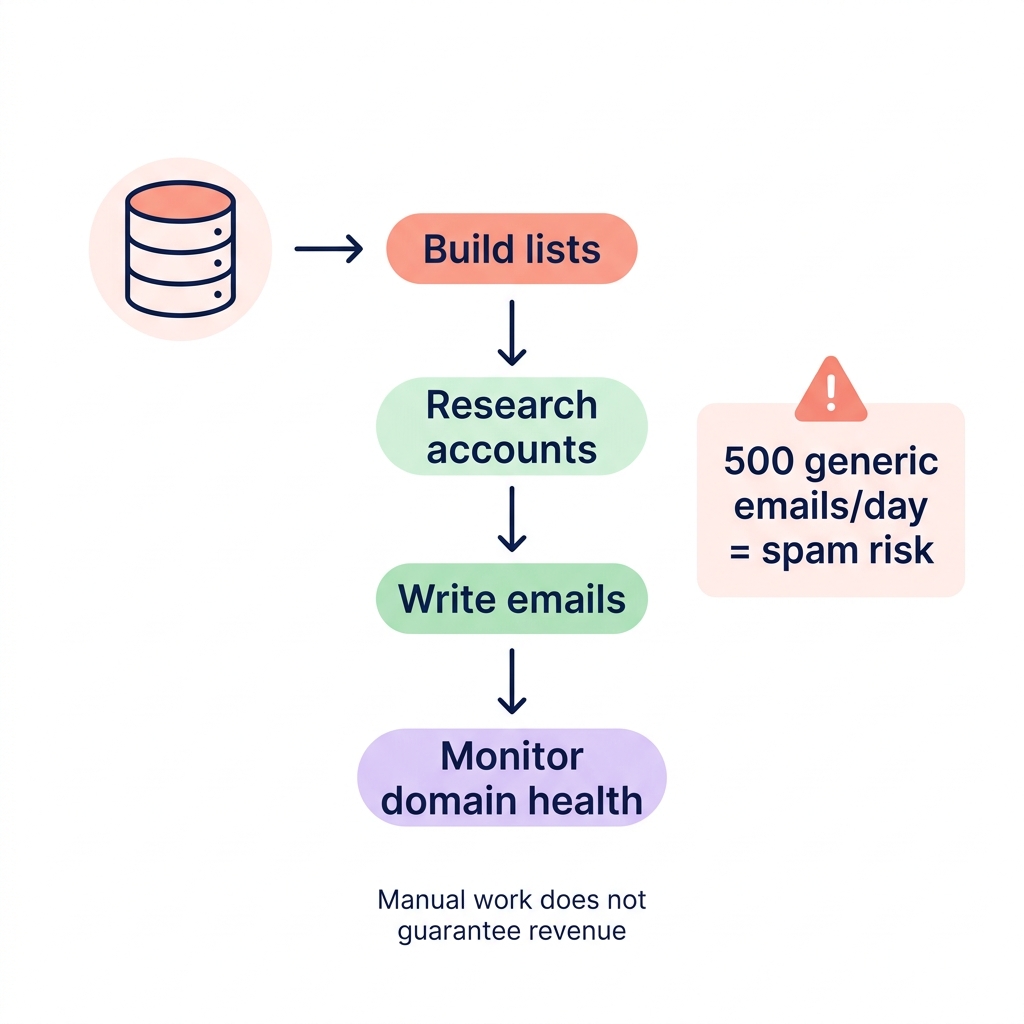
Whether you choose Cognism or Lusha, you are still only buying the “starting line.” In 2026, simply owning a database does not guarantee revenue. Your team must still manually build lists, research each account, write personalized emails, and monitor domain health to ensure messages actually land in the inbox. With inbox providers like Gmail and Microsoft tightening their filters, sending 500 generic emails a day is a recipe for being marked as spam.
Manufacturing sales cycles often last between 90 and 180 days, requiring consistent, high-quality follow-up. This manual “gap” between having data and booking a meeting is where most ROI is lost. High-performing teams are increasingly realizing that buying a spreadsheet of contacts creates a massive operational burden for their sales reps, who should instead be focused on closing deals.
Moving beyond data to autonomous outreach
The 2026 standard for efficient growth has shifted from manual tools to autonomous AI agents. Instead of paying for a database and then hiring an SDR to manage it, manufacturing leaders are using Sera’s AI-driven Autopilot to handle the entire outreach process. Sera does not just provide data; it coordinates six specialized AI agents to execute your sales strategy from end to end.
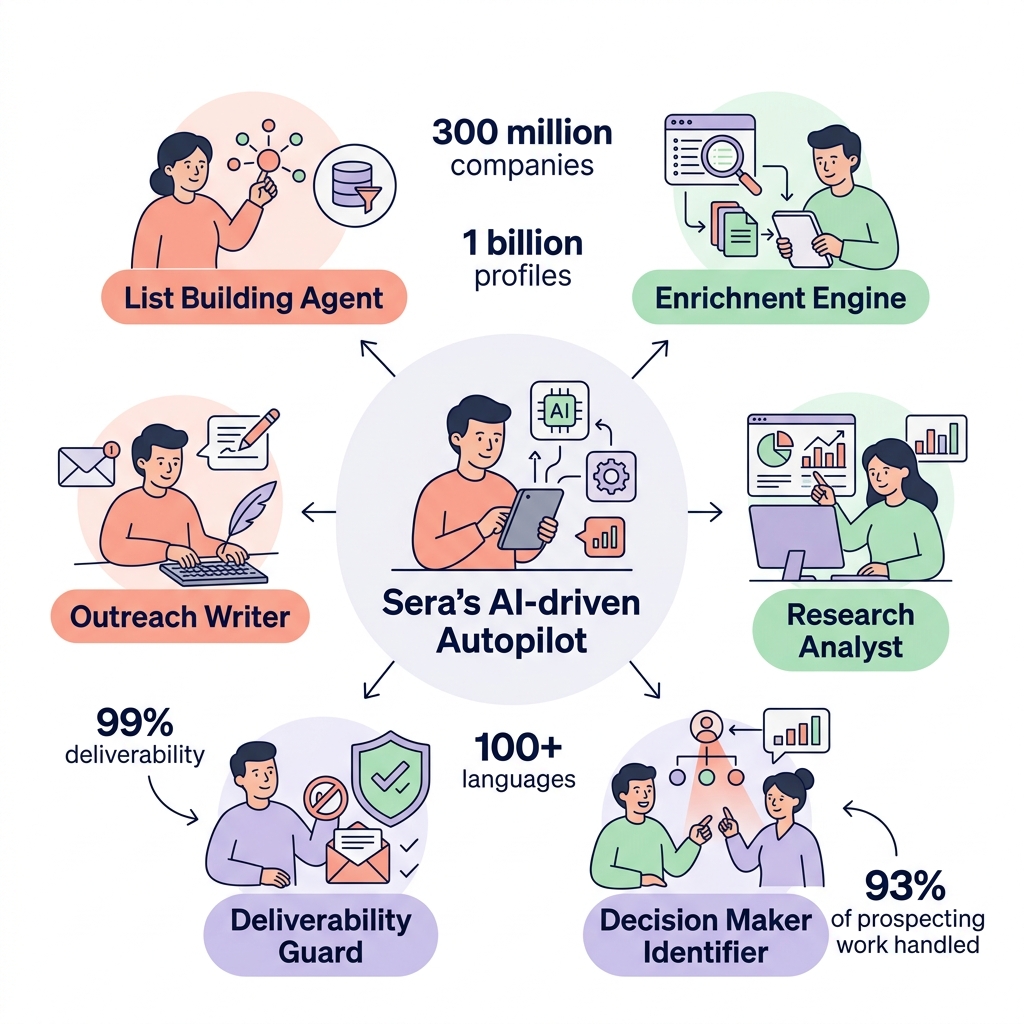
- A List Building Agent sources prospects from a database of 300 million companies and one billion professional profiles.
- The Enrichment Engine and Research Analyst find timing signals and technical details that make your outreach relevant.
- The Decision Maker Identifier confirms you are talking to the person with budget authority.
- The Deliverability Guard protects your sender reputation with a 99% deliverability rate.
- The Outreach Writer crafts personalized, human-sounding messages in over 100 languages.
This system handles roughly 93% of the prospecting work, allowing your technical experts and sales leaders to step in only when a meeting is booked. This approach is already trusted by manufacturers like Viking Window to open deals across multiple international markets without the need for a large, manual sales ops team.
If your priority is filling your calendar with qualified meetings rather than managing a list of phone numbers, it is time to look beyond traditional databases. You can view Sera’s pricing and agent packages to see how an all-in-one service can replace your entire prospecting stack.
To see how autonomous agents can transform your manufacturing outreach, book a free 30-minute consultation with the Sera team.