


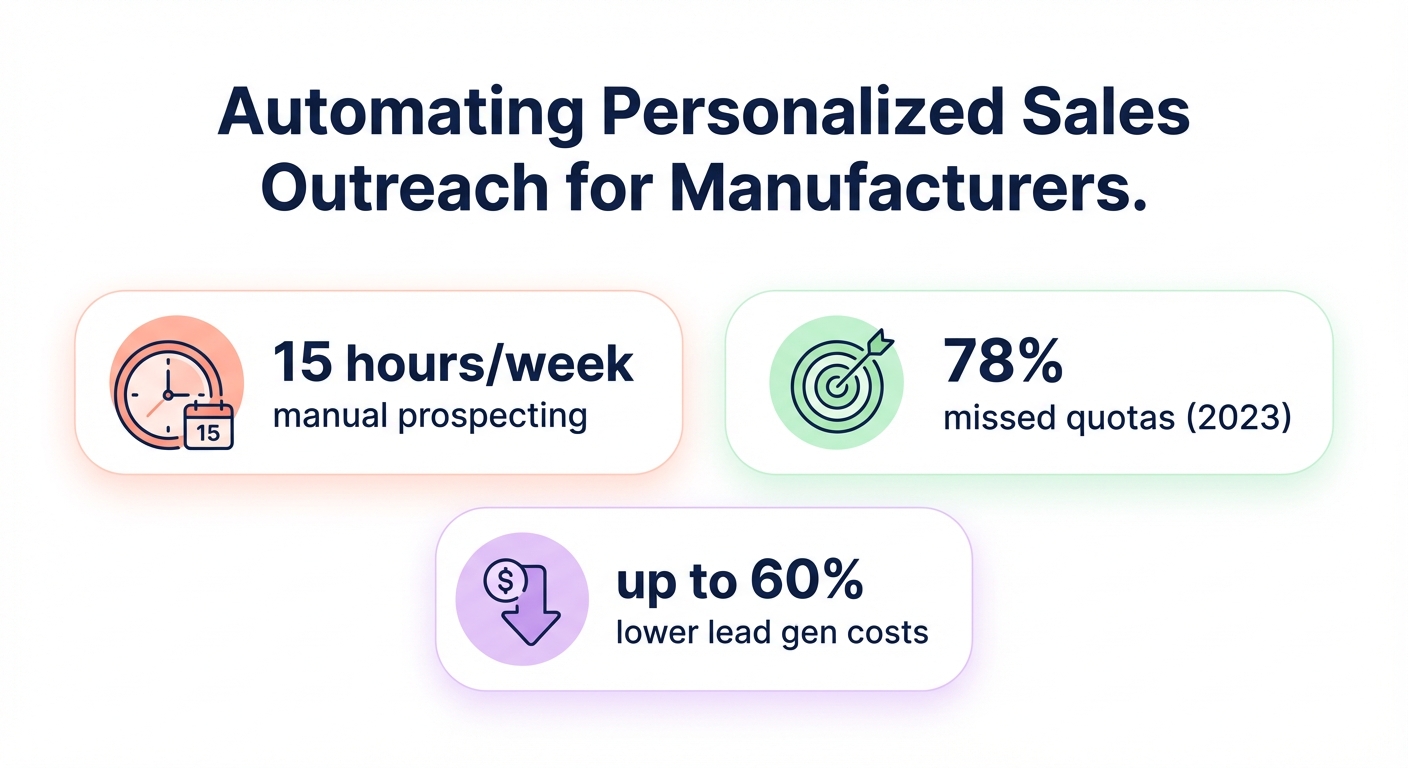
Are you still relying on trade shows and cold calls to fill your pipeline? Manual prospecting often takes 15 hours a week, and 78% of sellers missed their quotas in 2023. AI-driven outreach can double your reply rates while cutting lead generation costs by up to 60%.
The shift from manual prospecting to AI precision
In traditional manufacturing, sales teams often struggle with time-consuming administrative tasks. Research shows that manual data entry comprises over 60% of the workload for sales reps. When your team spends most of their day hunting for contact info or updating spreadsheets, they aren’t closing deals. This inefficiency often leads to a cycle of missed targets and high overhead.
AI-driven automation changes this by handling the groundwork. Instead of mass-blasting thousands of generic emails – which often results in high bounce rates – modern systems focus on cold outreach for manufacturing that is targeted and high-precision. By using specialized AI agents to research accounts and confirm decision-makers, you can move from guessing which leads might convert to data-backed engagement.
Why personalization is no longer optional
Generic “spray and pray” tactics no longer work. In fact, 52% of consumers will abandon a brand if their communications lack personalization. For a manufacturing executive, receiving a generic pitch about “efficiency” is simply noise. However, receiving a message that references their specific facility, recent production increases, or how a peer achieved a 34% reduction in defect rates is a genuine conversation starter.
Personalized emails achieve 29% higher open rates and can boost conversion rates by up to 20%. Using an AI-driven Autopilot allows you to scale this level of detail without increasing your headcount. Specialized agents scan LinkedIn, news reports, and firmographic data to find the specific “hook” that makes your message resonate with a busy decision-maker.
Automating the outreach workflow
Scaling your outreach doesn’t mean you have to sacrifice quality. A successful multi-channel outreach strategy uses AI to manage the entire sequence from start to finish. This ensures your brand stays top-of-mind across different platforms without requiring manual orchestration for every touchpoint.
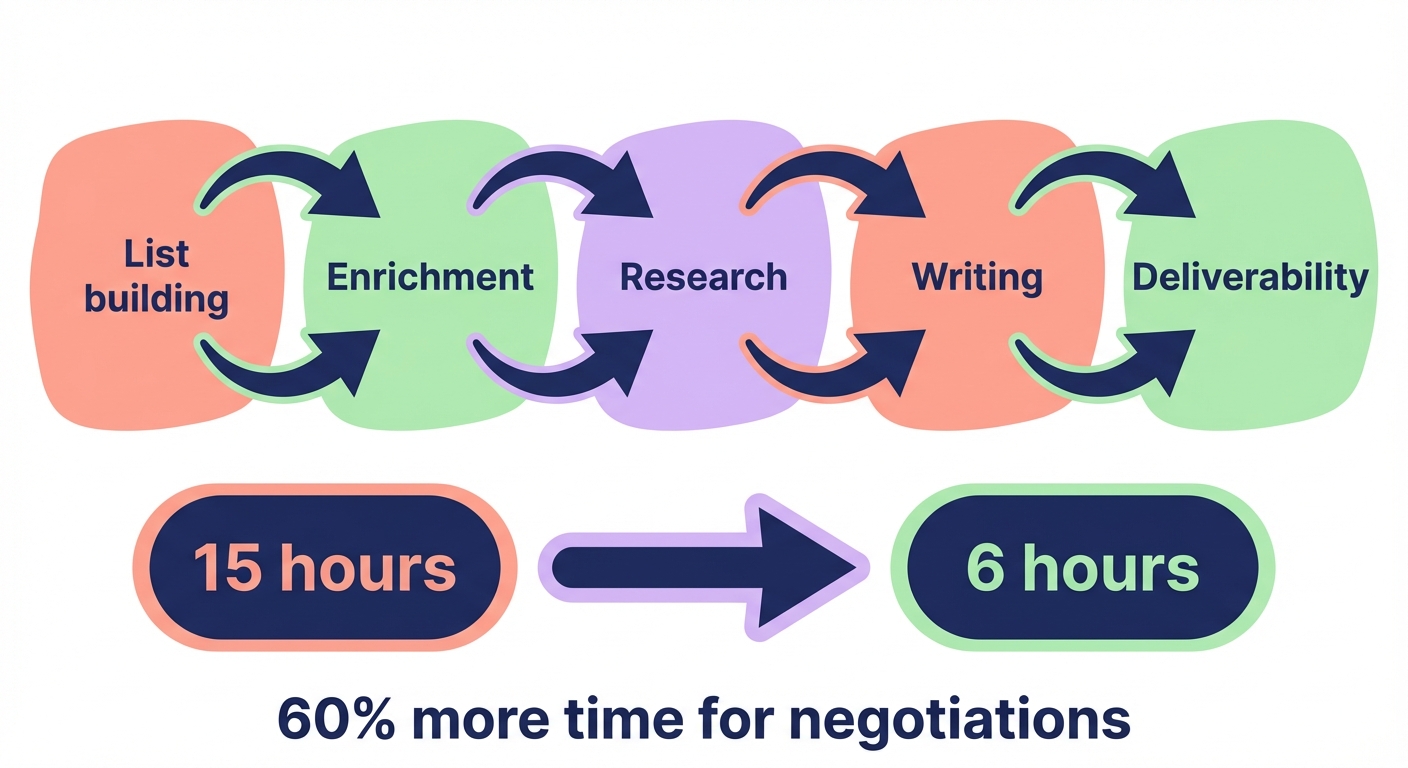
- List building: Sourcing verified companies and decision-makers that fit your specific Ideal Customer Profile (ICP).
- Enrichment: Adding technical specifications, revenue data, and deeper market insights to every contact.
- Research: Scanning the web for buying signals like new facility openings, funding rounds, or leadership changes.
- Writing: Drafting human-sounding emails that feel authentic and relevant to the prospect’s current challenges.
- Deliverability: Using technical safeguards like domain warm-up and address validation to ensure messages land in the inbox rather than the spam folder.
This coordinated approach allows manufacturers to reduce manual prospecting time from 15 hours down to just 6 hours weekly. This shift frees your sales team to spend 60% more of their time on high-value negotiations and closing deals.
Integrating with your existing sales stack
One of the biggest hurdles for traditional companies is fragmented systems or outdated data. For automation to be truly effective, it must integrate with your CRM and existing workflows. Companies that sync their lead generation with their CRM see 21% more marketing-attributed closed deals and generate 30% more annual leads.
Automation should work quietly in the background, updating notes and logging replies automatically. This ensures your sales reps have a complete picture of every prospect’s journey without the manual administrative burden. By using AI to handle the initial research and qualification, you ensure that only high-intent leads – which have a 51% higher conversion rate than traditional leads – reach your sales team’s calendar.
Scaling into new markets with multilingual AI
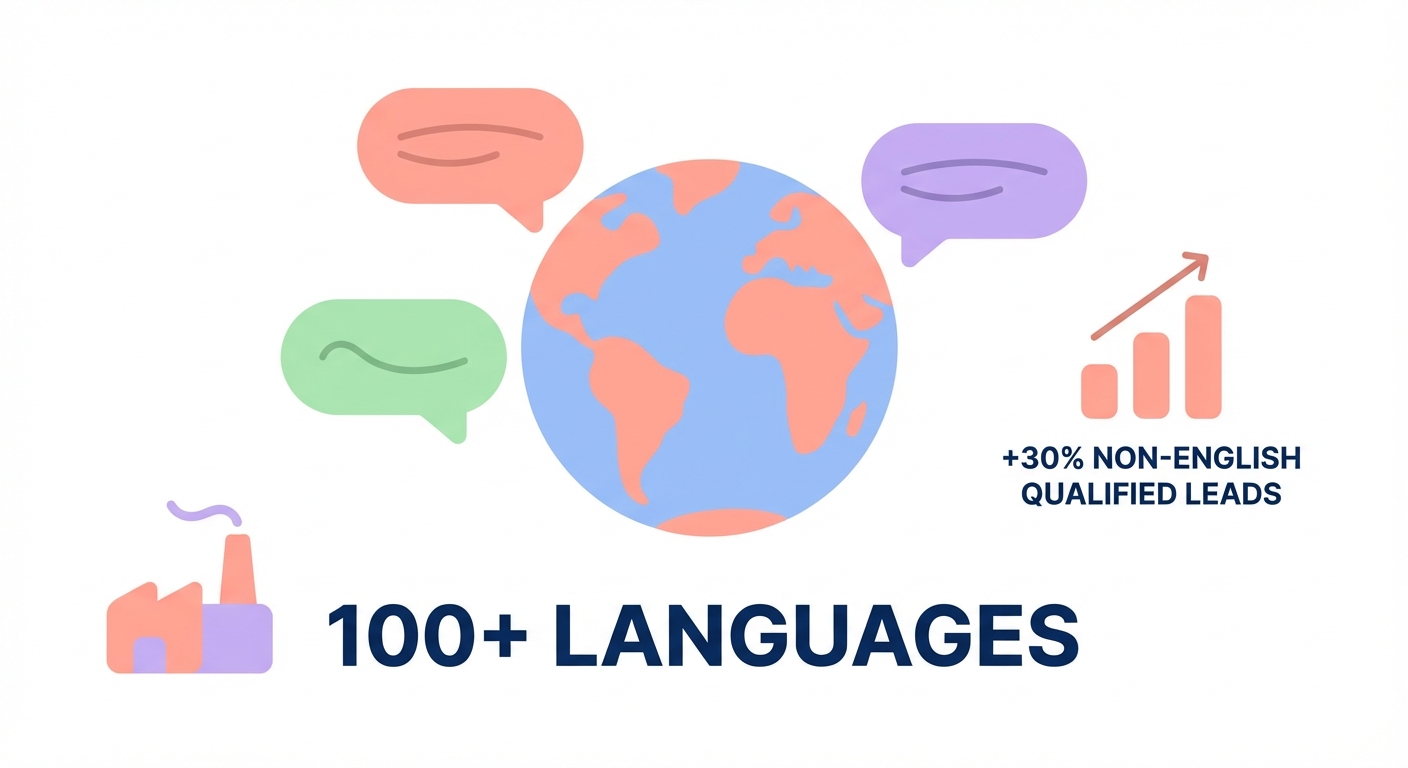
For manufacturers looking to expand globally, language barriers and cultural nuances are significant hurdles. Modern multilingual sales tools allow you to engage prospects in their native language with the correct tone. Whether you are targeting precision engineering firms in Germany or electronics manufacturers in Japan, AI agents can now write and respond in over 100 languages.
This capability has helped companies increase non-English qualified leads by 30%. By adapting messaging to account for regional dialects and business etiquette, you can turn a local manufacturing business into a global exporter. This allows your team to validate new markets quickly without hiring native speakers for every territory.
Drive more predictable revenue
By combining human supervision with machine speed, you can transform your outbound sales from a gamble into a predictable growth engine. Companies using these strategies report up to a 50% increase in lead generation and significantly shorter sales cycles. You no longer have to choose between high volume and high quality. AI gives you the precision to do both at once.
If you are ready to stop doing repetitive sales tasks and start filling your calendar with qualified meetings, explore how Sera’s AI Autopilot can scale your outreach and grow your revenue.