


Are your manufacturing sales emails sitting unread in the wrong inboxes? In industrial sales, contacting the wrong person can cost you months of wasted effort and stalled deals. Here is how to find the exact stakeholders who hold the buying authority.
The rising complexity of the manufacturing buying committee
Industrial sales have changed. You are no longer just selling to an operations manager or a procurement director.
According to Gartner, the average B2B buying group now includes six to ten stakeholders. In larger enterprise deals, that number often exceeds fifteen. Back in 2015, Gartner’s research indicated an average of 5.4 stakeholders. By 2018, Challenger Inc. reported that the buying group had expanded to 10.2.
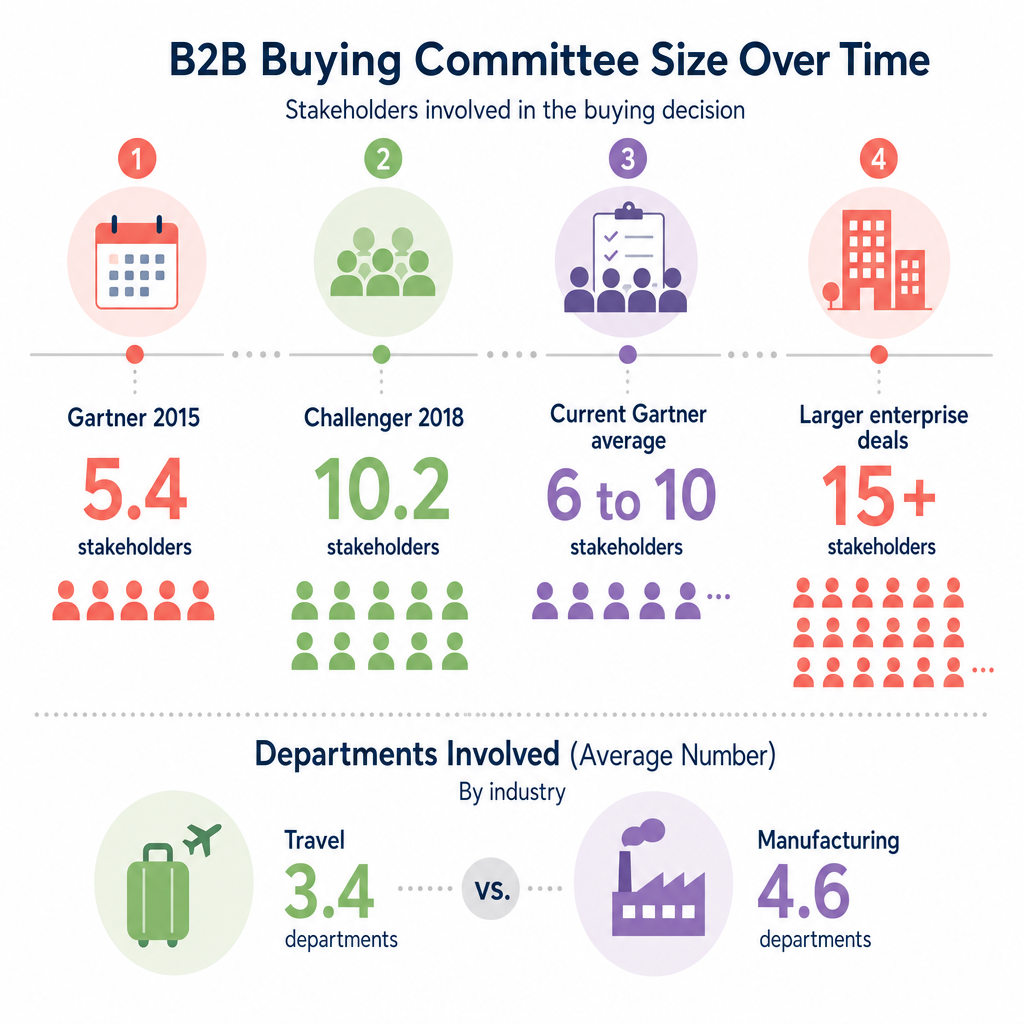
This complexity is especially true in your industry. Between three and five corporate departments weigh in on average B2B purchases. In the travel vertical, 3.4 departments impact buying decisions. In the manufacturing industry, that number rises to 4.6 departments.
To win these accounts, you must know who is at the table. Typically, the buying committee is made up of:
- Engineers assessing technical specifications and compatibility.
- Procurement professionals evaluating cost-effectiveness and contract terms.
- C-suite executives considering how your solution aligns with long-term strategic goals.
Across all business sectors, IT is the department most often involved in buying decisions (32%), followed by finance (31%) and business development (26%). If your sales team only focuses on a single contact, your deals will stall. Understanding how buyers research suppliers is the first step to positioning your company before the committee even forms.
Map the five essential buying roles
Before you pick up the phone or send an email, you must identify who plays which role in the target organization. You cannot treat every contact the same way. You need to segment key stakeholders by their actual influence on the purchase:
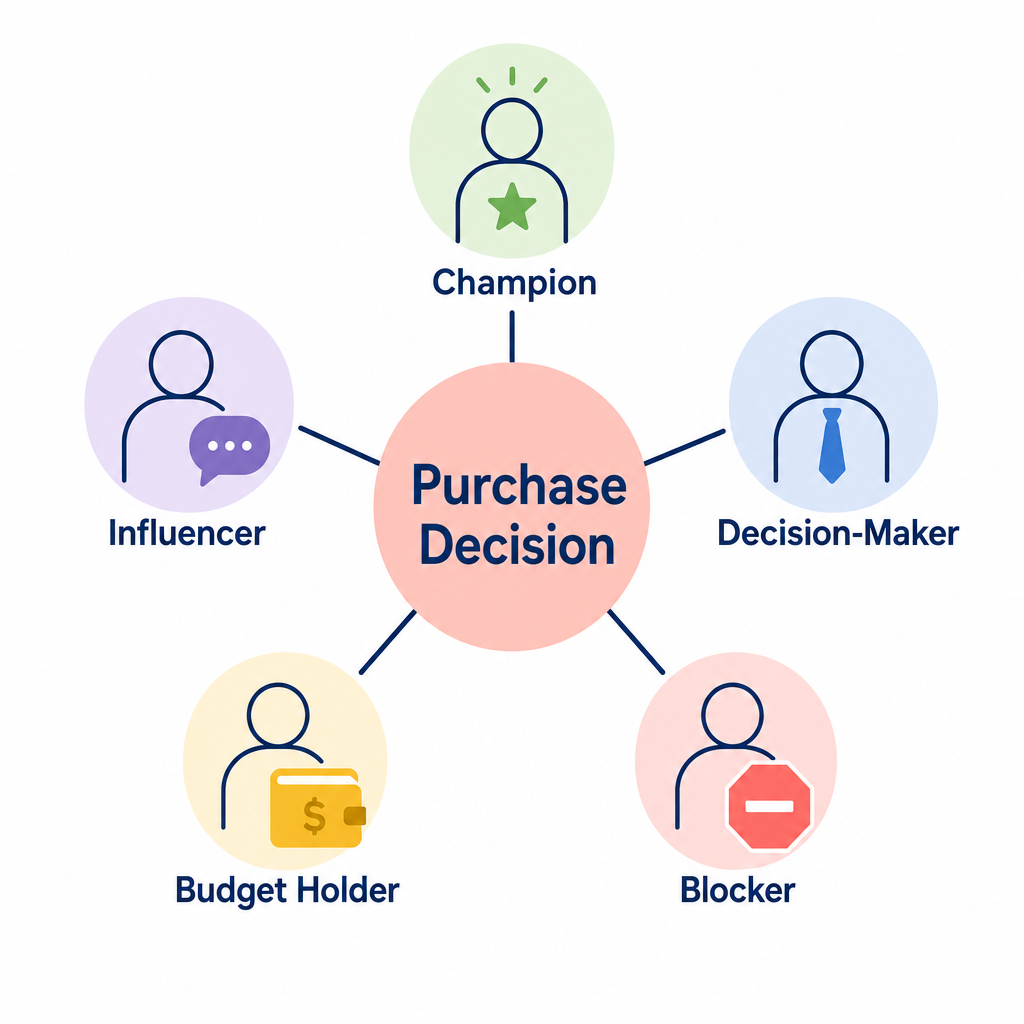
- The Champion: Often a department head or project manager. They want your solution to solve their daily operational headache. They will help you navigate their internal processes.
- The Decision-Maker: Senior leaders (often VP-level or higher) who focus on strategic alignment and overall scalability.
- The Budget Holder: Usually the CFO or Finance Director. They control the capital and care deeply about return on investment (ROI) and total cost of ownership (TCO).
- The Influencer: Technical experts, plant engineers, or daily operators. They evaluate reliability and ease of use.
- The Blocker: Compliance, legal, or IT security officers who can veto a contract late in the sales cycle.
Building detailed buyer personas for industrial markets helps your team recognize these roles early. When you map these personas, you can customize your outreach to speak directly to their specific concerns.
Practical methods to identify decision-makers
Knowing the roles is one thing. Finding the actual names and contact details of the people holding those roles is another. Use these practical strategies to pinpoint the correct buyers.
Ask strategic discovery questions
If you have already established contact with someone inside the target company, use your early conversations to map the power dynamics. Do not guess. Ask direct discovery questions such as:
- “Who has been involved in similar equipment or software decisions previously?”
- “Who else is likely to be affected by this implementation?”
- “Could you walk me through all the steps involved in approving a project like this?”
- “Besides yourself, who else needs to sign off on this project before we can begin?”
Analyze the organizational structure
Look for formal and informal power dynamics. Job titles can be misleading. A “Purchasing Manager” might only handle the paperwork, while an “Operations Director” holds the actual budget. Use tools like LinkedIn and ZoomInfo to build an organizational chart of the target account. Identify who reports to whom to find where the real decision-making power lies.
Sync your digital tools
Manual tracking is slow and leads to errors. Successful sales teams sync LinkedIn Sales Navigator directly with their CRMs. This keeps prospect data, job changes, and relationship history in one central place.
Implementing a clean LinkedIn CRM sync ensures your sales reps spend less time on administrative data entry and more time talking to verified buyers.
Use data and AI to find the right buyers
Modern manufacturing sales teams are moving away from manual prospecting. Instead, they use advanced data tools to find decision-makers automatically.
By integrating CRM data with AI prospect insights, you can spot patterns in how successful deals are closed. AI can analyze your historical sales data to show you exactly which job titles usually initiate, support, or approve your purchases.
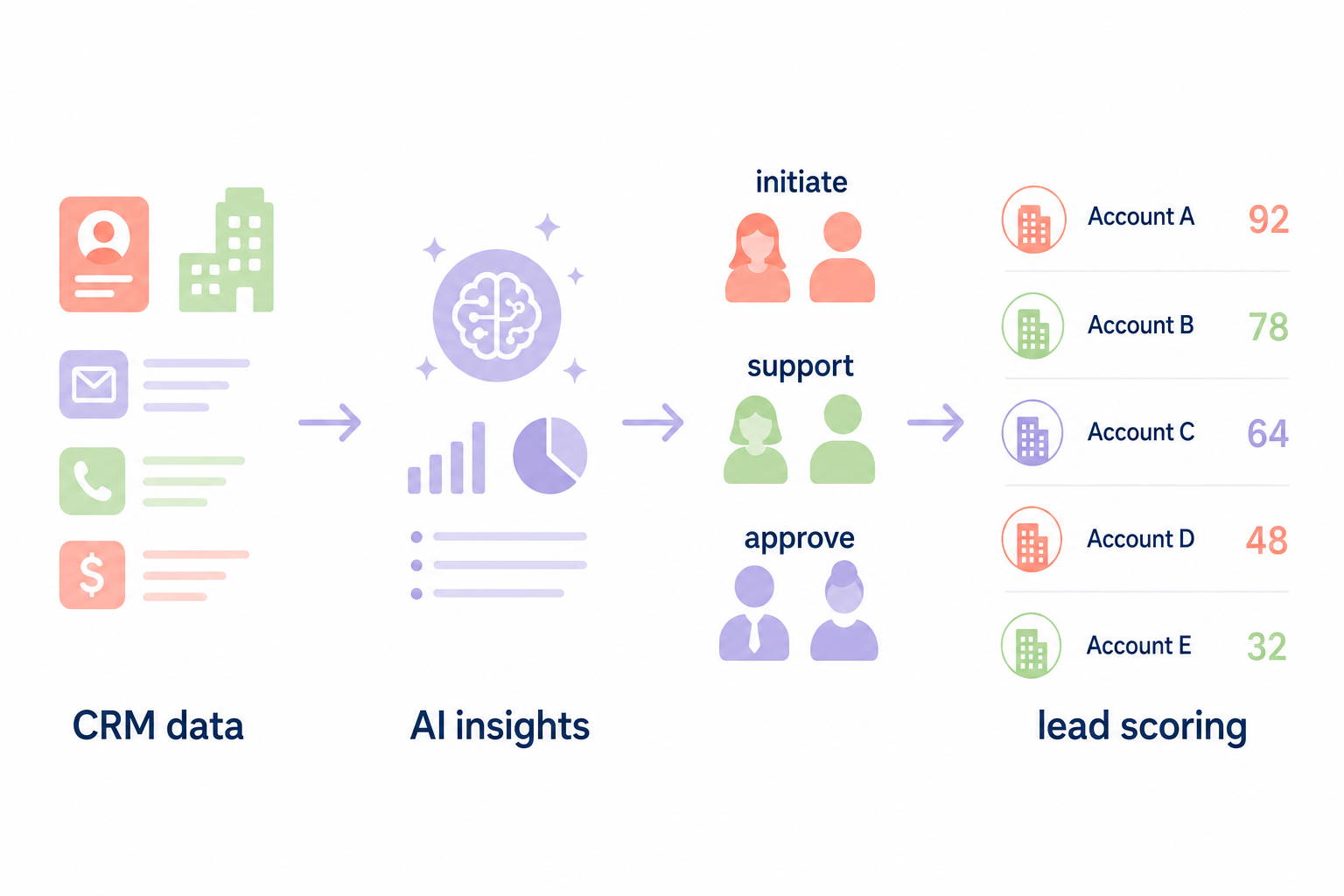
You can also use predictive analytics for sales prospects to score leads based on historical buying behavior. This allows your team to prioritize high-value accounts where the decision-makers are actively looking for solutions.
If you want to skip the manual search entirely, you can access verified prospect lists instantly. Using automated platforms allows you to get verified leads matching your ideal buyer profile in just a few minutes.
Scale your industrial sales outreach
Sellers who rely on single-point contacts in the manufacturing sector will continue to see long sales cycles and dropped deals. To improve your conversion rates, you must identify and engage the entire buying committee early in their research journey.
Mapping out your target accounts, asking the right discovery questions, and utilizing modern database tools will significantly improve your outreach efficiency.
If you are looking to scale this process without hiring a massive team of internal researchers, automated tools can help. You can automate the tedious work of list building, contact enrichment, and decision-maker verification.
Let artificial intelligence handle the heavy lifting of identifying the right buyers so your sales team can focus on what they do best: building relationships and closing deals. Discover how to put your B2B sales outreach on autopilot with Sera.