


Are your manufacturing sales reps still wasting hours chasing cold leads? Today, most industrial buyers complete up to 95% of their journey anonymously, making traditional sales pitches obsolete.
Understanding the modern industrial buying journey
The way industrial buyers source new manufacturing partners has fundamentally changed. Today, more than 70% of B2B decision-makers prefer digital self-service or remote human interactions over old-school, aggressive sales pitches. In fact, research shows that up to 95% of the buying journey happens before a prospect ever contacts a supplier directly. You can read more about navigating this hidden process in our guide on LinkedIn prospecting for industrial sales.
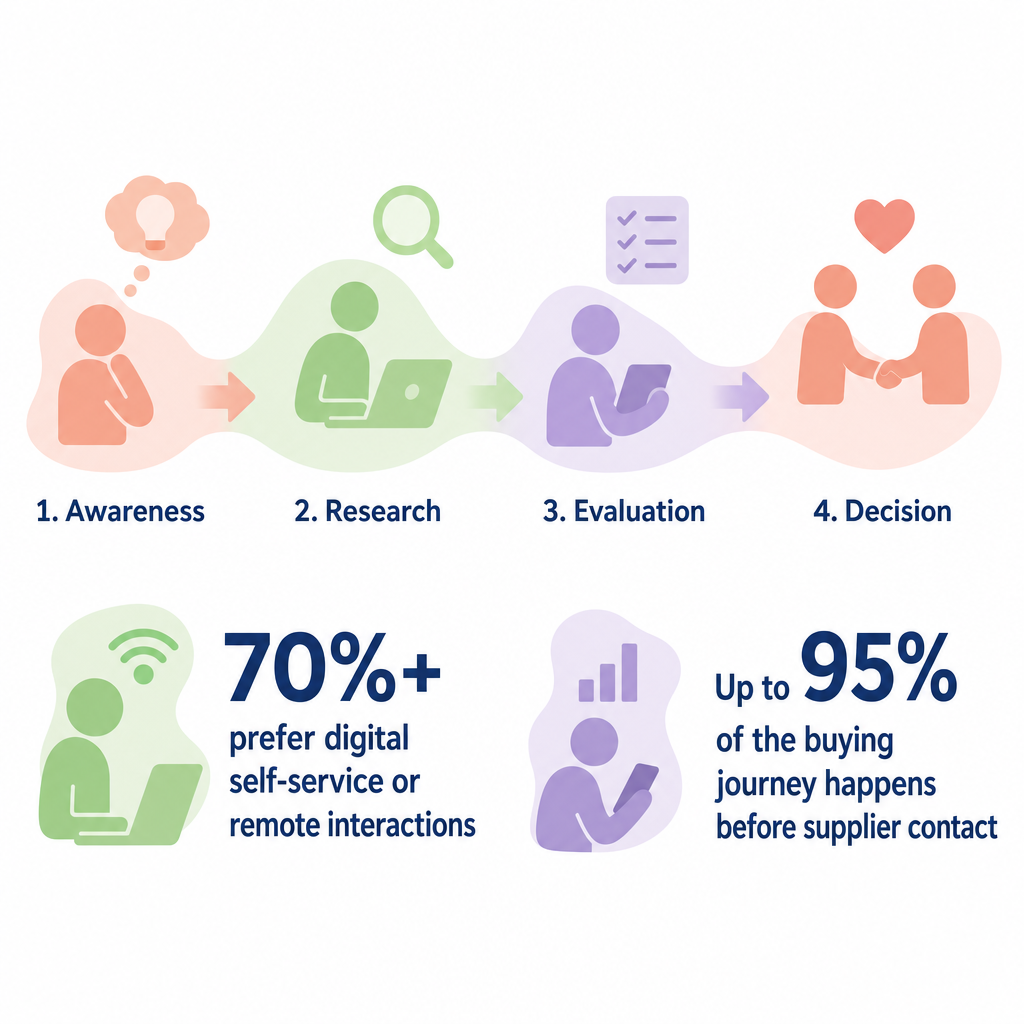
Your prospects are quietly researching your capabilities, certifications, and facility footprint long before they make contact. To win their business, your outbound outreach cannot feel like an interruption. Instead, you must position your company as a credible, problem-solving partner at the exact moment they need you.
Furthermore, industrial buying decisions are rarely made by a single engineer or purchasing manager. Modern B2B buying groups are expanding, often averaging 13 internal stakeholders who influence the final decision. To navigate these complex buying committees, you must tailor your approach to address the unique concerns of the entire outbound sales prospecting process, which typically involves engaging six to ten decision-makers ranging from plant floor managers to risk-averse procurement directors.
Define your industrial ideal customer profile
A successful outbound campaign does not target entire industries. It focuses on a highly refined segment of the market. To build a predictable pipeline, you must define an ideal customer profile that looks far beyond basic company size. Designing a detailed manufacturing ICP template helps your team target the accounts that yield the highest mutual value.
For manufacturing and industrial sectors, a complete profile combines three distinct layers of account data:
- Firmographic and production indicators: Target companies within your specific regions (such as the UK and Western Europe) with optimal operational footprints. Mid-sized firms with 100 to 500 employees or multiple manufacturing facilities are often the most profitable targets.
- Technographic and operational systems: Identify prospects using specific technologies, such as SAP ERP or Fanuc automation platforms. This technographic data indicates they have the digital maturity to integrate with your supply chain.
- Operational compliance and certifications: Filter prospects by critical standards. If you are targeting aerospace, they must hold AS9100 certifications. If you specialize in high-precision engineering, ISO 9001 compliance is non-negotiable.
Once you establish these filters, you can monitor for real-time buying signals. If a target manufacturer recently expanded a facility or secured a new contract, their production load will spike. This is the perfect moment to reach out and offer your support.
Design a multi-channel outreach sequence
Relying on a single communication channel severely limits your outreach. If you only send cold emails, you will miss decision-makers who spend their days on the factory floor or on social networks. An effective strategy uses a multi-touch approach across several platforms to stay top-of-mind.
Using multiple channels can raise your response rates by up to 40%. To see how to structure this workflow, you can explore our guide on personalized outreach sequence automation. A practical multi-channel sequence for industrial sales typically spans two weeks and uses several deliberate touchpoints:
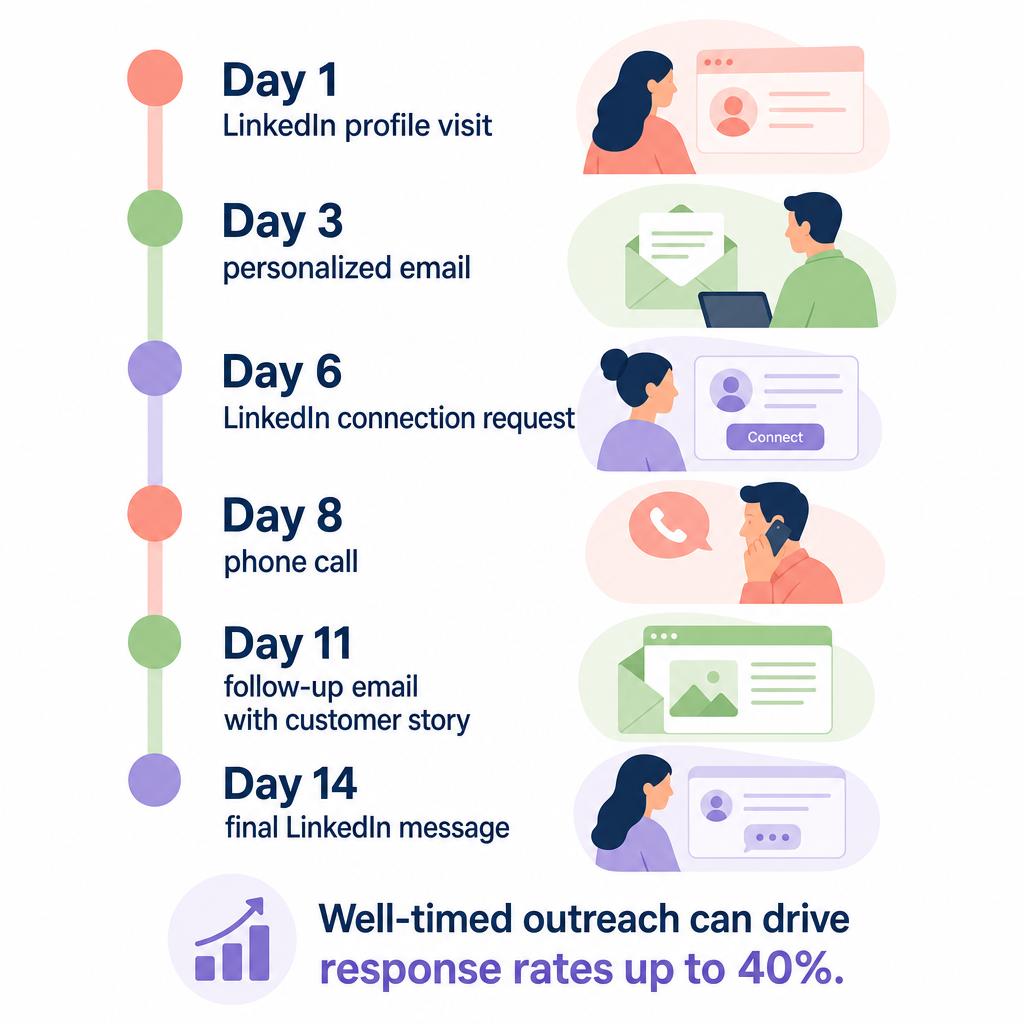
- Day one: Visit the prospect’s profile on LinkedIn and engage with their recent company updates to build initial familiarity.
- Day three: Send a highly personalized cold email addressing a specific operational pain point or production bottleneck.
- Day six: Send a LinkedIn connection request containing a brief, personalized message referencing your initial email.
- Day eight: Follow up with a direct phone call to their office to introduce yourself and see if they reviewed your message.
- Day eleven: Send a follow-up email sharing a relevant customer success story, drawing inspiration from proven case studies in personalized outreach.
- Day fourteen: Send a final LinkedIn message to gently wrap up and offer a brief, low-pressure introductory call.
%Managing this multi-step process manually for hundreds of leads is incredibly tedious. Modern B2B teams utilize AI-driven multi-channel outreach automation to coordinate these sequences, ensuring that every touchpoint flows naturally without manual tracking.
Write messaging that gets past the plant manager
Most outbound messages fail because they focus on the seller’s capabilities rather than the buyer’s problems. Plant managers and procurement heads do not care about your facility equipment until they understand how you can help them protect their operating margins or reduce downtime.
To get replies, your messaging must focus on tangible business outcomes. Personalization is the key to breaking through the noise. For example, on LinkedIn, including a personalized message in your connection request boosts your reply rate to 9.36%, compared to only 5.44% when sending a blank request.
When crafting your outreach templates, apply these essential rules:
- Keep it short: Your initial cold emails should be under 150 words and fully optimized for mobile screens. You can find more structural tips in our comprehensive guide to cold outreach for manufacturing.
- Reference trigger events: Call out specific local expansions or facility changes. Using structured LinkedIn outreach message templates allows you to naturally congratulate a prospect on their growth while introducing your services.
- Lead with concrete proof: Avoid generic claims about your quality. Instead, share specific data points, such as how you helped a similar Tier 2 supplier reduce prototype-to-production timelines by 40%.
- Use low-friction calls to action: Do not ask for a lengthy meeting right away. Instead, ask a simple, open-ended question about their current challenges, such as whether they are currently experiencing lead-time delays with their primary casting supplier.
If your team is targeting international buyers, manual localization becomes a bottleneck. Utilizing advanced tools for using AI to personalize cold email campaigns allows you to draft highly tailored, natural messages in multiple languages while maintaining strict control over deliverability.
Automate lead qualification to scale your pipeline
If your sales representatives spend hours searching LinkedIn, validating email addresses, and manually scoring leads, they have far less time to spend on the phone with warm buyers. This manual approach stalls your sales cycle and limits your revenue potential.
Implementing a system to optimize lead qualification with automation allows you to automatically separate passive website visitors from high-value opportunities. You can design automated workflows that score leads based on behavioral signals. For example, if a prospect from your target ICP visits your pricing page or downloads a technical specification sheet, they should be instantly fast-tracked to a sales representative for immediate, personalized follow-up.
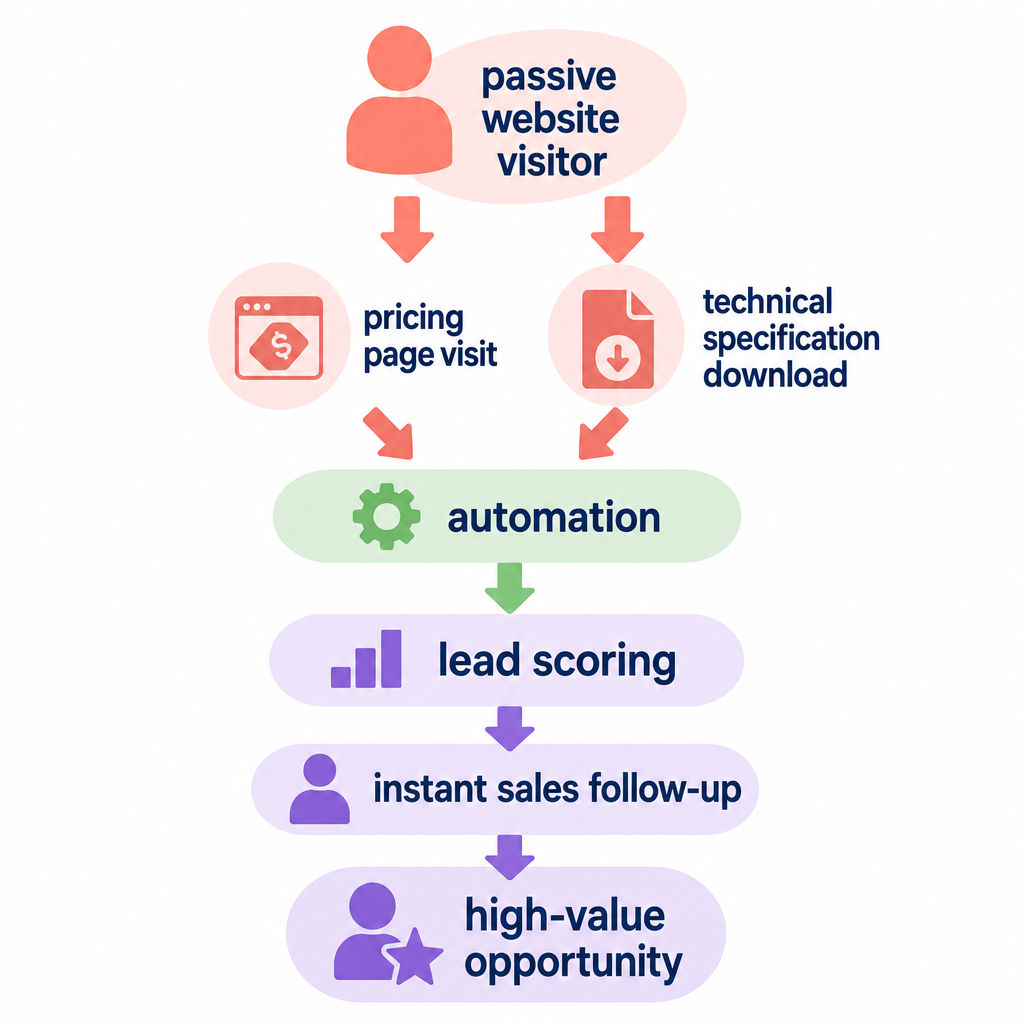
To scale this process without losing the personal touch, smart GTM teams combine automated data enrichment with human oversight. By employing specialized AI agents to build lists, find verified decision-makers, and write personalized message drafts, you can remove the manual grind from prospecting. This allows your sales team to focus their energy on handling the actual sales conversations and closing high-value contracts.
Building a sustainable outbound engine
A successful outbound lead generation strategy is not a one-time campaign. It is a repeatable, structured system that balances precise, research-backed targeting with consistent multi-channel follow-ups. By focusing your outreach on verified decision-makers who match your exact ideal customer profile and leading with value-first messaging, you can bypass the noise of generic spam and build lasting business relationships.
If you are ready to modernize your sales process and scale your pipeline without the manual grunt work, explore how Sera’s AI-driven Autopilot can automate your prospect research, target list building, and multi-channel outreach. You can also get five verified leads and personalized messages in just a few minutes to see the power of automated, research-driven outreach in action today.