


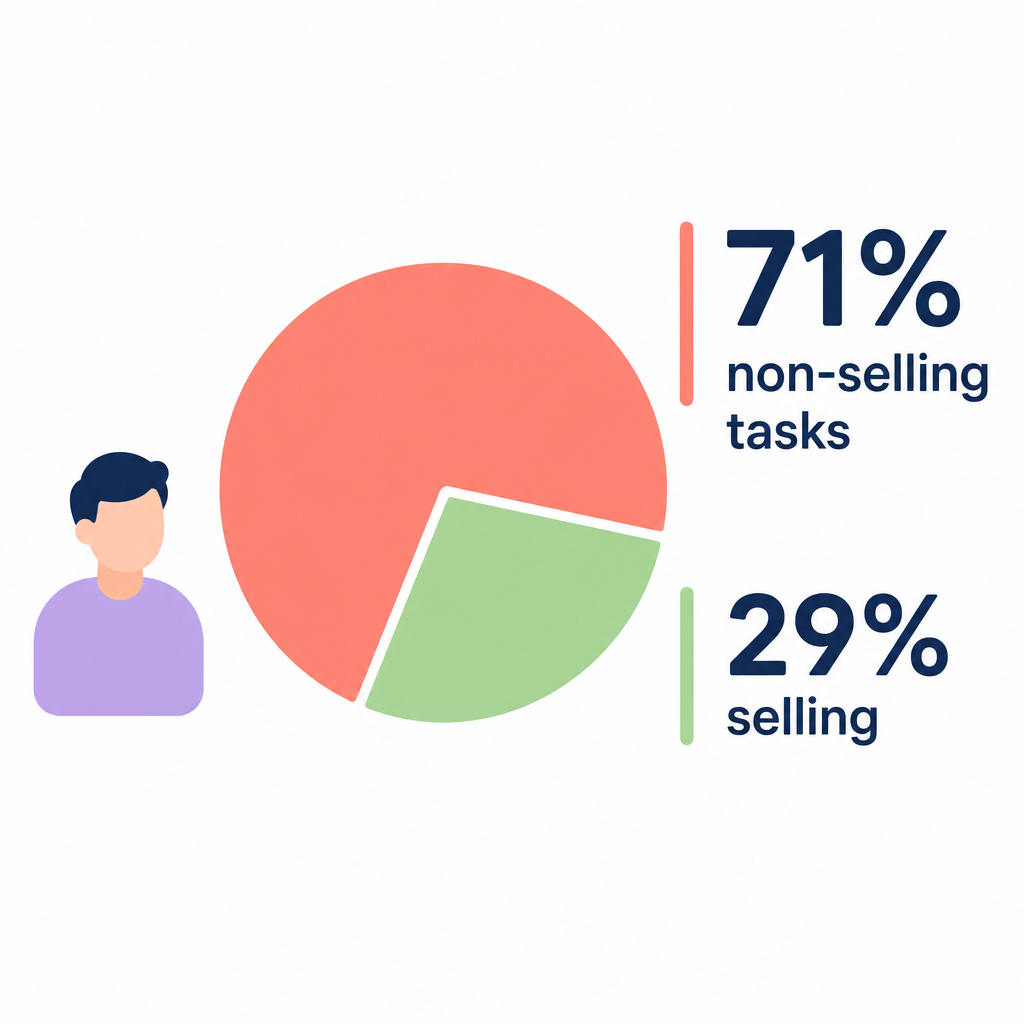
Did you know that B2B sales representatives spend roughly 71% of their time on non-selling tasks like manual research? Shifting from static lead lists to dynamic, research-driven qualifying is key to reclaiming those lost hours.
Build a precise ideal customer profile
A successful outbound sales prospecting process depends entirely on a laser-focused Ideal Customer Profile (ICP). This profile must go beyond basic geography. It should incorporate specific firmographics, such as a £50M+ revenue target, and technographics like the ERP or CAD software a factory uses.
To get the most out of your campaigns, you must combine these technical attributes with environmental and behavioral factors. This includes industry trends, regulatory changes, and active buying signals. Knowing exactly who fits helps you understand how to build a B2B prospect list that prevents wasted outreach, avoids spam filters, and keeps your domain reputation safe.
Map the industrial buying committee
Industrial B2B purchases are rarely decided by one person. Modern purchasing groups typically involve 6 to 10 stakeholders, meaning that you must build relationships with multiple departments to move a deal forward.
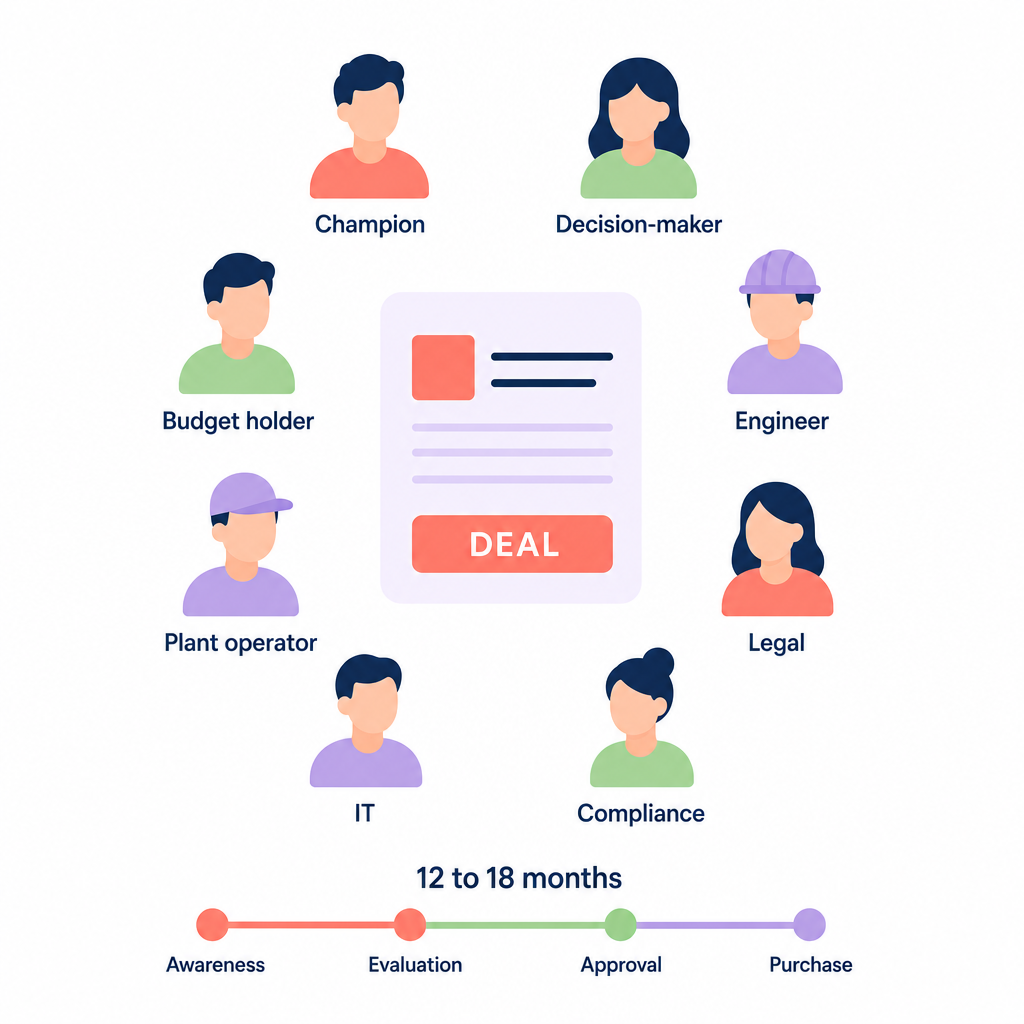
To navigate these 12-to-18-month sales cycles, you must design detailed buyer personas for industrial markets. Each role on the committee has unique priorities and pain points:
- Champion: This is often a department head or project manager who initiates the search, is highly engaged, and schedules the initial demos.
- Decision-maker: Typically VPs and senior leaders who make up over half of the committee, focusing heavily on strategic alignment, scalability, and long-term vendor support.
- Budget holder: CFOs and financial directors who control the budget in nearly four-fifths of buying decisions, keeping their eyes on total cost of ownership and return on investment.
- Influencer: Engineers and plant operators who will use the solution daily, caring deeply about reliability, ease of use, and training requirements.
- Blocker: Legal, IT, or compliance teams who can veto a deal late in the process if a vendor fails to meet security standards or ISO certification guidelines.
When your LinkedIn prospecting for industrial sales accounts for all of these roles, you prevent late-stage deal vetoes and move negotiations along much faster.
Apply B2B lead qualification frameworks
Your sales and marketing teams need structured frameworks to separate casual website visitors from high-intent buyers. In typical manufacturing pipelines, only 22% of marketing qualified leads (MQLs) successfully convert to sales qualified leads (SQLs). To identify a true qualified lead in manufacturing, evaluate your opportunities against proven industry frameworks:
- BANT (Budget, Authority, Need, Timeline): Developed by IBM in the 1960s, this model evaluates if the prospect has the funds, the decision-making power, a critical pain point, and an active buying timeline.
- CHAMP (Challenges, Authority, Money, Prioritization): A customer-centric approach that starts with the buyer’s concrete challenge, helping sales teams work constructively with lower-level champions before reaching the budget holder.
- MEDDICC (Metrics, Economic buyer, Decision criteria, Decision process, Identify pain, Champion): Highly effective for enterprise sales, this framework forces your team to map out the entire buying committee and locate the internal champion who will advocate for your solution.
Choose the model that fits your transaction size and operational complexity to ensure consistency across your sales pipeline.
Enrich your target data with context
Raw contact details are no longer enough to secure a meeting in a competitive market. Successful GTM teams turn to data enrichment for manufacturing to turn flat databases into actionable sales intelligence. This process matches your internal CRM data with external insights like facility square footage, machine investments, or local news.
By applying AI-driven sales prospect scoring, you can automate prioritization and filter out weak prospects. These models evaluate real-time signals to ensure your outreach matches the buyer’s current situation. For instance, a prospect researching energy efficiency during their budget cycle is 3.2 times more likely to convert. Tracking certification renewals (such as ISO 9001 or AS9100) or factory expansions provides the perfect timing to reach out with a relevant message.
Automate the prospecting bottleneck
By 2025, 80% of UK sales teams are projected to use AI for lead generation. Relying on static spreadsheets stalls growth and drains your sales reps’ energy. Instead, you can optimize lead qualification with automation to shorten sales cycles by up to 33% and increase conversion rates.
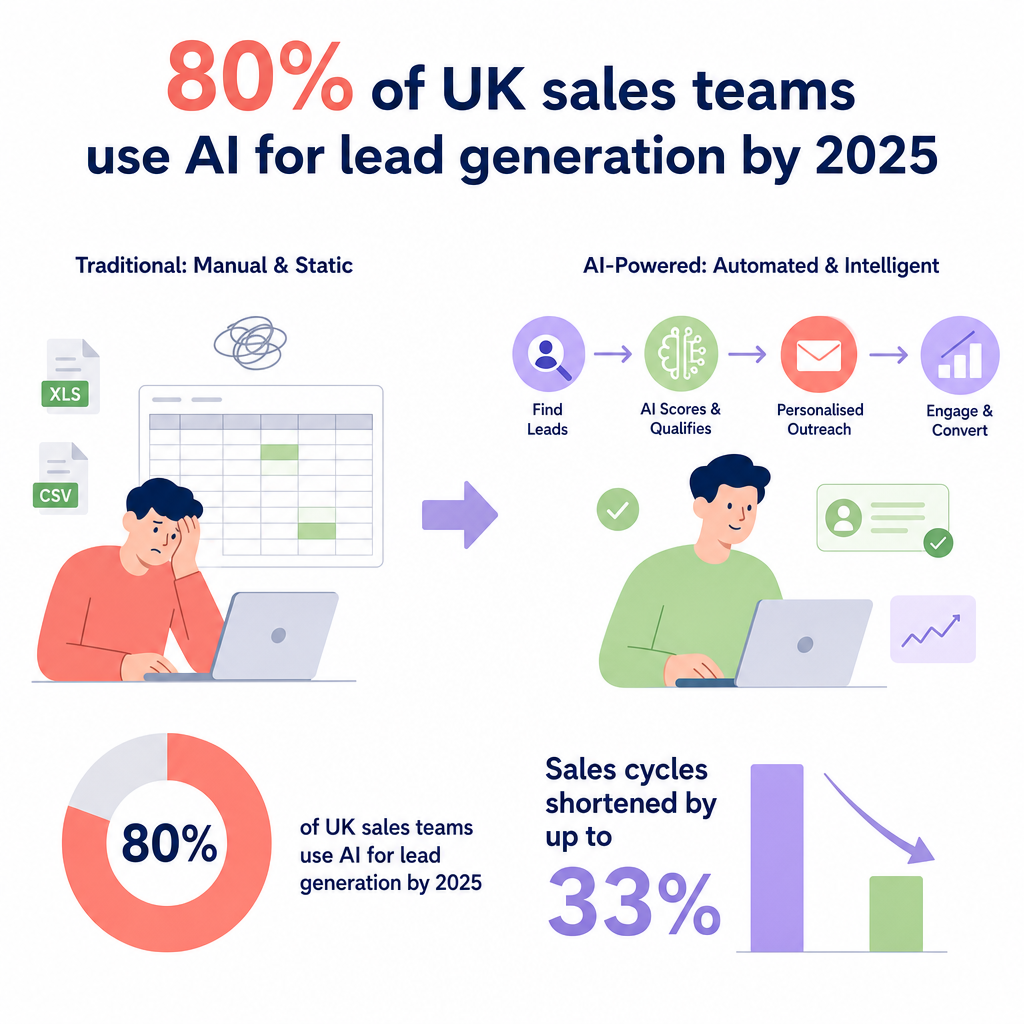
Using an AI agent for prospect research allows your team to skip manual data entry and focus on closing deals. Integrating these platforms with predictive analytics for sales prospects helps sales reps focus exclusively on speaking with verified decision-makers who are ready to buy.
Streamlining your outbound pipeline requires a balance of clear frameworks, accurate research, and smart technology. When your sales team spends less time hunting for data, they can spend more time building relationships on the factory floor.
If you want to remove the administrative headache of list building and qualification, consider automated solutions. Sera’s AI-driven outbound autopilot acts as your complete prospecting team, identifying high-fit buyers and initiating hyper-targeted, research-driven conversations.
Explore how Sera can build your next high-quality pipeline today.