

Are your expensive sales representatives spending more time digging through outdated spreadsheets than closing contracts? Traditional sales development is struggling to scale, but a new class of digital tools is changing the B2B industrial sales landscape.
The financial reality: human SDR vs. AI SDR costs
Hiring a human sales team comes with significant overhead. In the U.S., the average base salary for a traditional sales development representative (SDR) ranges between $50,000 and $80,000 per year.
However, the fully loaded cost of a human rep – including recruitment, benefits, training, CRM licenses, and management overhead – quickly rises to between $83,000 and $117,000 annually. In the UK, those figures translate to a total cost of £60,000 to £110,000 per year per rep.
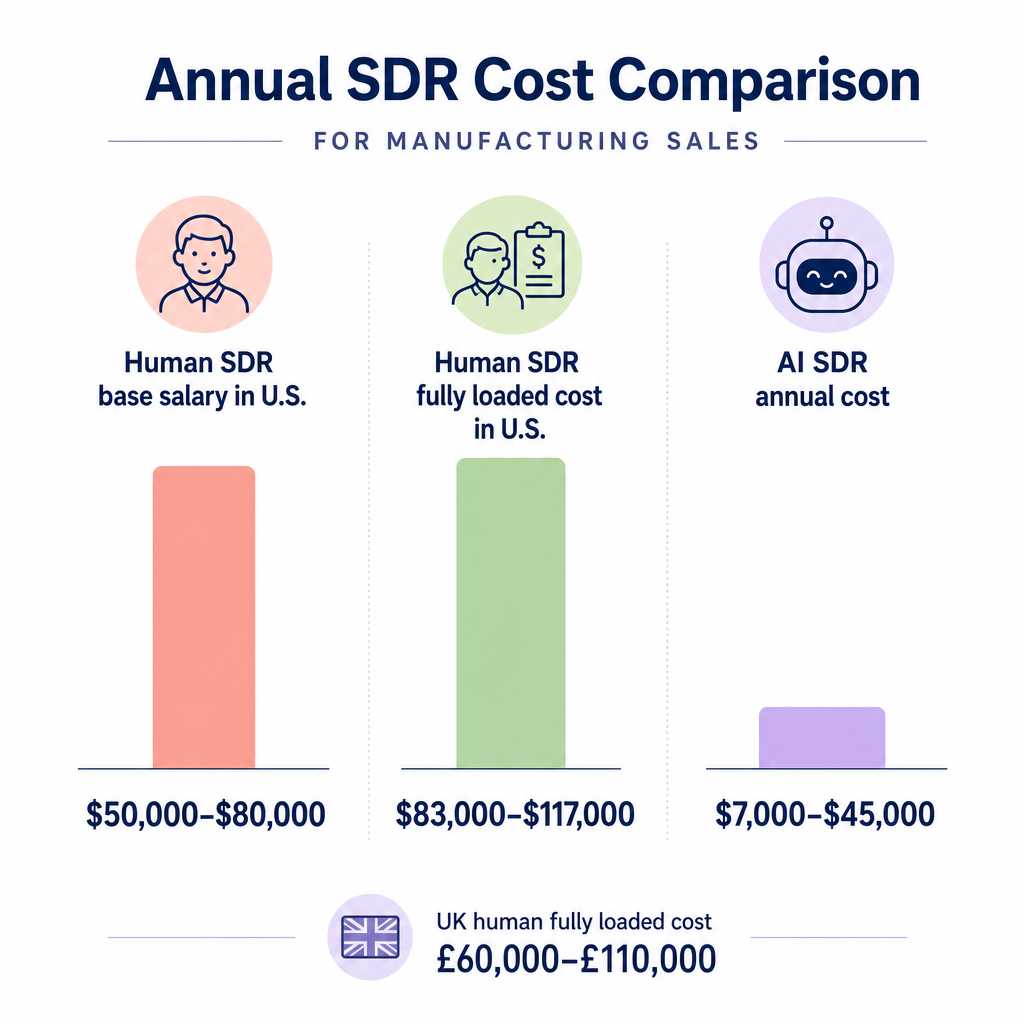
In contrast, deploying an AI SDR generally costs between $7,000 and $45,000 annually. While some basic software tools offer predictable monthly pricing structures to automate some emails, they often introduce a hidden “SDR tax.”
If you use complex modern data orchestration platforms, your team will still spend hours writing prompts, configuring API connections, and troubleshooting broken database matches.
To bypass this extra work, many manufacturing firms prefer a fully managed, human-supervised AI service like Sera. By reviewing human-supervised AI outreach pricing, you can plan your budget based on booked meetings rather than paying for disjointed software subscriptions.
Scalability and output: 24/7 engagement vs. human limits
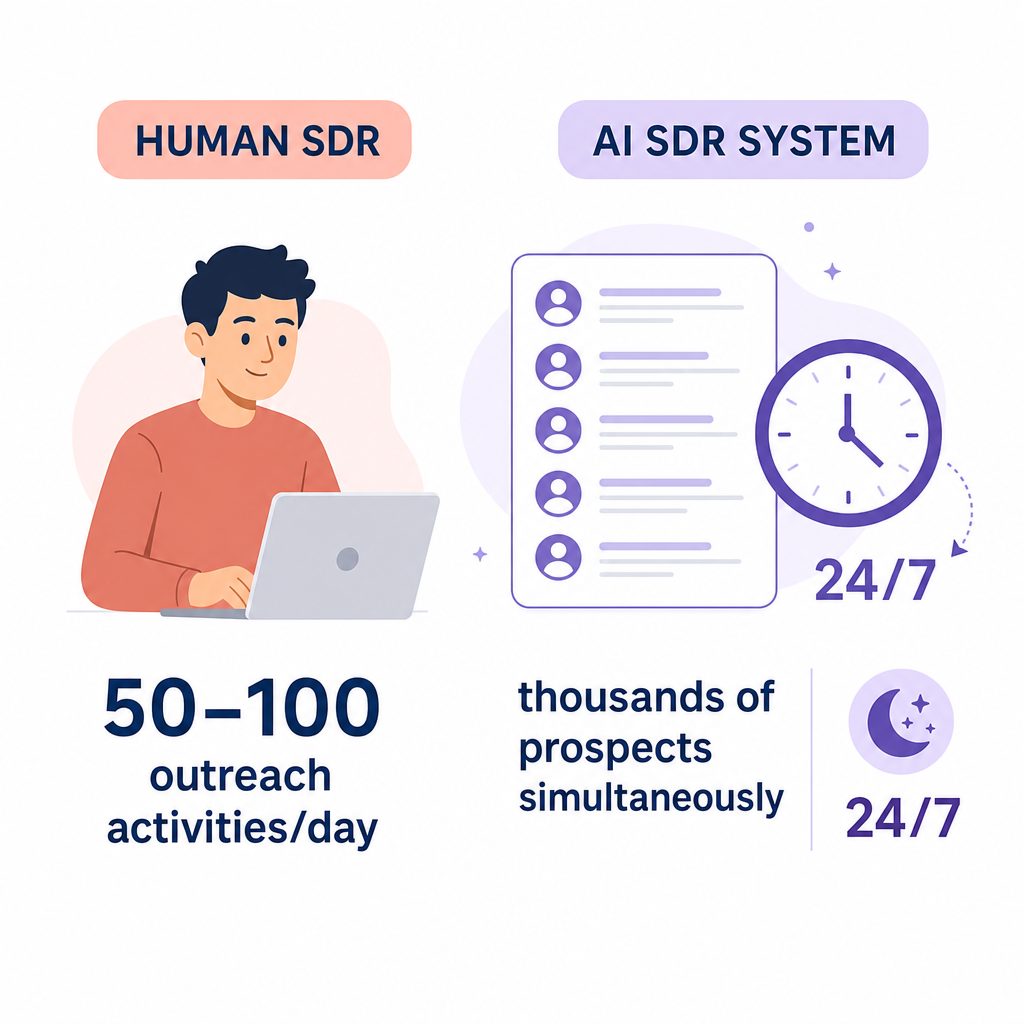
A human SDR is limited by time, bandwidth, and energy. On average, a productive human rep can manage 50 to 100 outreach activities per day. An AI system, on the other hand, can process thousands of prospects simultaneously. It operates 24/7 without breaks, vacation days, or downtime.
This speed is crucial for modern industrial buyers. B2B buyers spend 83% to 95% of their purchasing journey researching solutions anonymously. To reach them before your competitors do, you must act fast. AI systems quickly scan the web for buying signals, locate new industrial facility updates, and identify correct procurement heads.
For manufacturers targeting international markets, translation is another major roadblock. Instead of hiring expensive multilingual reps, manufacturing teams can use AI tools to scale their personalized outreach sequence automation across more than 100 languages instantly, ensuring native-level tone and local compliance.
Lead qualification and conversion performance
If your sales team is bogged down by manual prospecting, your pipeline suffers. AI agents can handle roughly 70% of routine, top-of-funnel administrative tasks. This includes finding plant locations, scraping contact data, and verifying email addresses.
By offloading these repetitive tasks, your team saves valuable time. According to research from Monday.com, organizations that implement AI lead prioritization save 15 to 25 hours per SDR per week. They also see a 20% to 40% improvement in lead conversion rates.
Data accuracy also plays a major role in closing deals. Harvard Business Review reports that companies utilizing predictive lead scoring and automated qualification experience a 51% increase in lead-to-deal conversion rates. When your team only contacts high-intent buyers, your close rates improve naturally.
The hybrid sales model: why collaboration beats replacement
Manufacturing sales are highly relationship-driven. You cannot replace the trust built during face-to-face site visits or complex technical consultations with software alone. Because of this, the most successful GTM teams do not replace their staff with AI. Instead, they run a hybrid sales model.
As IBM points out, AI systems are ideal for structured, repeatable, data-driven tasks like initial outreach, automated follow-ups, and early-stage qualification. Human reps, on the other hand, excel at creative problem-solving, strategic decision-making, and closing complex contracts.
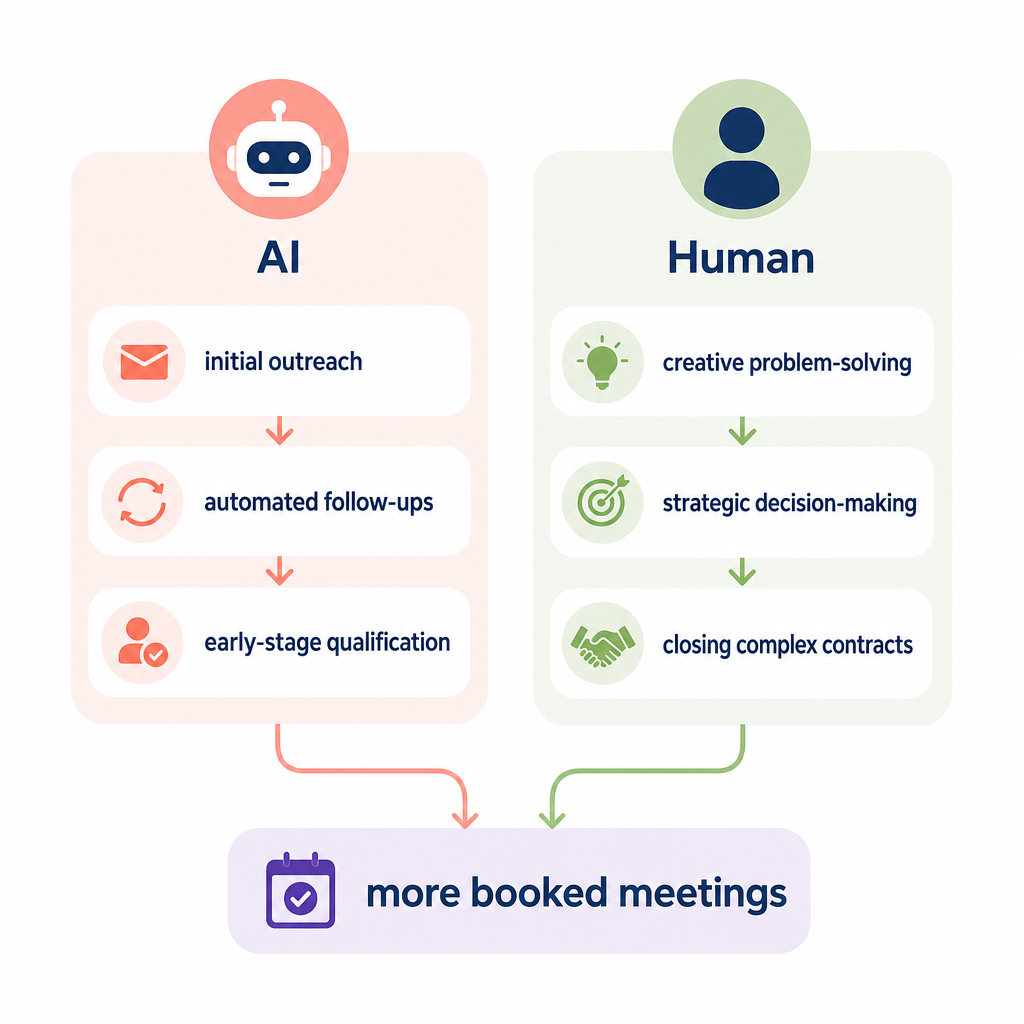
With this division of labor, your human sales engineers and account executives focus entirely on booking and running face-to-face meetings, leaving the digital legwork to automation.
Precision vs. volume: protecting your manufacturing brand
Many high-volume AI tools send thousands of generic messages every day. For a respected industrial manufacturer, this high-volume approach poses a major risk. Mass-produced generic messages can quickly trigger spam filters and ruin your email domain reputation.
To avoid this, look for a system that prioritizes quality over quantity. Modern traditional sales engagement platforms still require your reps to manually click through outreach steps.
A better approach is to use multi-agent AI sales systems that coordinate list building, enrichment, research, and email deliverability. This model relies on ultra-targeted, low-volume campaigns to ensure your messages bypass the spam folder and land directly in your prospect’s inbox.
Shift from managing tools to booking meetings
The choice for manufacturing executives is no longer about finding a tool with slightly better features. It is about whether you want your sales team to act as software operators or deal closers.
By moving away from manual prospecting, you can free your team to build deeper buyer relationships. If you want to stop chasing bad contact data and start filling your calendar with high-value manufacturing deals, let us help you build a smarter outreach program.
Visit Sera’s automated sales outreach today to schedule a free 30-minute strategy call and see how our human-supervised AI autopilot can generate pipeline for your business.