

Your SDR team is drowning in manual work. Email sequences that looked great in 2023 land in spam. LinkedIn automation triggers blocks. And nobody’s answering calls anymore.
The world changed, but most cold-email tools didn’t.
If you’re evaluating Lemlist alternatives in 2026, you’re probably hitting one of these walls: deliverability issues, poor lead data, weak multi-channel coordination, or simply too much clicking around to run a single campaign. This guide compares eight platforms side by side, with pricing, pros, cons, and recommendations based on what manufacturing and industrial B2B teams actually need.
What changed between 2024 and 2026
Before we dive into alternatives, here’s why you’re looking.
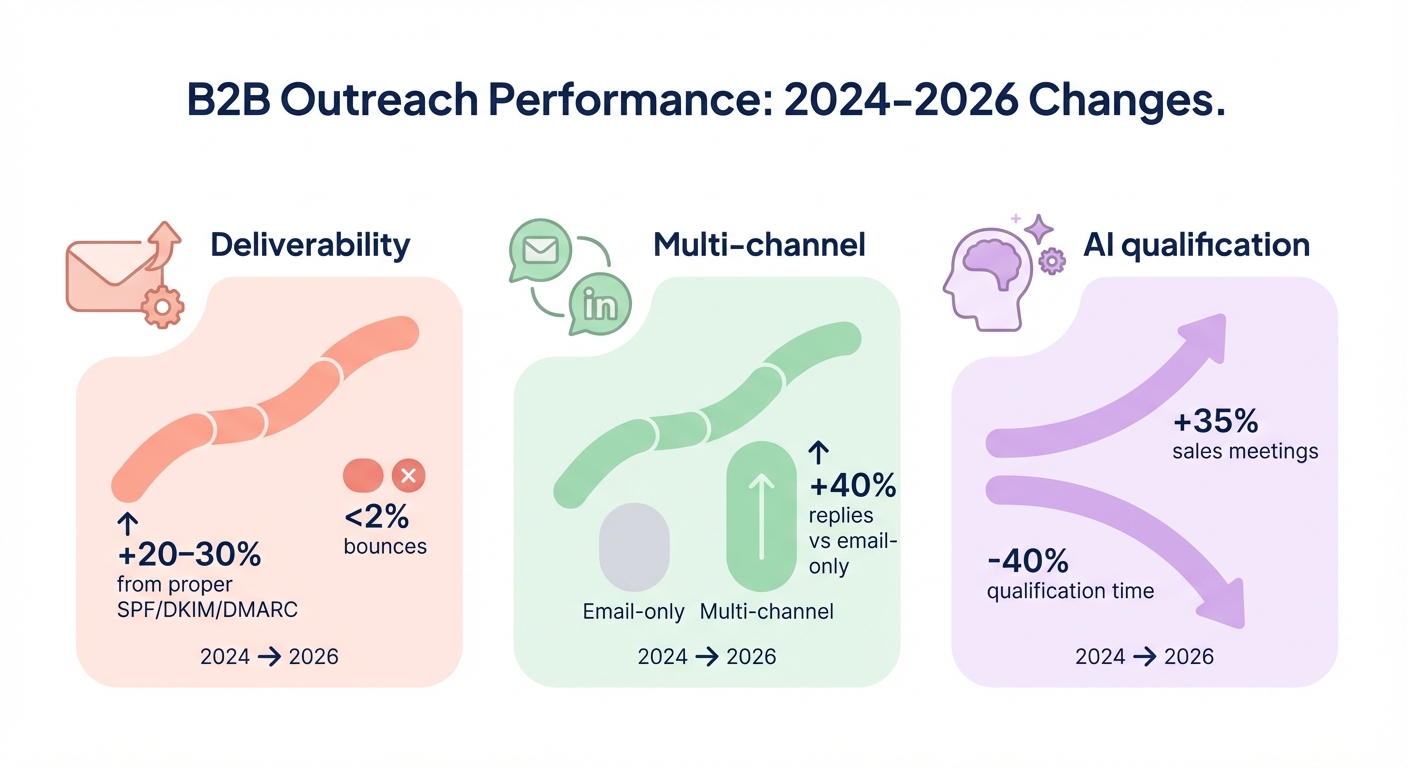
Deliverability got harder. Gmail and Outlook now enforce DMARC policies for high-volume senders. Authentication protocols that were optional 24 months ago are now table stakes. Proper authentication protocols can improve deliverability by 20-30%, and maintaining bounce rates below 2% correlates with higher inbox placement.
Multi-channel became mandatory. Multi-channel sequencing increases response rates by up to 40% compared to email-only outreach. Your prospects ignore single-channel campaigns. The most effective sequences coordinate email with LinkedIn connection requests and calls, each touch referencing previous interactions to create a cohesive conversation.
AI entered the game. Tools that bolt on “AI features” compete with platforms built around AI agents from day one. The gap is noticeable in personalization quality and time saved. Research shows that AI-driven lead qualification can increase sales meetings by 35% while reducing qualification time by 40%.
Nobody should be spending their day clicking buttons in software anymore. There are AI-driven outreach systems now that handle prospecting, research, and messaging while humans focus on relationship-building and closing.
The 8 best Lemlist alternatives for 2026
1. Outreach
Best for: Enterprise sales teams with complex processes
Pricing: Starter $36/user/month (annually), Pro $99, Scale $199
Outreach delivers comprehensive sales engagement with tools to track, manage, and optimize multi-channel interactions including email, calls, and social touches from a unified dashboard. The platform offers sophisticated workflow automation, deep analytics, and built-in coaching features for sales teams.
Pros:
- Robust Salesforce CRM integration that reduces forecast prep time by 44%
- Advanced analytics and forecasting for pipeline optimization
- Enterprise-grade security and compliance controls
- Extensive customization for complex sales methodologies
Cons:
- Steep learning curve requiring significant training investment
- Pricing puts it out of reach for smaller teams
- Implementation takes weeks, not days
- Overkill feature set if you need simple cold outreach
When to choose Outreach: Your team already runs Salesforce, you have 20+ reps, and you need granular control over multi-step enterprise sales processes. Skip it if you want quick setup and straightforward email sequences.
2. Apollo.io
Best for: Teams wanting prospecting, enrichment, and outreach in one system
Pricing: Free plan available; paid tiers start around $49/user/month
Apollo provides a massive B2B contact database of 210M+ contacts and 35M+ companies with integrated sequences, dialer functionality, and built-in email warmup features. The platform combines data, outreach, and calling in a single interface, making it particularly valuable for teams that want everything unified.
Pros:
- Enormous built-in contact database eliminates separate data vendors
- Integrated dialer and call recording
- Email warmup and deliverability features included
- Unified platform reduces tool sprawl
Cons:
- Data accuracy varies by region (strongest in US markets)
- Interface can feel cluttered with so many features
- Sequences less sophisticated than dedicated email tools
- LinkedIn automation capabilities are basic
When to choose Apollo: You need prospecting data and don’t want to pay for separate enrichment services. The unified platform makes it particularly valuable for teams wanting data, email, and dialer functionality together. Pass if your data sources are already solid and you need advanced email capabilities.
3. Salesloft
Best for: Mid-market and enterprise teams focused on coaching
Pricing: Custom quotes; typically $100-150/user/month
Salesloft enables sophisticated multichannel campaigns across email, phone, and social media with powerful workflow automation, deep analytics, and built-in coaching features for sales teams. The platform emphasizes conversation intelligence and team performance.
Pros:
- Best-in-class conversation intelligence and call coaching
- Strong Salesforce integration with bi-directional sync
- Analytics help identify what messaging and techniques work
- Cadence builder supports complex multi-touch sequences
Cons:
- Premium pricing requires significant budget
- Focused on US market; less strong in Europe
- Requires dedicated admin to maximize value
- Integration setup can be complex
When to choose Salesloft: You’re a US-based mid-market team prioritizing call coaching and team development. The conversation intelligence features shine when you want to improve rep performance systematically. Not ideal for European manufacturers or teams on tight budgets.
4. Reply.io
Best for: Teams needing sophisticated campaign logic
Pricing: Starter $59/mailbox/month, Professional $99, Ultimate $166
Reply functions as a command center for outbound sales operations with branching logic that creates sophisticated campaign structures adapting to prospect engagement, unlike Lemlist’s linear sequences. Multi-channel campaigns span email, LinkedIn, calls, SMS, and WhatsApp.
Pros:
- Branching sequences adapt to prospect behavior automatically
- Strong LinkedIn automation with safety features
- Built-in lead finder and enrichment
- Video messaging integration for personalization
Cons:
- Learning curve for branching logic setup
- LinkedIn features require browser extension
- Some users report deliverability challenges at high volume
- Analytics less detailed than enterprise platforms
When to choose Reply.io: You want sophisticated IF/THEN campaign logic that responds to prospect actions. The branching capabilities let you create adaptive sequences that Lemlist’s linear approach can’t match. Skip if you prefer simpler, set-it-and-forget-it campaigns.
5. Instantly
Best for: High-volume cold email at scalePricing: Growth $30/month (1,000 emails/day), Hypergrowth $77.60 (100,000/month), Light Speed $286.30 (10M+/month)
Instantly dominates high-volume email outreach with vertical integration and deliverability focus, making it preferable for teams where email is the primary channel. Built specifically for agencies and teams sending massive volumes.
Pros:
- Unlimited email accounts for better deliverability distribution
- Industry-leading warmup and inbox rotation
- Simple interface focused exclusively on email
- Aggressive pricing for volume senders
Cons:
- Email only – no LinkedIn, calls, or SMS
- Limited personalization compared to AI-powered alternatives
- Analytics are basic compared to full platforms
- No native lead database or enrichment
When to choose Instantly: You’re running high-volume cold email campaigns and deliverability is your top concern. Perfect for agencies managing multiple clients. Not suitable if you need multi-channel orchestration or deep personalization.
6. Mailshake
Best for: Small teams prioritizing simplicity
Pricing: Email Outreach $59/user/month, Sales Engagement $99/user/month
Mailshake simplifies cold outreach with user-friendly automation of research and email domain warmup processes, featuring an intuitive interface and CRM integrations preferred by small teams. The platform emphasizes ease of use over feature breadth.
Pros:
- Intuitive interface requires minimal training
- Phone and social media integrations available
- Good template library to start quickly
- Responsive customer support for small teams
Cons:
- Limited automation compared to enterprise tools
- Basic analytics and reporting
- LinkedIn automation requires paid add-on
- Fewer advanced features as team grows
When to choose Mailshake: You’re a small team (2-5 people) that values simplicity and quick onboarding. The user-friendly approach gets you sending within an hour. Not appropriate for complex workflows or large-scale operations.
7. Persana.ai
Best for: Budget-conscious teams wanting AI personalization
Pricing: Significantly lower than Lemlist (exact pricing requires quote)
Persana provides AI-driven outreach with better personalization capabilities at more economical pricing compared to Lemlist, particularly beneficial for budget-conscious sales teams. The platform uses AI to improve message relevance and timing.
Pros:
- AI personalization improves response rates
- More affordable than comparable platforms
- Good integration with common CRMs
- Focuses on quality over volume
Cons:
- Smaller user base means fewer integrations
- Limited multi-channel capabilities
- Newer platform with evolving feature set
- Less proven at enterprise scale
When to choose Persana.ai: You want AI-powered personalization without enterprise pricing. Good fit for mid-sized B2B teams testing AI capabilities. Pass if you need proven enterprise support or extensive integrations.
8. Sera
Best for: Manufacturers and industrial companies wanting full-service AI outreach
Pricing: Single-channel plan with monthly billing; custom quotes for multi-market campaigns
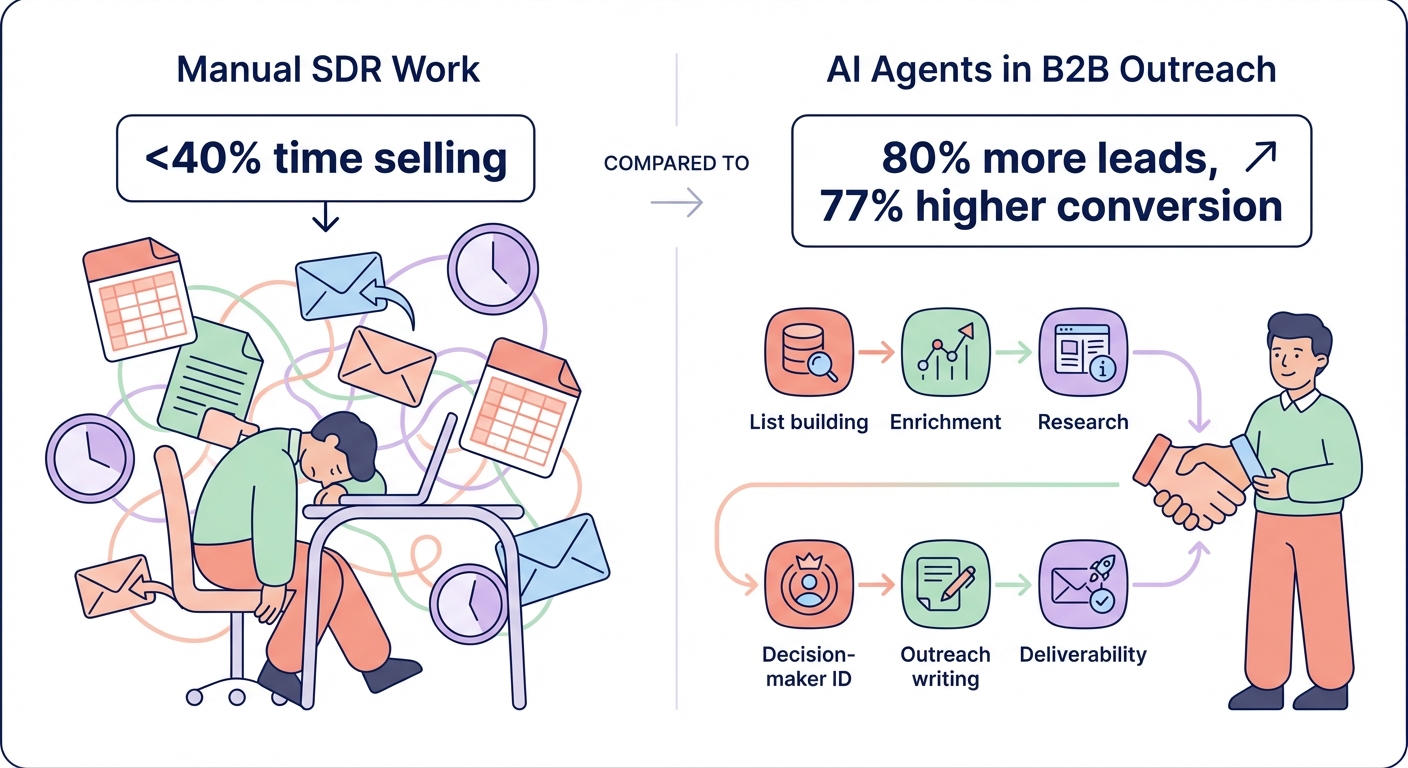
Unlike traditional tools, Sera is a human-supervised AI outreach service powered by six specialized AI agents that handle 93% of the work: list building, enrichment, research, decision-maker identification, outreach writing, and deliverability management. Each agent specializes in a different aspect of the outreach process, working together to deliver research-driven campaigns at scale.
Pros:
- Six AI agents coordinate the entire outreach process automatically
- Native-level multilingual outreach across 100+ languages enables European expansion
- 99% email deliverability through automated domain warmup and pacing
- Low-volume, research-driven approach avoids spam and increases reply rates
- Seamless CRM integration keeps workflows clean
- Human supervision ensures quality control
Cons:
- Service model rather than self-serve software
- Focused on quality over volume (sends fewer emails than mass platforms)
- Requires 15-minute onboarding call
- Best suited for €10K+ deal sizes
When to choose Sera: You’re a manufacturing or industrial B2B company expanding into European markets, entering new segments, or validating go-to-market strategies. The AI agent approach works especially well when you need multilingual outreach that sounds human, not translated. Companies like Viking Window, Bolt, and Montonio use Sera to reach decision-makers in Germany, Poland, Finland, Netherlands, and across Europe. Skip if you want to manage sequences yourself or send mass email campaigns.
How to choose the right alternative for your team
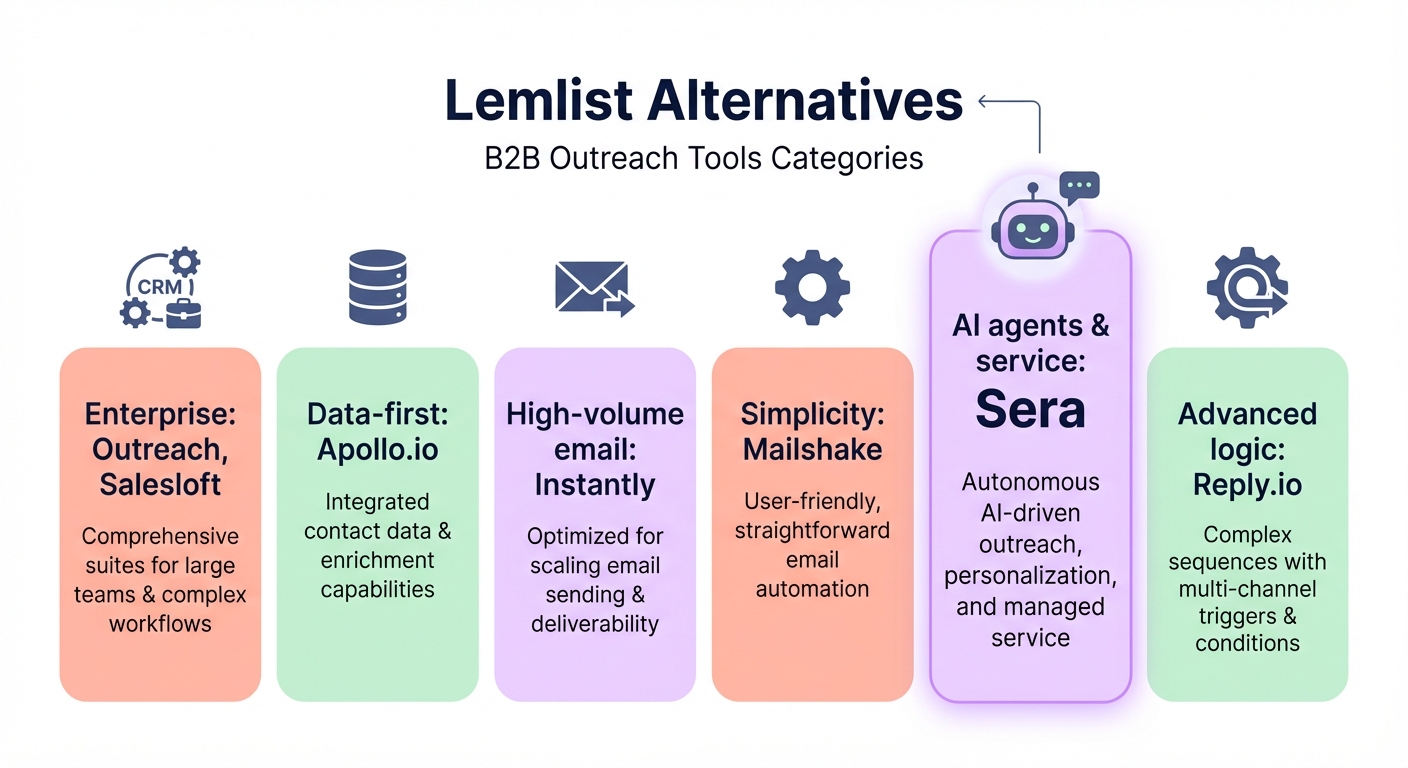
If you need enterprise-grade complexity: Choose Outreach or Salesloft. Both offer sophisticated workflows, deep analytics, and strong Salesforce integration. Expect significant implementation time and training investment.
If data access is your bottleneck: Go with Apollo.io. The built-in database of 210M+ contacts eliminates separate data vendors and unifies prospecting with outreach.
If you’re sending massive volume: Pick Instantly. The platform handles unlimited email accounts and prioritizes deliverability above all else. Perfect for agencies running multiple campaigns.
If simplicity beats features: Choose Mailshake. Small teams appreciate the intuitive interface and quick setup, even if it means fewer advanced capabilities.
If you want sophisticated logic: Select Reply.io. The branching sequences let you build campaigns that adapt to prospect behavior dynamically.
If you’re expanding across Europe: Choose Sera. The multilingual AI agents handle research, decision-maker identification, and native-level outreach across 100+ languages while humans supervise quality. Traditional manufacturers use Sera to open deals across Ireland, Germany, Poland, Finland, and Netherlands without hiring multilingual SDRs.
What actually matters in 2026
The tools above all send emails. The differences come down to a few critical factors.
Deliverability infrastructure. Can the platform warm domains, rotate sending, and maintain SPF/DKIM/DMARC authentication automatically? Email that lands in spam wastes everyone’s time. Research shows that maintaining proper authentication protocols and keeping spam complaint rates under 0.1% directly correlates with inbox placement.
Data quality and research. How fresh is the contact data? Can it identify real decision-makers? Does it surface buying signals? B2B contact databases decay at about 30% annually, so continuous refresh matters.
Multi-channel orchestration. Email alone isn’t enough anymore. Multi-channel sequencing increases response rates by up to 40% compared to email-only outreach. Look for natural coordination across channels where each touch references previous interactions.
AI versus automation. Traditional automation follows IF/THEN rules you program. AI agents analyze context, learn patterns, and adapt approaches based on what’s working. The difference shows in personalization quality and results. A UK SaaS company achieved a 47% higher conversion rate using AI-driven personalization compared to standard templates.
Time to value. Enterprise platforms take weeks to implement and require dedicated admins. Simpler tools or services get you sending within days.
The bigger shift happening in B2B outreach
Here’s what manufacturing and industrial sales leaders tell us.
Your prospects ignore 90% of outreach because it’s obviously automated, poorly researched, or mistimed. Between 83% and 95% of the B2B buyer journey happens anonymously before any direct contact. By the time buyers surface, they’ve already shortlisted suppliers. The data is clear: 86% of enterprise buyers start with brands they already know, and 71% purchase from their first-choice brand.
The old playbook – buy a list, blast sequences, measure open rates – stopped working. Inboxes got smarter. Buyers got pickier. And your SDRs spend less than 40% of their time actually selling, with the rest consumed by manual data entry, research, and administrative tasks.
Forrester predicts that 80% of UK sales teams will use AI for lead generation by 2025. That trend accelerated through 2026. Teams still clicking buttons in software are getting outpaced by those deploying AI-powered systems that handle research, personalization, and sequencing automatically. Businesses using AI report 80% more leads and 77% higher conversion rates compared to traditional methods.
The question isn’t whether to use AI. It’s whether you want a tool with bolt-on AI features or a system built around AI agents from the ground up.
Your next step
Most Lemlist alternatives give you a better way to click buttons. A few give you an AI employee.
If you’re a traditional manufacturing or industrial company looking to expand across Europe, validate new segments, or simply stop wasting SDR time on manual research – Sera’s six AI agents handle list building, enrichment, research, decision-maker identification, outreach writing, and deliverability automatically. The system sends low-volume, research-driven emails in 100+ languages that sound native, not translated.
Setup takes 15 minutes. You see replies within the first week. And you focus on closing deals instead of building sequences.
Book a free 30-minute consultation to see how Sera would approach your market.