

Are your sales reps spending more time managing spreadsheets than talking to plant managers? Traditional prospecting is often a manual bottleneck, but an agentic sales process allows manufacturers to reclaim up to 15 hours of their week by automating the heavy lifting of outreach.
What is an agentic sales process?
An agentic sales process uses coordinated AI agents to execute complex, multi-step workflows independently. Unlike traditional software that follows a rigid script, agentic AI can reason, make decisions, and adapt based on the data it finds. This transition represents a shift from basic automation to “self-driving” revenue teams that proactively identify and engage prospects.
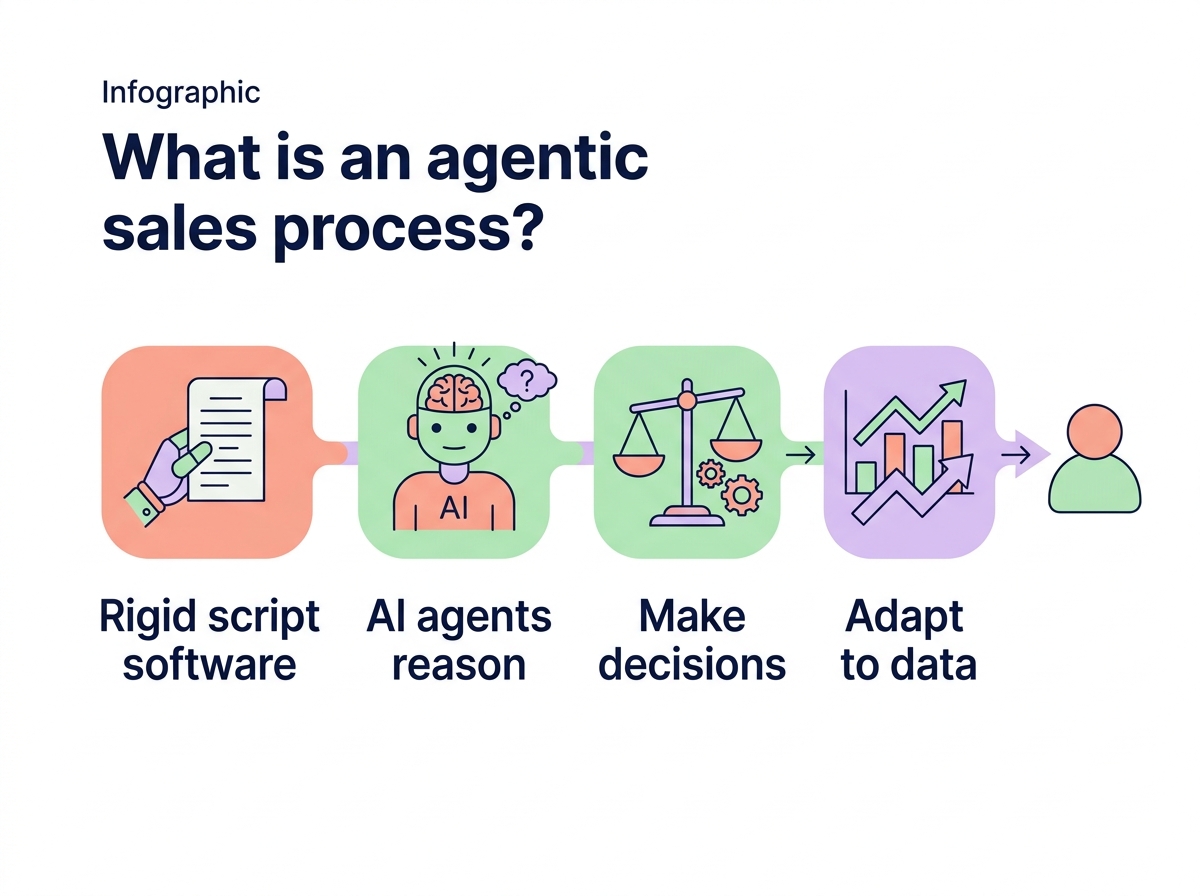
In a B2B context, this means the system does more than just send an email. It identifies a target facility, researches their current production challenges, confirms the correct engineering lead, and crafts a message that resonates with their specific needs. By 2025, it is predicted that over 80% of sales interactions will be influenced by AI, moving industrial sales teams away from manual searching toward intelligent, autonomous operations.
How agents differ from traditional automation
Most manufacturing GTM teams are familiar with basic automation, such as email templates or CRM triggers. However, there is a fundamental difference in how AI agents for sales operate compared to static tools.
- Traditional Automation: These systems follow fixed rules. If a lead fills out a form, the system sends a pre-written email. It cannot adjust its behavior if a prospect’s job title changes or if a company announces a new facility opening.
- AI Assistants and Copilots: These tools provide suggestions to a human. They might draft an email or summarize a meeting, but a person must still click “send” and manage every follow-up.
- Agentic AI: This technology executes the end-to-end journey autonomously. It monitors buying signals – such as a prospect researching energy efficiency – and chooses the best time and channel to reach out without waiting for a human prompt.
Research into these technologies highlights that teams adopting an agentic approach see a 34% increase in sales productivity because the “busy work” of prospecting is handled independently.
The coordinated agent framework for outreach
To replace the manual groundwork of a traditional Sales Development Representative (SDR), an agentic system uses specialized roles that work together. This coordination is the core of automated lead generation that feels human and precise.
- List Building Agent: This agent scans databases of millions of professionals to find companies that match your Ideal Customer Profile (ICP) exactly.
- Enrichment Engine: It adds deep firmographic data, such as the ERP systems a factory currently uses or their specific level of shop-floor automation.
- Research Analyst: This specialist scans news reports and LinkedIn for “buying signals,” such as leadership changes or new manufacturing contracts.
- Decision Maker Identifier: It confirms the exact person responsible for procurement or operations to help your team avoid “gatekeeper” delays.
- Outreach Writer: This agent crafts human-sounding, personalized outreach tailored to the prospect’s cultural context in over 100 languages.
- Deliverability Guard: This monitors technical settings like SPF and DKIM to ensure messages land in the inbox rather than being filtered as spam.
Tangible outcomes for manufacturing teams
For manufacturers, generic outreach can damage long-term reputations with Tier 1 suppliers. Agentic processes prioritize precision over volume, which is why cold outreach for manufacturing performs best when it focuses on highly targeted lists.
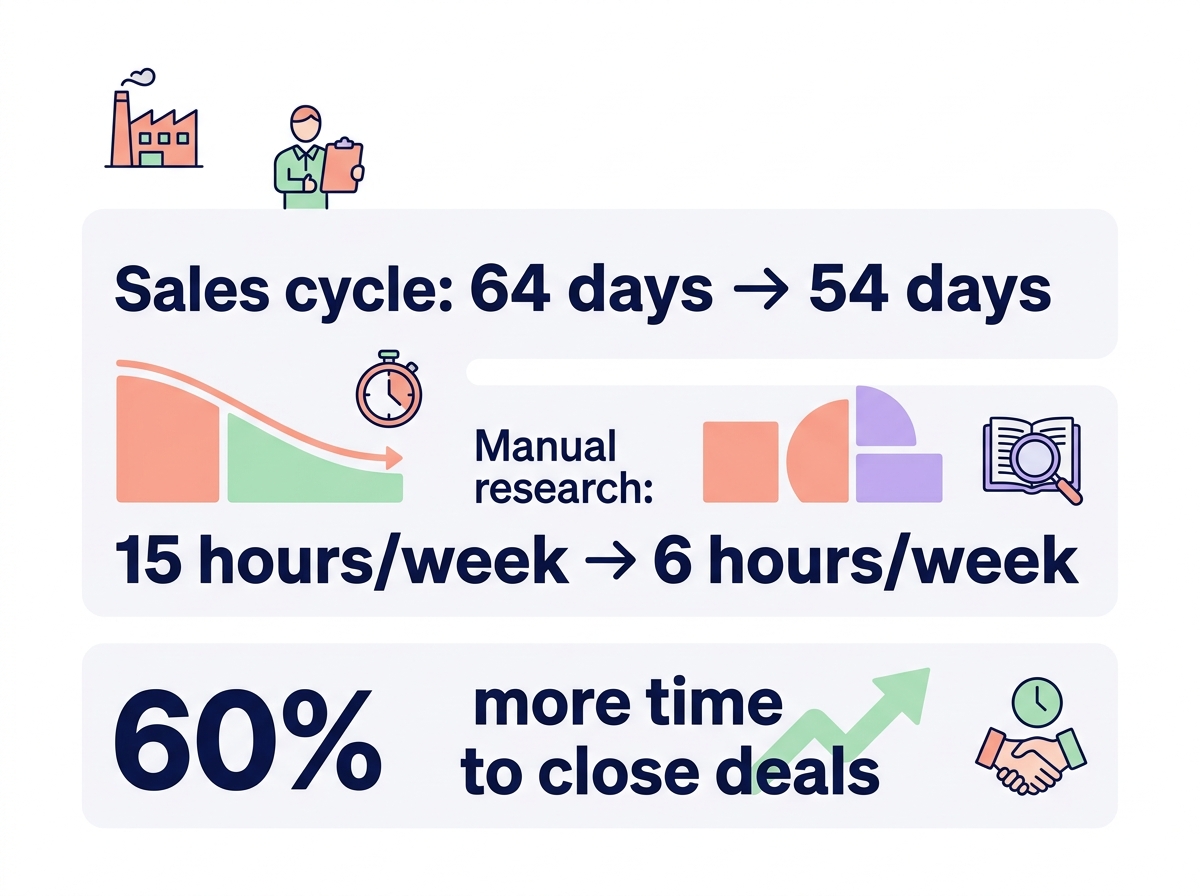
Real-world applications in the industrial sector have shown significant results for those who move away from manual prospecting. For example, a Leeds-based equipment supplier used AI to cut their sales cycle from 64 to 54 days. By reducing manual research and prospecting from 15 hours to just 6 hours per week, their reps gained 60% more time to focus on closing deals.
Other manufacturers have reported win rates as high as 60% by using AI to identify high-intent visitors and trigger immediate, relevant follow-ups. These outcomes demonstrate that when AI handles the data-heavy research, sales engineers can focus on the technical deep dives where their expertise is most valuable.
The role of human-AI collaboration
An agentic sales process does not replace your sales team; it upgrades them to focus on high-value interactions. The most successful optimized sales workflows use a “human-in-the-loop” model where AI handles the repetitive groundwork while humans provide the final layer of quality supervision.
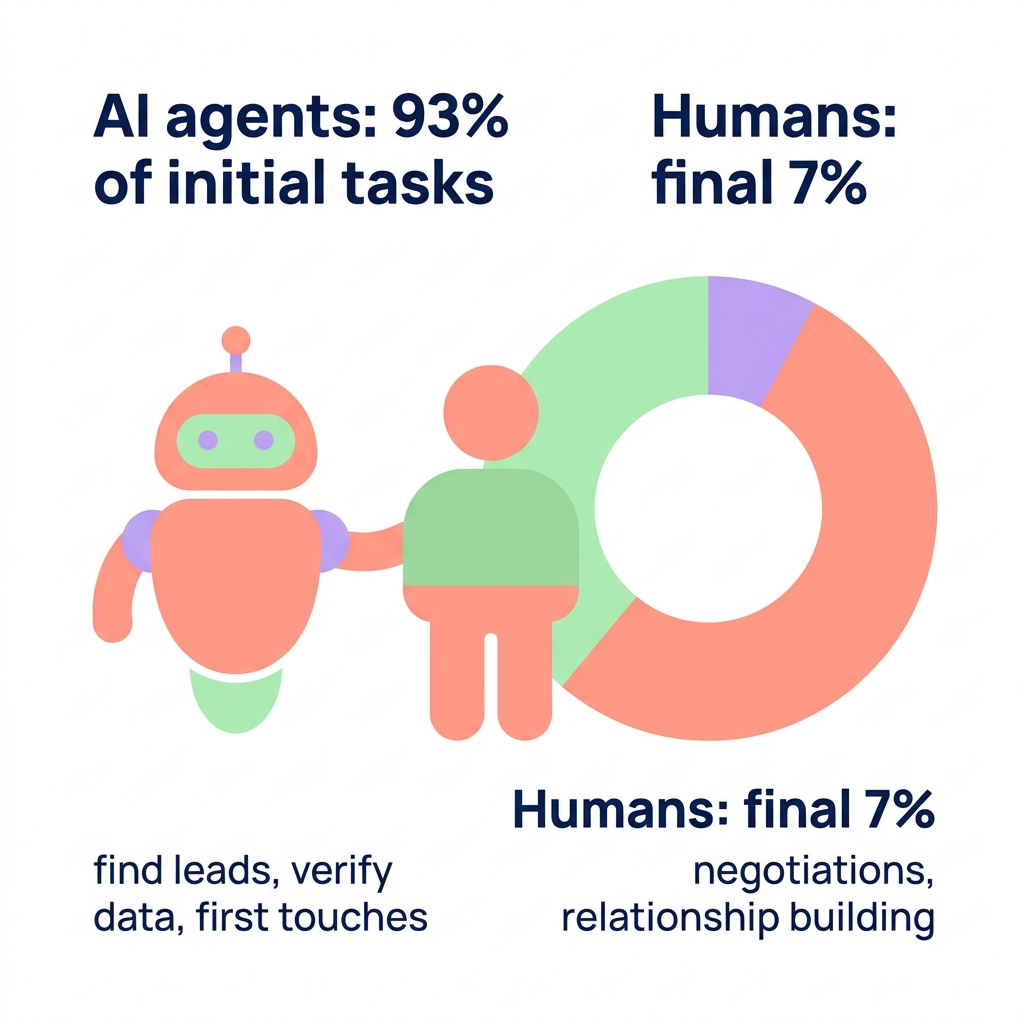
Typically, AI agents handle about 93% of the initial tasks – finding leads, verifying data, and managing first touches. Humans remain essential for the final 7%, focusing on complex negotiations and relationship building. This collaboration ensures that while the process is fast and efficient, every interaction maintains the genuine human touch required to win trust in industrial markets.
Transitioning to an agentic model allows your GTM team to move away from guesswork and toward a predictable pipeline. By automating the research and outreach phases, you ensure that your sales professionals only step into conversations that are already qualified and ready for a serious business discussion.
To see how coordinated AI agents can fill your calendar with high-quality meetings, explore how Sera’s Autopilot handles the end-to-end prospecting journey for you.