

Is your sales team spending more time on spreadsheets than on the factory floor? Manual prospecting consumes up to 15 hours a week for the average manufacturing representative. Automating these workflows with specialized AI agents allows your team to skip the data entry and focus on building relationships.
In the industrial sector, the outbound sales prospecting process is notoriously difficult. Sales cycles average 84 days, and you often need to navigate a committee of 6 to 10 stakeholders – from plant managers to procurement directors – before a contract is signed. Traditional manual methods struggle to keep up with this complexity.
Why manual prospecting is failing industrial sales
The traditional “batch and blast” email approach no longer works for technical buyers. Research indicates that 83-95% of the B2B buyer journey occurs anonymously before a vendor is ever contacted. When you finally reach out, 73% of buyers will avoid the interaction if the message is not relevant to their specific role or current project. This disconnect leads to manufacturing lead conversion rates that typically sit between 1.5% and 3.5%, significantly lower than the B2B average of 13%.
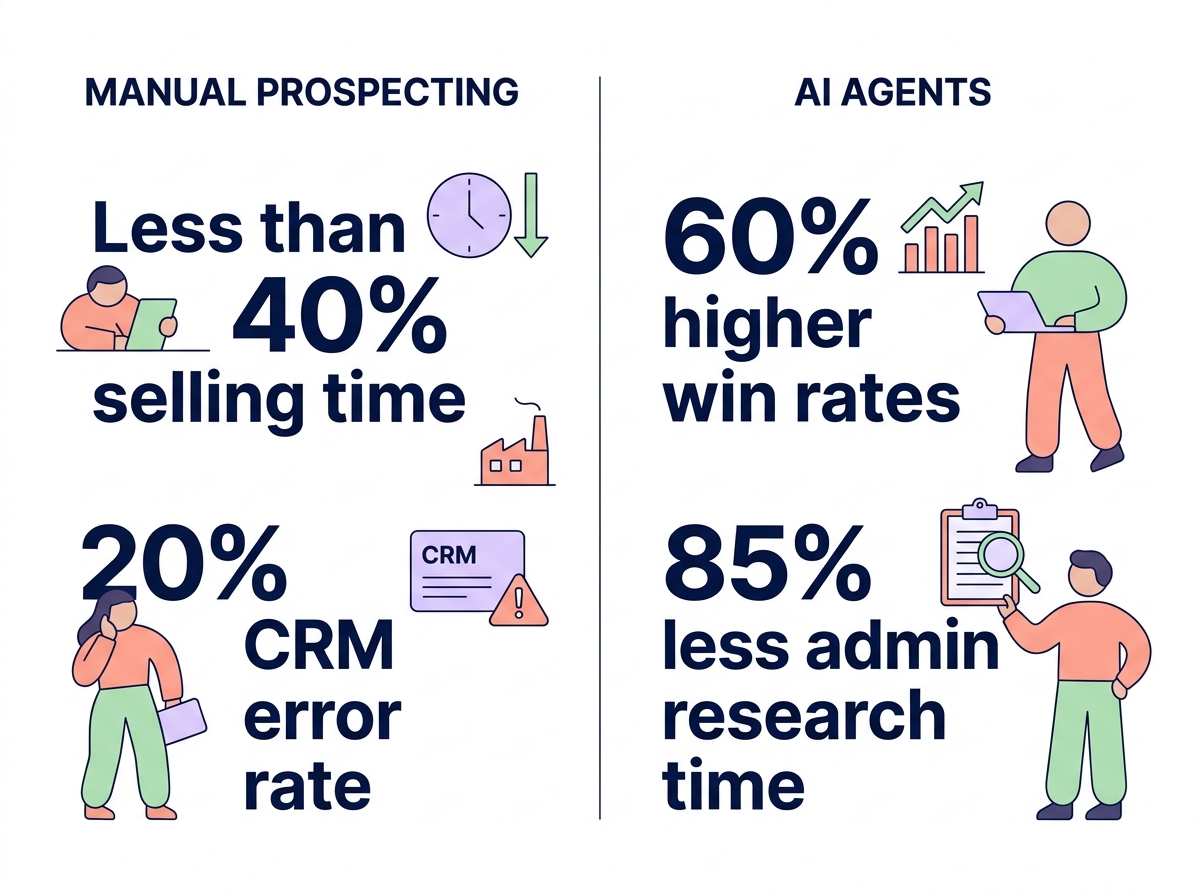
The cost of sticking to manual processes is high. Sales representatives often find themselves spending less than 40% of their time actually selling. Furthermore, manual entry introduces human error, with CRM data frequently suffering from a 20% error rate. By using AI sales agents to book more meetings, industrial companies have seen win rates increase by 60% while reducing the time spent on tedious administrative research by 85%.
How specialized AI agents automate the workflow
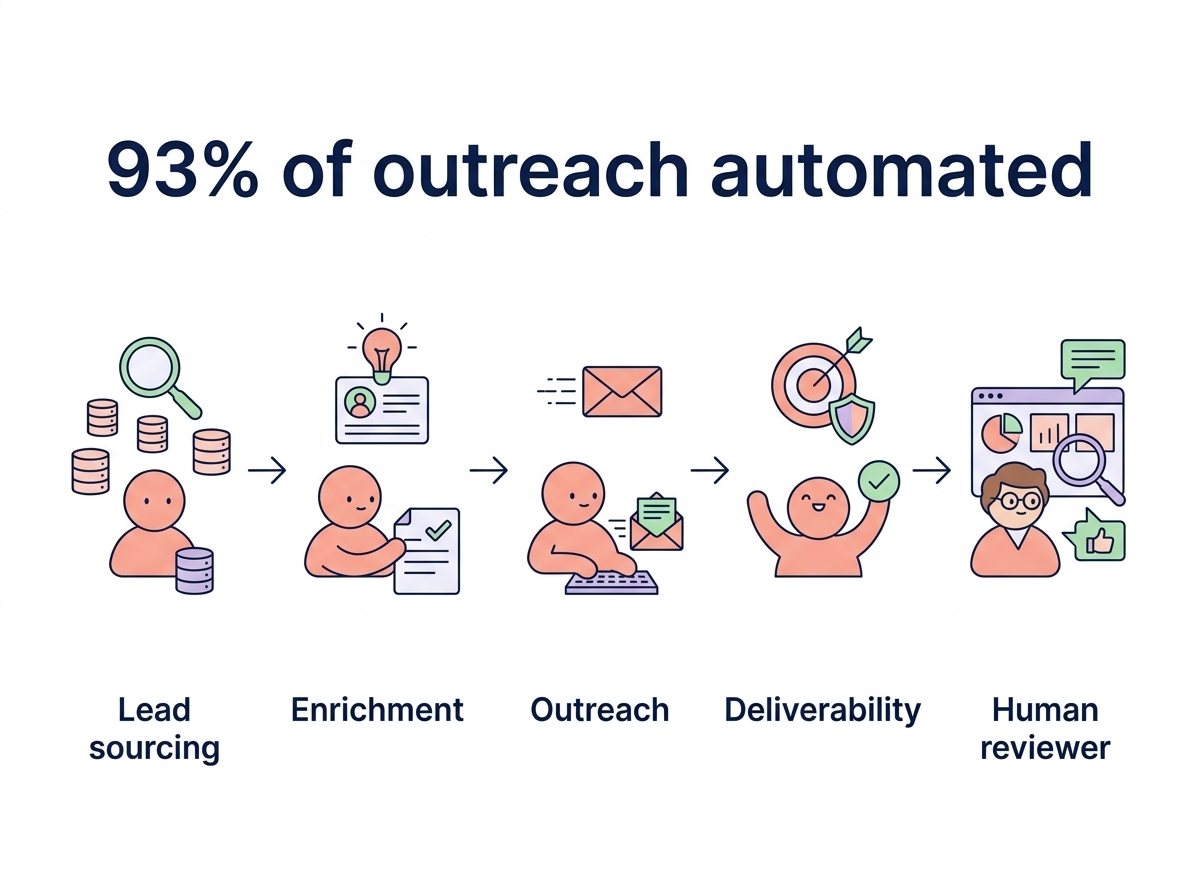
Unlike a generic chatbot, an AI SDR uses a coordinated system of specialized agents to handle different parts of the sales funnel. This “agentic” approach ensures that roughly 93% of the outreach is automated, leaving humans to provide the final oversight and quality control. These agents work together to manage everything from lead sourcing to deliverability.
Targeted list building and enrichment
Instead of purchasing a stale, generic database, AI agents scan live sources like LinkedIn and global industry news to find companies that match your exact Ideal Customer Profile (ICP). A list building agent identifies firms based on firmographics and technographics, while an enrichment engine adds deep insights. This might include identifying recent factory expansions or new production targets, allowing your team to move beyond basic contact info to true market intelligence.
Identifying the right decision-makers
In manufacturing, the person who signs the purchase order is rarely the person using the equipment on the floor. AI agents confirm the specific authority and role of each lead within the buying committee. This ensures you are not wasting a personalized outreach sequence on stakeholders who lack the power to approve new vendors or technical specifications.
Research-driven outreach writing
AI agents can draft human-sounding emails in over 100 languages, making them ideal for manufacturers expanding into international markets. These agents analyze specific buying signals, such as a prospect researching energy efficiency solutions during their budget cycle. Because the content is tailored to the prospect’s immediate needs, personalization beyond just a first name can boost reply rates by 2 to 3 times compared to generic templates.
Protecting your technical deliverability
Automated outreach only provides value if your messages actually land in the inbox. A deliverability guard monitors your technical setup – including SPF, DKIM, and DMARC records – and manages domain warm-up. Proper technical maintenance can improve inbox placement from 72% to 94%. This keeps your spam complaint rates under 0.1%, which is vital for maintaining a professional brand reputation during cold outreach for manufacturing.
Integrating AI with your existing CRM
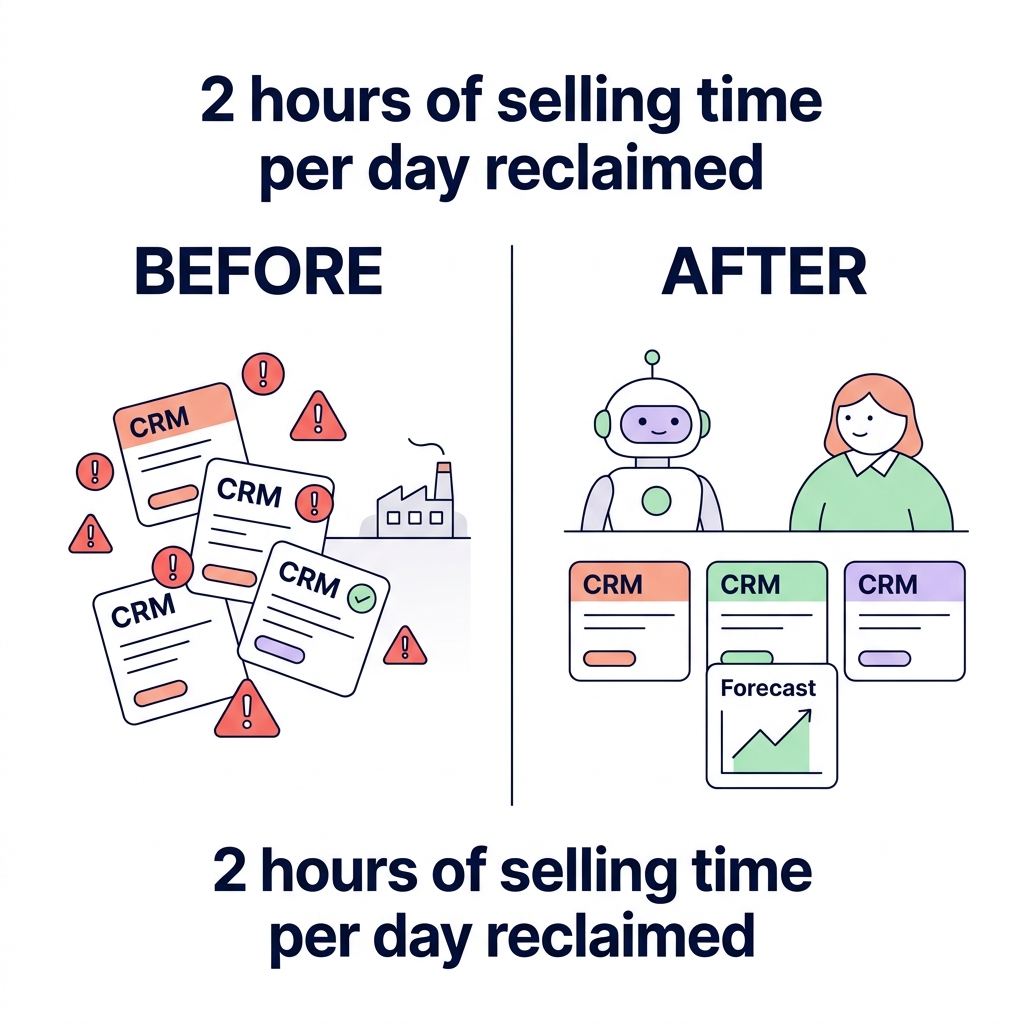
A common concern for manufacturing executives is the potential for new technology to disrupt established sales operations. Modern AI agents solve this through seamless CRM integration with platforms like Salesforce, HubSpot, or Pipedrive. When an agent identifies a high-intent lead or receives a positive reply, it automatically updates the prospect’s record and logs the activity.
This automation reclaims approximately two hours of selling time per day for every sales representative. Beyond time savings, it ensures that pipeline data is accurate and free from manual entry errors. With cleaner data and automated activity logging, your leadership team can forecast quarterly revenue and production needs with much higher confidence.
Maintaining the human element
While AI handles the “grunt work” of automated lead generation, the final stages of the process remain human-centric. Executives at industrial firms still value technical consultations and personal handshakes. The goal of automation is to handle the 15 hours of weekly research and initial outreach so your engineers and sales experts can focus on high-value tasks.
By removing administrative burdens, your team can dedicate their energy to in-depth technical demonstrations and negotiating complex RFPs. They have more time for on-site facility visits and solving the specific engineering challenges that your clients face. The AI acts as an autopilot for the “cruising” phase of prospecting, allowing the human pilot to take over for the critical “landing” of the deal.
Scaling your industrial outreach
Automating your sales workflow is not about increasing the volume of spam; it is about increasing the precision and quality of your engagement. By deploying specialized agents, you can enter new geographical markets or validate a new product line in a fraction of the time it would take to hire and train a manual sales team. This research-driven approach turns your outbound strategy into a predictable engine for growth.
If you are ready to see how an AI-driven autopilot can fill your calendar with qualified meetings and reclaim your team’s time, explore how Sera’s AI agents work.