

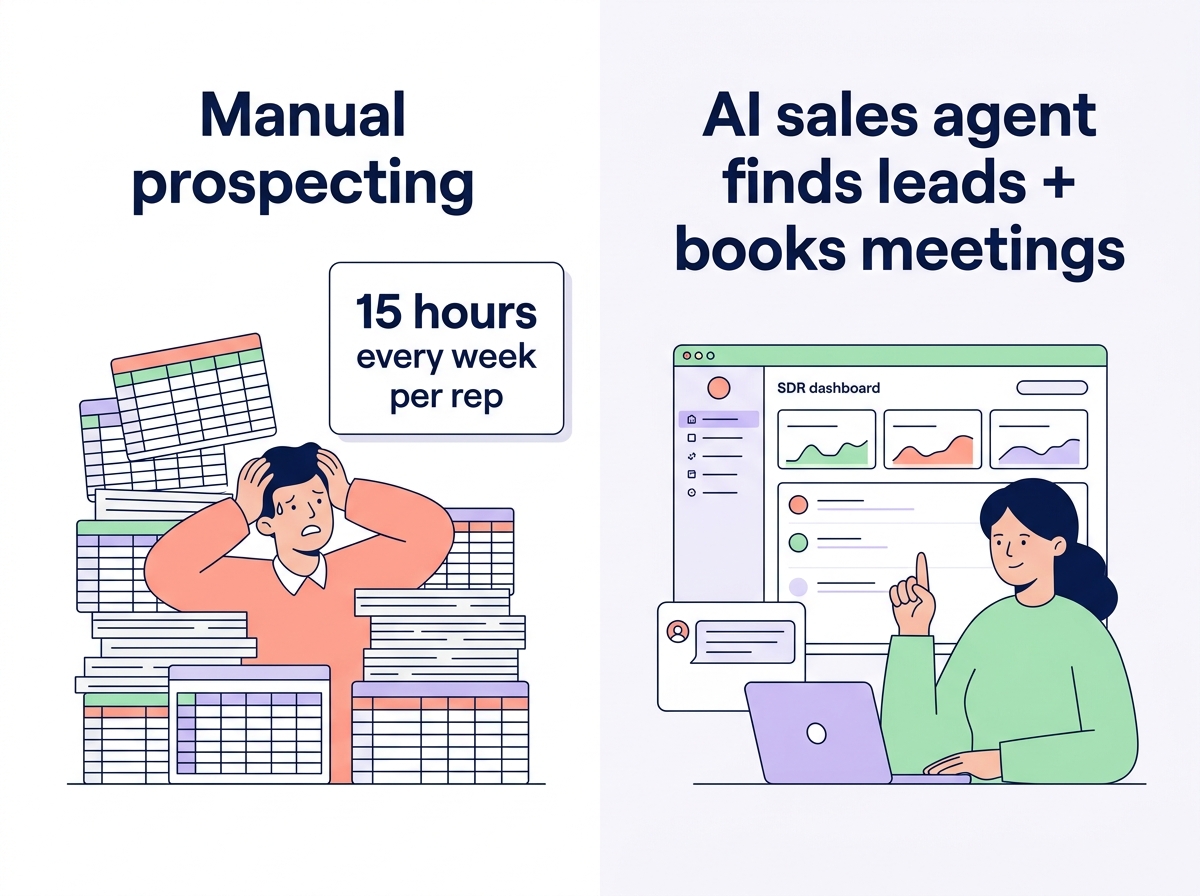
Are your sales reps buried in spreadsheets instead of closing deals? Manual prospecting consumes 15 hours every week per rep. An AI sales agent is an autonomous system that handles this entire outbound process, acting as a virtual SDR to find leads and book meetings.
This technology represents a shift from tools that simply store data to systems that proactively generate revenue. For manufacturing executives and B2B leaders, understanding this distinction is the first step toward reclaiming your team’s time and reducing manual outreach across the board.
How an AI sales agent differs from traditional tools
In the past, sales teams relied on simple automation. You would upload a list, write a generic template, and hit send. AI sales agents are fundamentally different because they are agentic. This means they can read a situation, analyze data, and decide on the best next step without a human prompting every move.
- Traditional chatbots: These are reactive tools. They stay on your website and wait for a visitor to click a bubble before they provide a scripted response.
- CRM automation: This technology focuses on organization. It logs data or sends “nudge” reminders, but it cannot perform the actual labor of identifying a new buyer.
- AI copilots: A copilot functions as an assistant that suggests what you should type. An AI agent is more advanced; it researches the prospect, writes the message, and handles the delivery.
By using AI for SDR tasks, your company moves beyond templates. These agents can look at a prospect’s latest financial report or a news mention to craft a message that sounds like it was written by a human expert.
The impact on manufacturing and B2B sales cycles
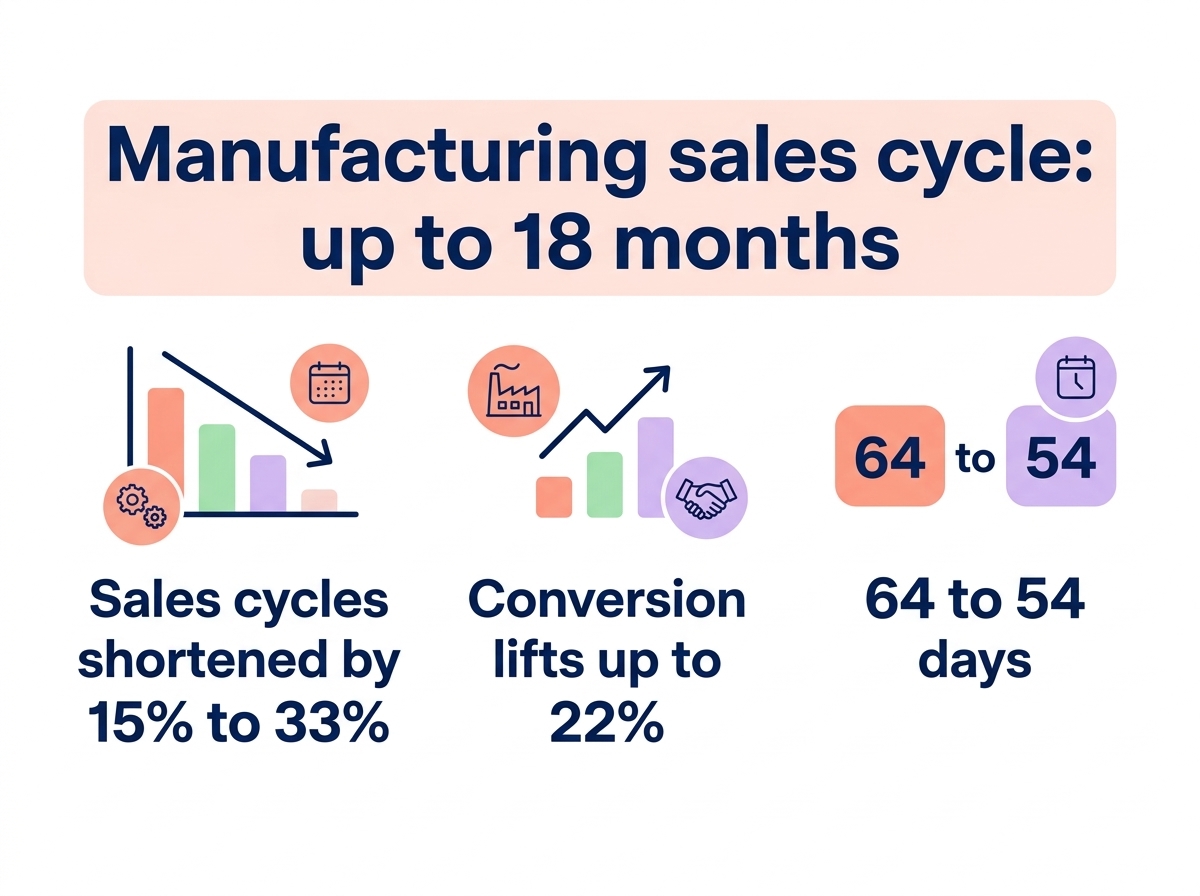
For manufacturing executives, the primary challenge is often a long, complex sales cycle that can last up to 18 months. When the top of your funnel is clogged with manual bottlenecks, it can delay revenue for weeks or even months.
Data shows that AI-driven outreach can trigger a return on investment of AI lead generation that shortens sales cycles by 15% to 33%. In the UK manufacturing sector, companies have even seen conversion lifts of up to 22%. By automating the heavy lifting of manufacturer lead generation, your human team can focus exclusively on technical specifications and relationship-building. One Leeds-based supplier even reduced their average sales cycle from 64 to 54 days after integrating AI into their workflow.
Core stages of the AI sales process
AI sales agents do not just send mass emails. They follow a coordinated, five-stage workflow that mimics the habits of a top-performing sales representative.
- Autonomous prospecting: The agent identifies companies that match your Ideal Customer Profile (ICP) across global databases, filtering by intent and firmographic data.
- Deep enrichment: It confirms the specific decision-maker at each company and finds their verified contact details to ensure your messages actually reach the inbox.
- Personalized outreach: Using multilingual outreach automation, agents can craft human-sounding messages in over 100 languages, allowing you to enter new markets without hiring local staff.
- Lead qualification: The agent scores prospects based on their responses and behavior. By optimizing lead qualification with automation, you ensure your reps only spend time on leads that are ready to buy.
- Meeting booking: Once a prospect shows interest, the agent coordinates with your calendar to book more sales meetings and logs every interaction in your CRM.
The hybrid model: AI handles the math, humans handle the chemistry
While AI agents are incredibly efficient, they are not a total replacement for your sales team. The most successful B2B organizations use hybrid models for lead qualification that combine machine speed with human intuition.
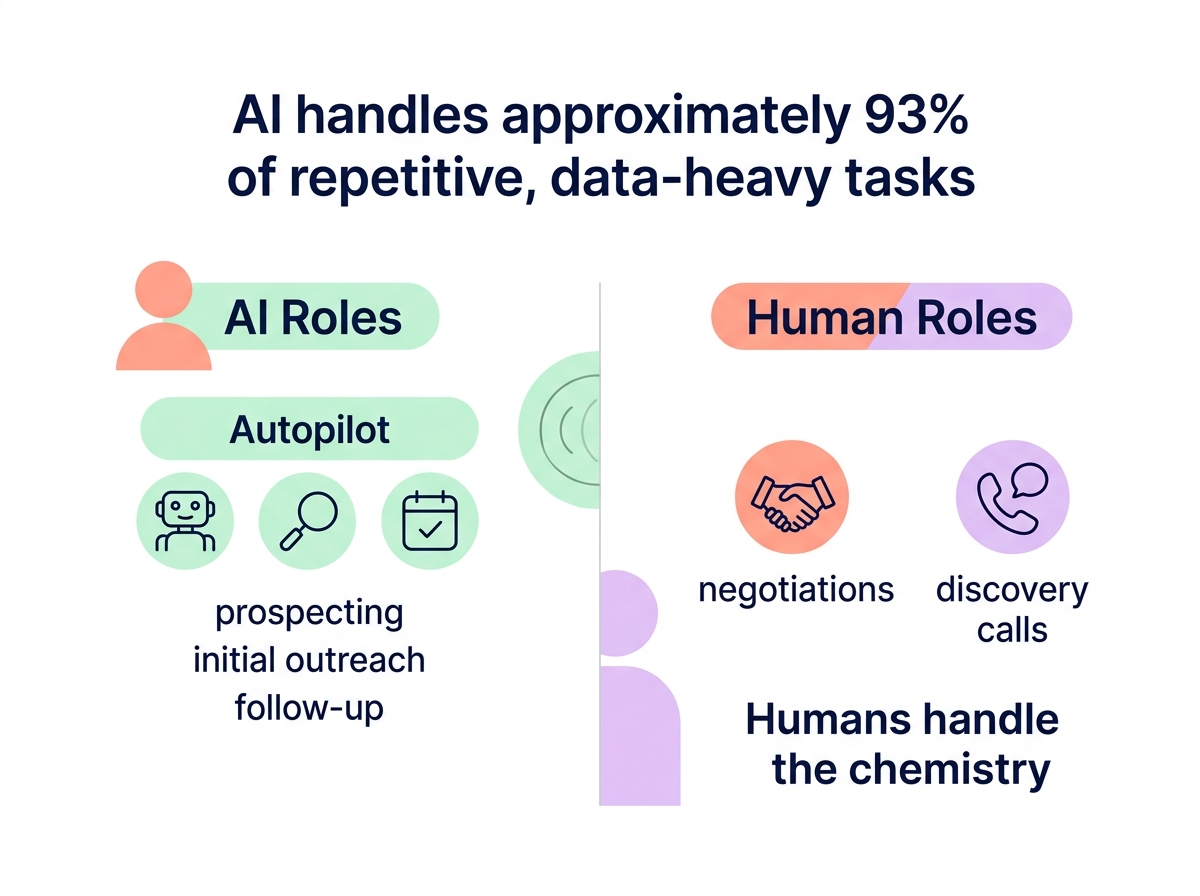
In this setup, the AI agent handles approximately 93% of the repetitive, data-heavy tasks. This includes prospecting, initial outreach, and automating follow-up processes. This “Autopilot” approach frees up your human closers to handle complex negotiations and high-stakes discovery calls. When the AI handles the “math” of finding and warming up leads, your team can focus on the “chemistry” of building trust.
By delegating administrative burdens to an agent, your team can reclaim up to 10 hours per week and see a 14.2% increase in overall productivity. You can transform your outreach from a manual grind into a scalable revenue engine that works 24/7.
To see how specialized AI agents can fill your calendar with high-intent meetings, explore Sera’s AI-driven outreach autopilot.