


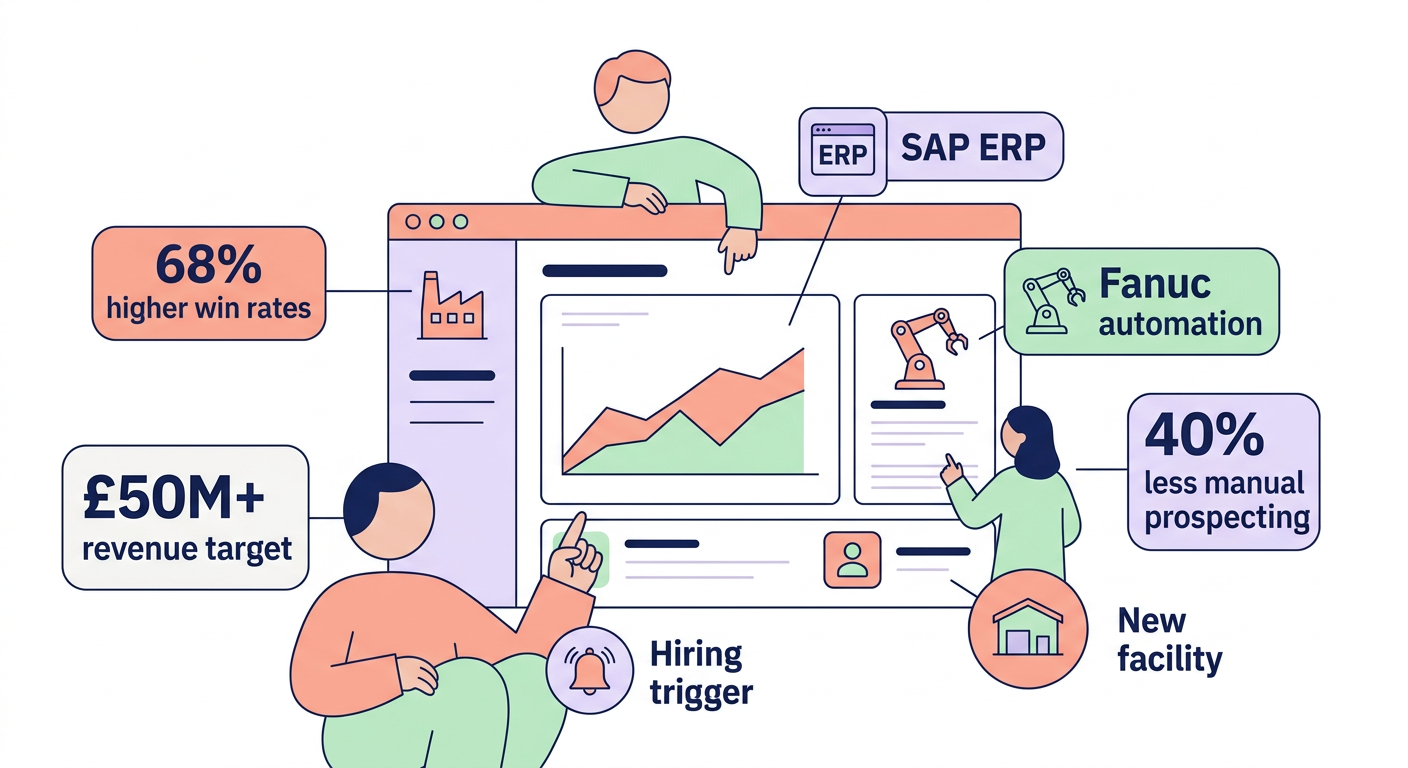
A high-quality list starts with identifying your target with surgical precision. In the industrial sector, company size alone is often a poor metric; you must look at operational sophistication to find the right fit. Research suggests that companies using a documented ideal customer profile for manufacturing achieve 68% higher win rates.
This definition should go beyond basic geography to include firmographic details like a £50M+ revenue target and specific technographic data. For example, knowing if a prospect uses SAP ERP or Fanuc automation systems can indicate their readiness for specialized tooling or software. Furthermore, tracking buying triggers – such as a company hiring for technical roles or opening a new facility – can reduce manual prospecting time by 40%. By focusing on these specific signals, you ensure your team only pursues accounts with a high probability of closing.
Source contacts through multi-channel data
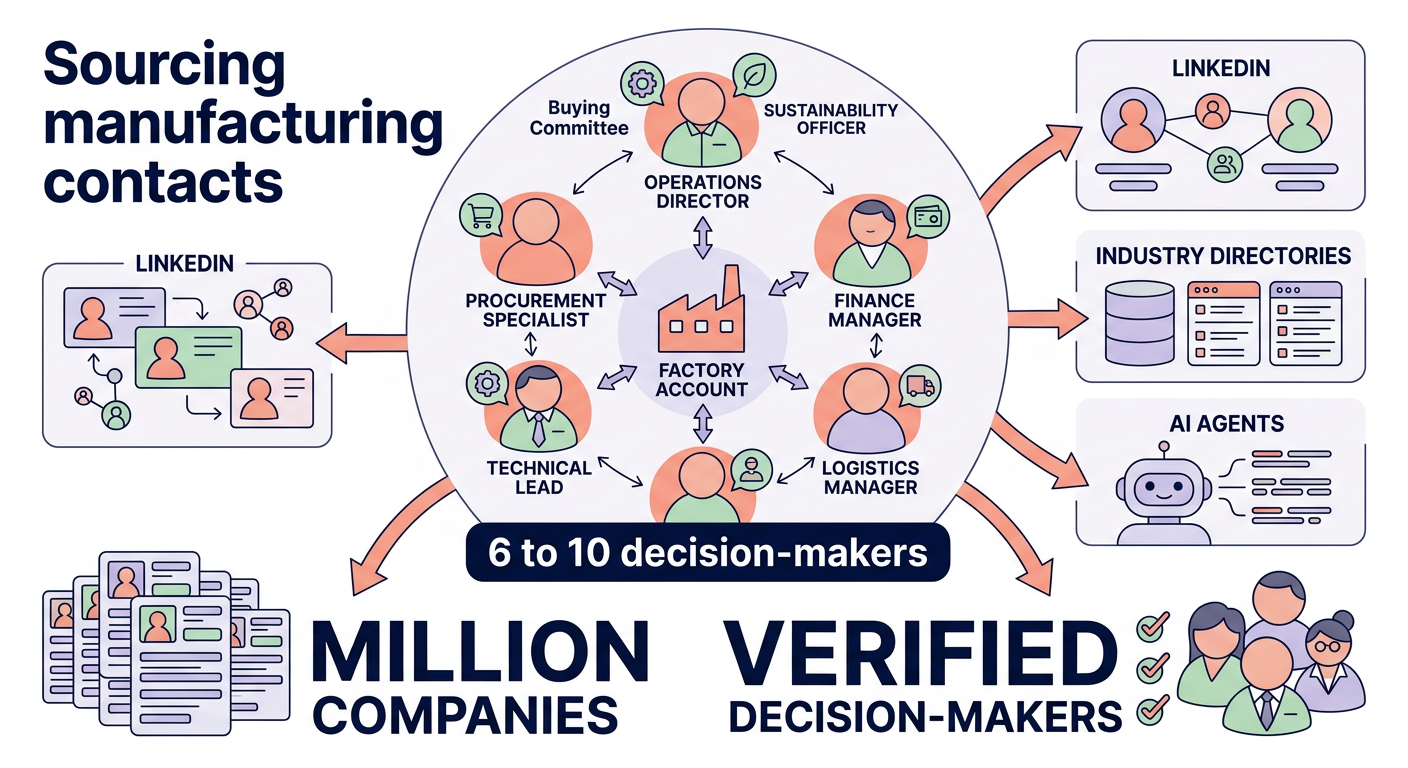
Once you define your target, the next step is locating individuals within the buying committee. In manufacturing, these groups often include 6 to 10 decision-makers ranging from operations directors to procurement specialists. Finding these hidden stakeholders requires a multi-channel approach that moves past simple spreadsheets.
Industry directories and LinkedIn
LinkedIn is a powerful tool for filtering by seniority or industry-specific keywords like “AS9100” and “Lean Manufacturing.” However, industrial buyers are often less active on social platforms than those in the tech sector. Consequently, successful LinkedIn prospecting for industrial sales requires a subtle approach focused on professional credibility rather than high-volume pitching. Appearing as a credible resource during their anonymous research phase is far more effective than sending interruptive messages.
Data providers and intent platforms
While tools like UpLead or ZoomInfo offer massive databases, the accuracy of contact information can vary significantly. Some providers have connect rates as low as 14%, which leads to wasted effort. To overcome this, Sera’s specialized AI agents automate the sourcing of verified decision-makers from a database of over 300 million companies. This system doesn’t just find a name; it uses an enrichment engine to confirm firmographics and tech stacks, ensuring you reach the person with the actual authority to sign a contract.
Validate and clean your data
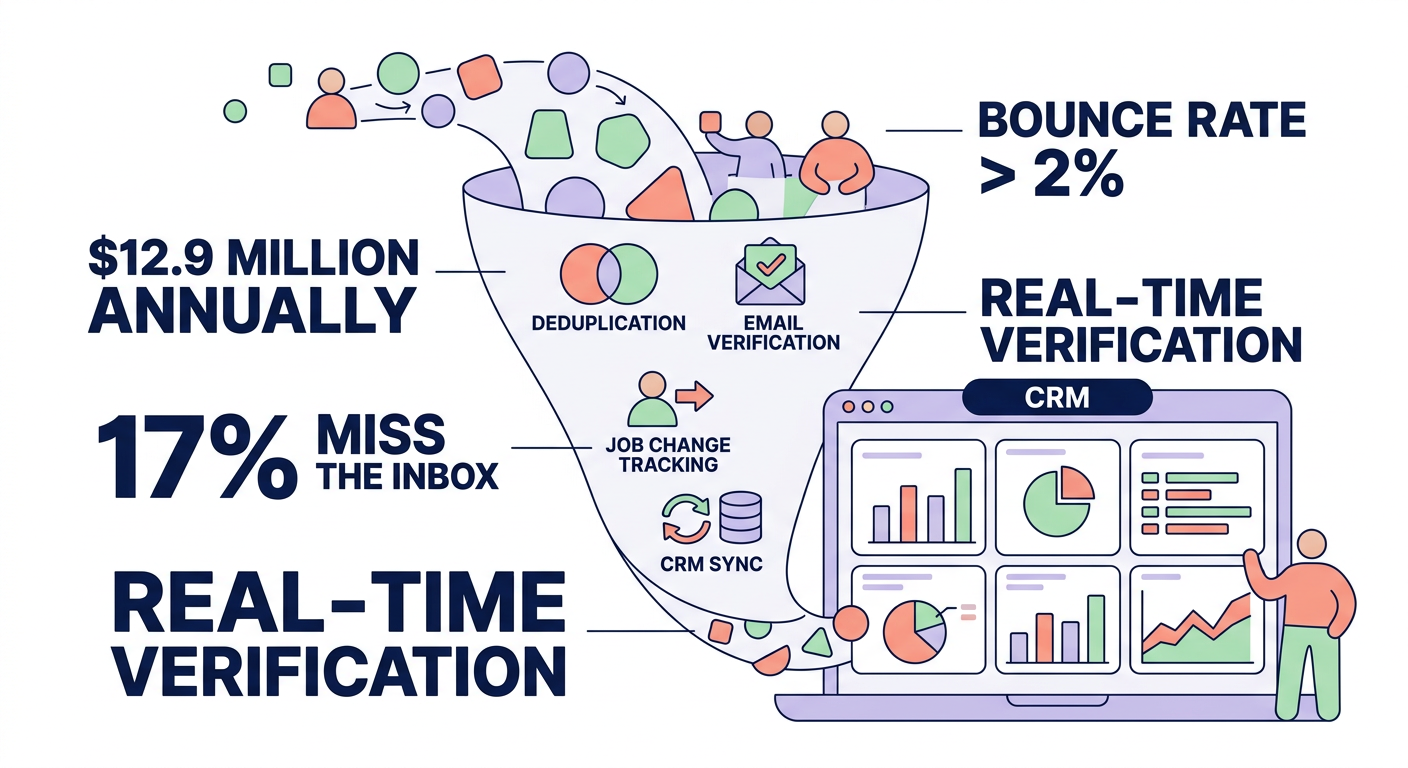
Poor data quality is a silent profit killer that costs organizations an average of $12.9 million annually. In the context of email outreach, 17% of cold emails often miss the inbox due to poor deliverability. If your bounce rate exceeds 2%, email providers will flag your domain, potentially costing you millions in lost pipeline.
Maintaining a healthy list requires following best practices for automated lead sourcing to ensure your data remains actionable. You must implement deduplication strategies to prevent your CRM from storing multiple entries for the same contact, which often leads to embarrassing double-outreach. Because manufacturing professionals frequently change roles, you should use data validation tools for Sales Navigator to track job changes and promotions. Finally, real-time verification of email addresses protects your sender reputation and ensures your message lands exactly where it belongs.
Integrate with your CRM for scale
A prospect list should never live in a static, siloed file. To turn data into revenue, you must integrate your lead generation with your CRM. This integration allows your team to see engagement signals in real-time, such as when a high-priority prospect visits your pricing page or downloads a technical specification.
Modern sales teams are moving away from manual list building in favor of AI-driven systems that manage the entire workflow. Sera’s Autopilot uses six specialized AI agents to handle research, enrichment, and outreach under human supervision. This approach allows you to maintain the high-touch feel of a boutique firm while achieving the scale of a global enterprise. By automating the technical heavy lifting, your reps can spend their time building relationships rather than cleaning spreadsheets.
Stop fighting with outdated data and unverified leads. You can start building a more predictable pipeline today by focusing on high-precision targeting and rigorous validation.
See how Sera finds and contacts your next manufacturing clients