


Are your sales reps wasting time on leads that will never close? In traditional manufacturing, a “good enough” target list often leads to 18-month cycles that end in “no decision.” Defining your B2B Ideal Customer Profile (ICP) is the only way to ensure your outreach hits the mark.
What exactly is a B2B ideal customer profile?
An Ideal Customer Profile (ICP) is a detailed description of the company that derives the most value from your product and provides the most value back to you. While buyer personas focus on the specific people within a company, an ICP focuses on the business entity itself. In the industrial sector, a strong ICP describes a “win-win” situation where your client hits their production goals using your solution, and you hit your financial goals because the account is lucrative and loyal.
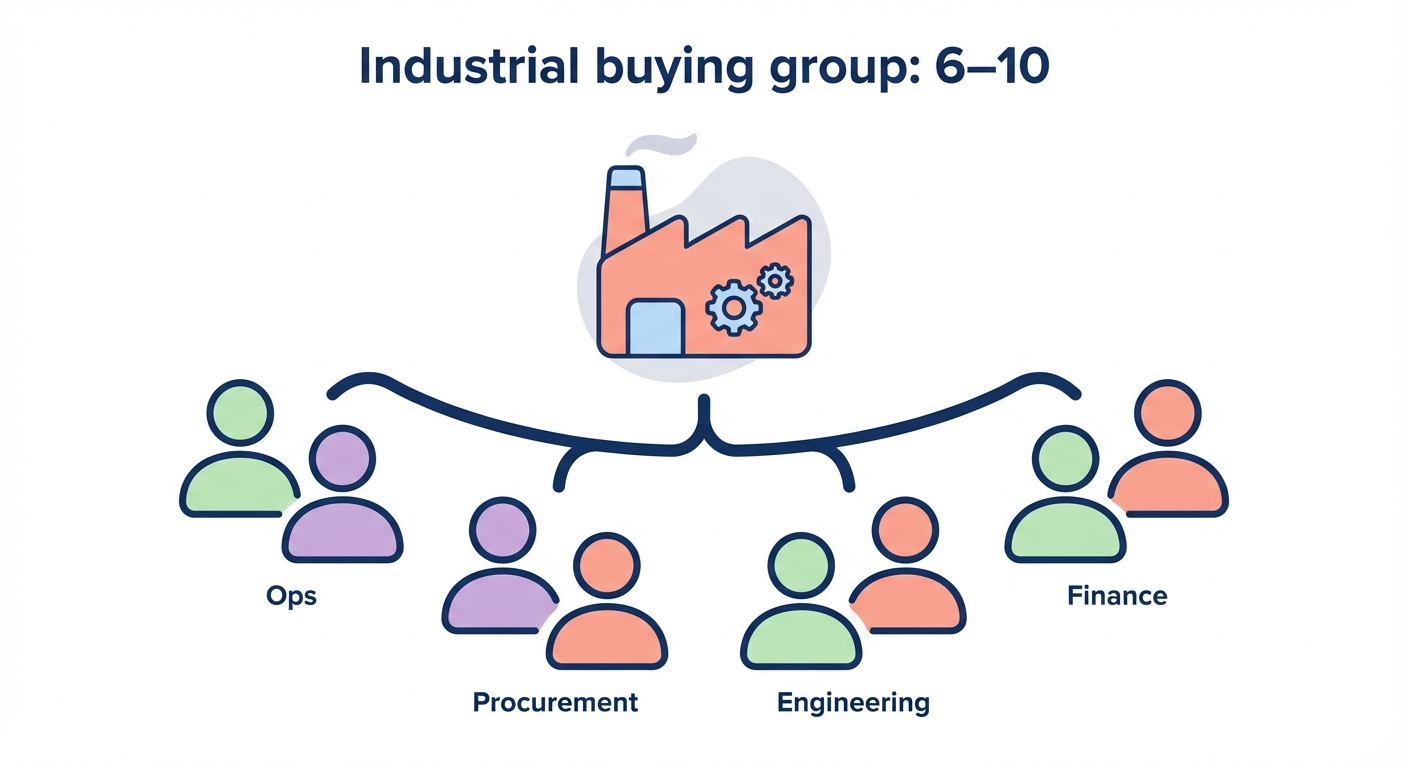
Manufacturing and industrial purchases are rarely decided by a single person. Research shows that B2B buying groups for industrial markets typically include 6 to 10 decision-makers, ranging from operations managers to procurement heads. Without a documented ICP, your marketing and sales teams will struggle to align on which specific “buying committees” deserve their attention. A well-defined profile draws a picture of a successful partnership, ensuring you target firms where your solution allows them to scale and grow.
The industrial ICP checklist: beyond company size
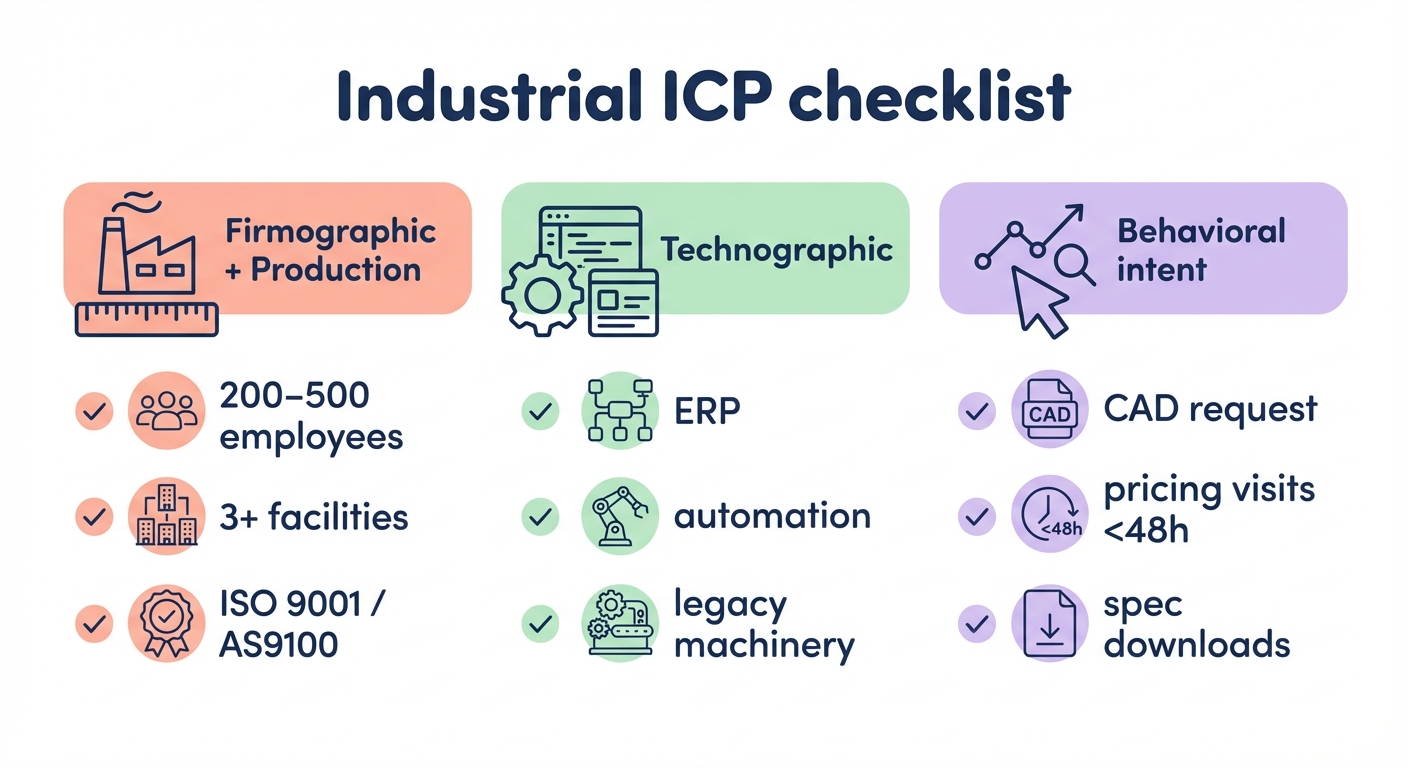
Traditional manufacturers often stop their targeting at “companies with £50M+ revenue.” To win in today’s competitive market, you must look deeper into the specific operational realities of your prospects. Effective industrial ICPs include a mix of firmographic data, production indicators, and behavioral signals to identify high-potential accounts.
Firmographic and production indicators
Company size is a starting point, but it is rarely the best predictor of success. Mid-sized firms with 200 to 500 employees often represent the most profitable targets for industrial suppliers because they are large enough to have significant needs but agile enough to make decisions. You should also consider production capacity indicators, such as the number of facilities, total square footage, and recent equipment investments. Compliance requirements also play a major role in the industrial sector. For instance, certifications like ISO 9001 or AS9100 often indicate a level of operational sophistication and specific procurement standards that match your own capabilities.
Technographic and operational data
Understanding a prospect’s technology stack helps you determine if your solution can integrate seamlessly into their current workflow. You should identify whether they use specific ERP systems, high-level automation, or legacy machinery. By leveraging data enrichment for manufacturing, you can uncover these “invisible” technical attributes before you ever send an introductory email. Knowing their technology investments and hiring patterns for technical roles can reveal a company’s readiness to adopt new industrial solutions.
Behavioral intent signals
A company is only “ideal” if they are actually in-market for a solution. High-intent signals might include downloading technical specifications, requesting CAD files, or visiting your pricing page multiple times within a short window. Research suggests that predictive lead scoring can increase conversion rates by 25% by identifying these behavioral patterns early. When you see a prospect viewing technical documentation or pricing within 48 hours, they are significantly more likely to convert than a passive researcher.
The manufacturing ICP template
Use the following framework to document your profile. You can copy this into your CRM or a shared document to keep your manufacturing sales funnel focused on the right accounts.
| Category | Definition | Example for Industrial Tooling |
|---|---|---|
| Industry | Specific Niche or Sector | Aerospace Component Manufacturing |
| Geography | Where they operate | United Kingdom and Western Europe |
| Company Size | Employee count or revenue | 100-500 employees; £20M-£100M revenue |
| Production Fit | Facility type or capacity | High-precision CNC shops; 3+ facilities |
| Technology | Existing software/machinery | SAP ERP; Fanuc automation systems |
| Pain Points | The problems they face | High downtime; 5%+ defect rates |
| Compliance | Non-negotiable standards | Must hold AS9100 certification |
| Buying Signal | Evidence of need | Recently secured a new Tier 1 contract |
How to use your ICP for automated outreach
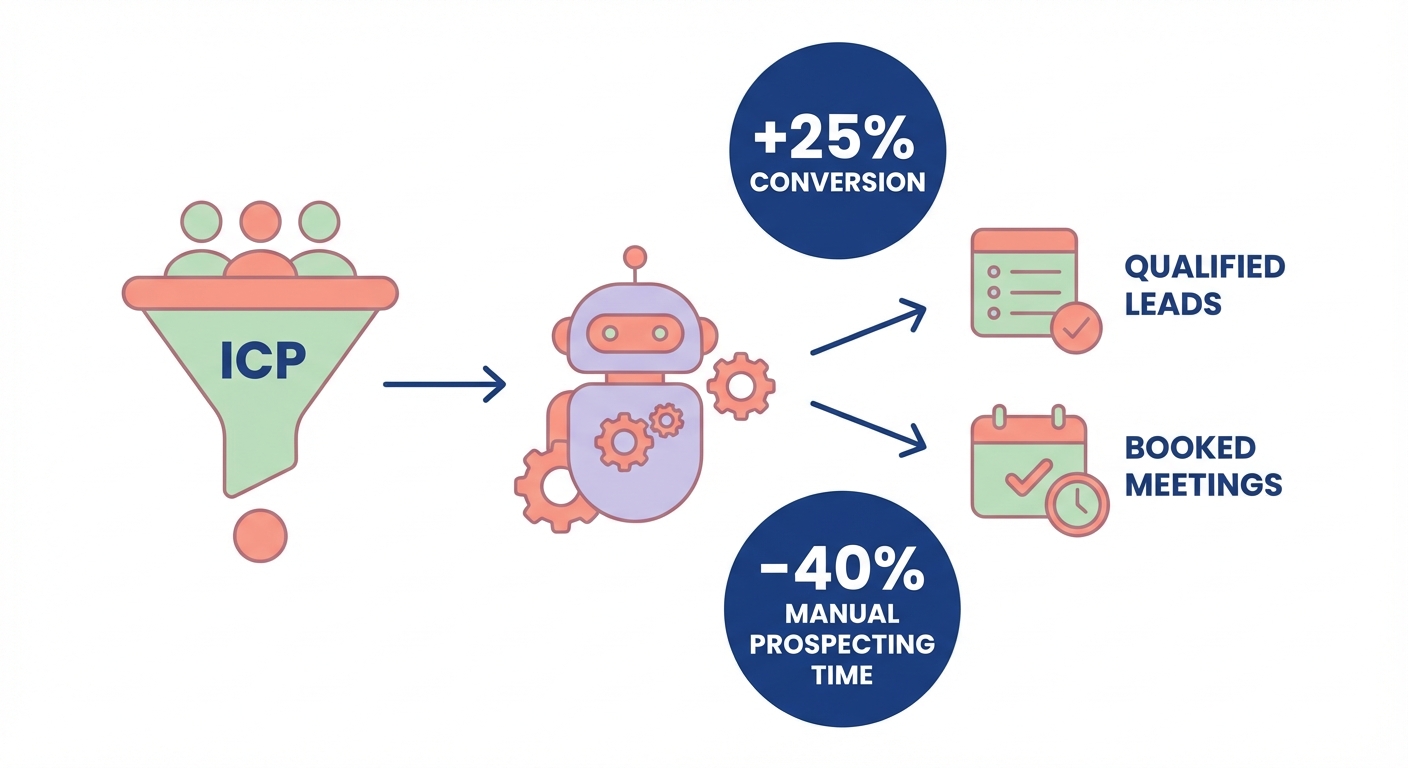
Once your ICP is documented, you shouldn’t have to hunt for leads manually. Modern systems for automated lead qualification use your ICP as a filter to find high-value targets. This ensures that your sales team spends their energy on leads that meet your specific criteria for company size, sector, and technical needs.
Sera’s Autopilot, for instance, utilizes a specialized List Building Agent to source verified decision-makers from a database of over 300 million companies that specifically match your documented ICP. Instead of blasting thousands of generic emails, the system focuses on low-volume, research-driven outreach. An Enrichment Engine then adds deep firmographics, such as revenue trends and tech stacks, ensuring your cold outreach for manufacturing remains relevant to the recipient’s current challenges. By aligning your ICP with AI-driven research, you can reduce manual prospecting time by up to 40% while increasing your reply rates.
Put your ideal customer profile into action
A well-defined ICP moves your sales team from guessing to knowing. When you narrow your focus to the accounts that truly matter, your sales cycles shorten and your win rates climb. This clarity allows you to build more personalized campaigns, improve your sales messaging, and align your entire organization around the customers who provide the highest lifetime value.
When you are ready to see how your Ideal Customer Profile can be turned into a steady stream of booked meetings, explore how our AI agents handle the heavy lifting of identifying and researching your next clients at Sera.