
Skip to content

AI tools for multilingual sales prospecting and outreach in 2025

Taavid Mikomägi
Taavid Mikomägi
Head of Growth

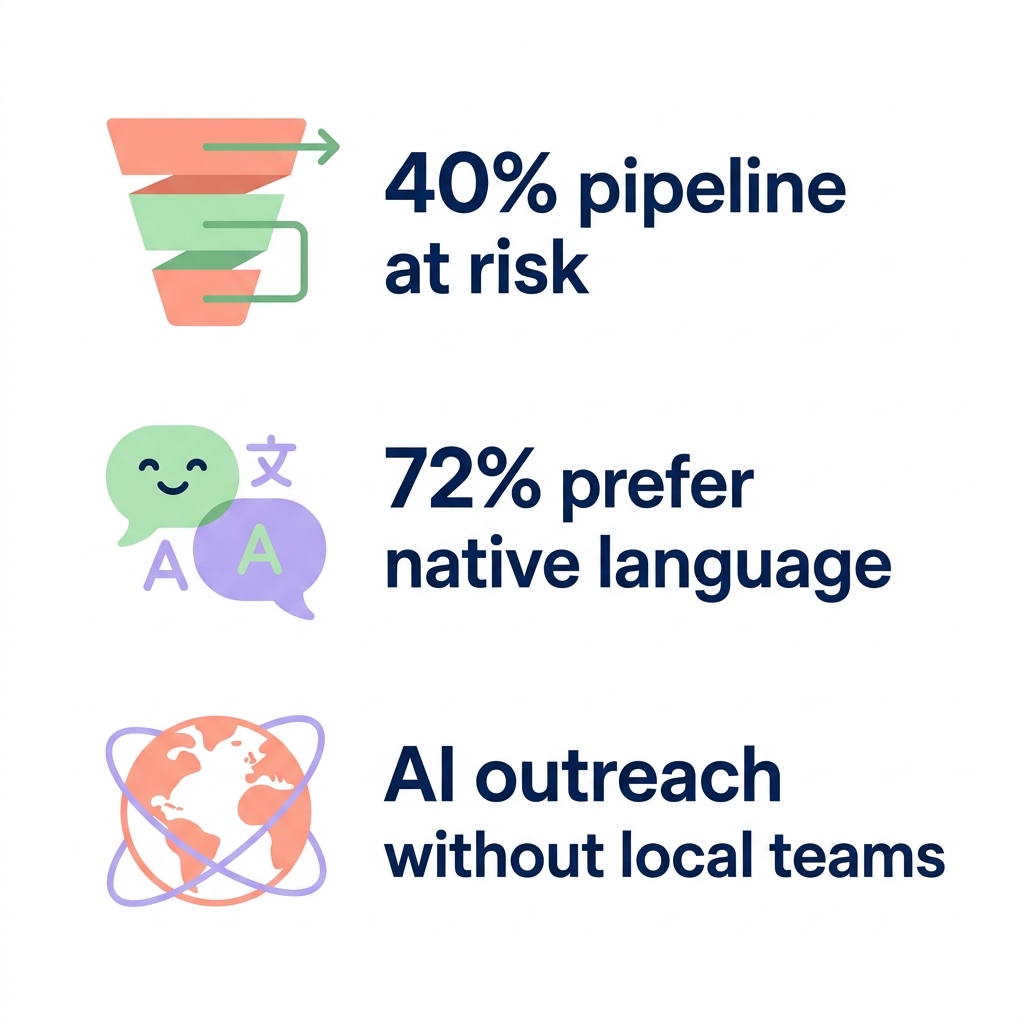
Your sales team is probably losing 40% of its potential pipeline to a language barrier they don’t even realize exists.

The data is stark: 72% of customers prefer engaging in their native language, and companies that localize content effectively see 30–40% higher engagement rates. Yet most B2B sales teams still default to English-only outreach, essentially abandoning qualified prospects across Europe, Asia-Pacific, and Latin America before the conversation even starts. The solution isn’t hiring multilingual sales reps in every target market – it’s leveraging AI tools purpose-built for global prospecting and outreach that combine lead research, multilingual message generation, smart sequencing, and deliverability safeguards to scale cold outreach without tipping into spam.

Why AI-powered multilingual prospecting matters now

The global sales landscape has fundamentally shifted. 80% of UK sales teams are projected to use AI for lead generation by 2025, and 30% of outbound sales messages will be machine-generated this year – a 98% increase from 2022. But what separates winners from the noise is this: the best tools don’t just translate; they research, personalize, and adapt culturally while maintaining your brand voice across 100+ languages.

Consider the numbers. Sales teams using AI-powered outreach tools achieve 2x higher reply rates and 30% more booked meetings compared to teams without AI. Multilingual AI-driven outreach enabled one London marketing agency to document a 15% improvement in conversion rates, while a UK software company generated 35% of its qualified leads from Asia-Pacific markets using multilingual chatbots. The speed advantage is equally compelling: leads contacted within one minute convert at 391% higher rates, and AI enables that instant response across every time zone and language simultaneously.

Lead research and prospect intelligence tools

Effective multilingual outreach starts with knowing who to contact and when. Modern AI research tools scan millions of data points to surface qualified prospects and buying signals that manual research would never catch.

Apollo.io and 6sense lead the pack for intent-based targeting across global markets. These platforms analyze website behavior, content engagement, and digital footprints to identify prospects actively researching solutions like yours – then surface that intelligence in your preferred language dashboard. Organizations using predictive analytics for lead scoring saw up to 51% increase in lead-to-deal conversion rates, largely because AI catches micro-signals humans miss. When a German prospect visits your pricing page three times in a week, views competitor comparison content, and downloads a case study, AI flags them as high-intent and triggers personalized outreach in German.

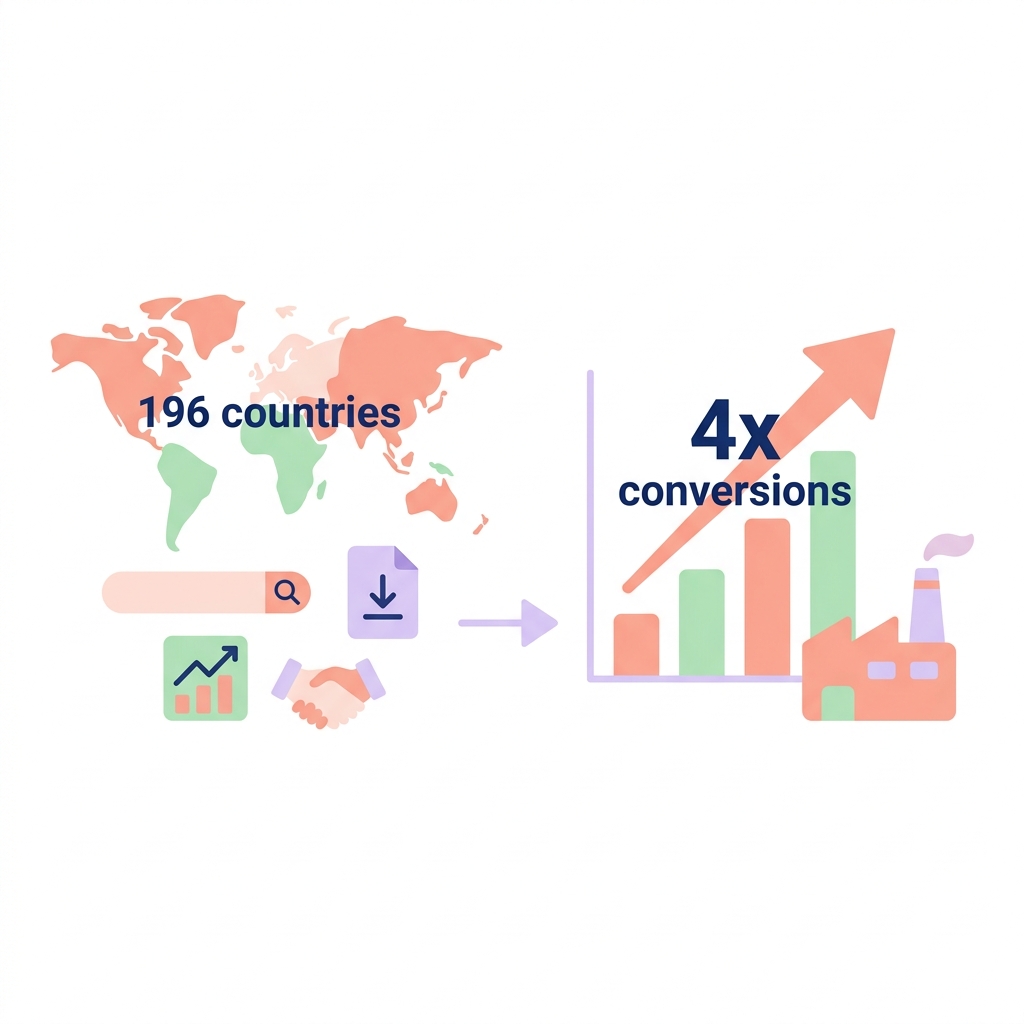
Leadspace and Demandbase excel at firmographic enrichment for international markets. They automatically append company data – revenue, tech stack, employee count, recent funding, expansion signals – across 196 countries. A UK fintech using Demandbase generated £2.7 million in pipeline within a single quarter by targeting accounts showing combined intent and fit signals.

The challenge with global prospecting isn’t just finding leads – it’s understanding context. Why is a Singaporean manufacturing firm searching for your solution right now? What regulatory change in Germany created sudden demand? Modern research platforms like Sera combine lead data with real-time market intelligence. Their Research Analyst agent scans news, LinkedIn activity, and press releases to uncover buying signals, timing cues, and cultural hooks that make outreach messages resonate. When a French company announces a new factory opening, the system flags it as a perfect moment to discuss equipment procurement and surfaces the decision-maker’s preferred communication style based on regional business norms. This level of research intelligence is what separates inbox placement from spam folders – 75% of sales teams now use AI for prospecting, yielding 25% higher outbound lead generation and 15% average conversion rate increases precisely because they lead with relevant, timely insights rather than generic pitches.

AI translation and multilingual message generation

Translation is table stakes. The real value lies in tools that preserve your brand voice, adapt cultural nuances, and optimize messaging for regional buying psychology.

DeepL Pro has become the gold standard for B2B sales translation, offering neural networks trained on billions of multilingual business documents. Unlike Google Translate’s literal approach, DeepL maintains industry terminology, adjusts formality levels, and adapts idioms appropriately. A London agency director noted their multilingual automation for outreach produced messages that felt “refreshingly natural” in German – critical when 72% of buyers prefer native-language engagement. Smartling and Lionbridge go further with workflow integration, letting you manage translations at scale while maintaining version control and brand consistency. They’re particularly valuable when you’re running parallel campaigns across multiple European markets and need to ensure messaging coherence. But here’s the limitation: pure translation tools don’t understand sales psychology. They convert words, not intent.

This is where platforms like Jasper Campaigns and purpose-built sales AI shine. These systems don’t translate – they generate original messaging in the target language, trained on high-performing sales copy and cultural communication patterns. The result? Properly localized emails drive 56% higher conversion rates compared to generic campaigns. An AI SDR delivering personalized outreach in five languages achieved 3.5x higher engagement rates versus English-only communications. The key is cultural adaptation beyond translation. German prospects respond to detailed technical specifications and ROI data. Italian decision-makers prefer relationship-focused messaging with longer introductions. AI tools trained on these patterns automatically adjust tone, structure, and emphasis – without you needing a communications degree in intercultural business.

Sera’s Outreach Writer agent exemplifies this approach. It crafts messages that “feel authentic – not automated” by combining prospect research with language-specific templates and cultural intelligence. When reaching out to a Polish manufacturer about production equipment, the system references local industry challenges, adapts formality levels appropriate for Polish business culture, and structures the email following regional expectations – all while maintaining your brand voice.

Personalization engines and dynamic content

Scale and personalization used to be opposites. AI eliminated that tradeoff. AI-driven personalization improves email campaign performance by 25%, but the impact multiplies when you personalize across both language and business context. Modern platforms use behavioral data, firmographic insights, and real-time signals to customize every element of outreach – from subject lines to specific pain points mentioned – for each recipient.

HubSpot Marketing Hub and Marketo lead in this category, offering dynamic content blocks that swap based on prospect attributes. A single email template can automatically show German-language case studies to German prospects, French regulatory compliance information to French buyers, and UK-specific pricing to British decision-makers. The sophistication goes deeper with intent-based personalization. Platforms like Jeeva AI use multi-agent scoring frameworks that detect micro-signals – pricing page visits, competitor content consumption, LinkedIn activity – and trigger hyper-personalized follow-ups in the prospect’s language.

One practical example: A UK software firm set up behavioral triggers for their German audience. When a prospect from Munich viewed their integration documentation three times, the system automatically sent a personalized email in German highlighting technical architecture details, included a case study from a similar Bavarian manufacturer, and offered a demo in the prospect’s time zone. The approach tripled engagement rates in German-speaking markets.

The best personalization engines let you create market-specific playbooks that define messaging frameworks, objection handling, and communication patterns for each region. This isn’t just about swapping language – it’s about encoding cultural business intelligence. A UK company achieved a 35% increase in qualified leads by developing region-specific playbooks: their German guide emphasized technical specifications and ROI calculations, their French playbook prioritized relationship-building and longer context-setting, and their Dutch version focused on direct, concise value propositions.

Outreach sequencing and campaign automation

Generating a great multilingual message is step one. Delivering it at the right moment, through the right channel, with intelligent follow-up is where revenue happens.

Outreach.io and SalesLoft pioneered intelligent sequencing, and their latest versions integrate multilingual capabilities. You can build sequences that automatically adapt timing, channel, and content based on prospect engagement and regional preferences. The intelligence layer matters enormously. Research shows contacting prospects between 4:00–5:00 PM their local time can increase success rates by up to 71%, but manually coordinating that across time zones is impossible at scale. AI sequencers handle it automatically, scheduling emails when prospects are most likely to engage in Frankfurt, Sydney, São Paulo, and Seattle simultaneously.

Cadence by Ringover offers this at £69/user/month with built-in multilingual support for email sequences and automated tasks. It’s particularly strong for European markets, with GDPR compliance built into the workflow.

The most effective approach balances automation with human touch. Hybrid models combining AI-driven outreach with multilingual specialists generate 30% more qualified leads annually than purely automated or purely human approaches. Here’s how the best teams structure it: AI handles initial qualification in the prospect’s native language, scores engagement level, and routes high-intent leads to human sales reps. The rep takes over the conversation with full context – research notes, interaction history, cultural guidance – all surfaced in their dashboard.

A London agency implemented this model with impressive results in multilingual engagement: 30% increase in qualified non-English leads and 15% improvement in conversion rates. As their director explained: “The AI does the heavy lifting of initial outreach across languages, then helps our team understand cultural context when they take over the conversation.” Sera’s approach exemplifies this hybrid model, combining six specialized AI agents with human supervision to run approximately 93% of outreach activities while maintaining quality and cultural appropriateness.

Email deliverability and reputation management

All the AI sophistication in the world means nothing if your messages land in spam folders. Deliverability is where many multilingual campaigns fail – and where the right tools provide enormous competitive advantage.

Modern deliverability platforms like Lemlist and Mailshake automate the technical foundations: SPF records, DKIM signatures, DMARC policies. But international markets add complexity. Asian email providers may have different text-to-HTML ratio thresholds than European servers, and spam filters in different regions flag different patterns. The solution is AI-driven warmup and monitoring. Properly authenticated and warmed domains see up to 70% lower spam flagging rates. Tools that automate gradual sending volume increases, simulate natural engagement patterns, and monitor reputation across regional ISPs are essential.

One UK manufacturer boosted deliverability from 76% to 94% in key Asian markets within six weeks using AI-driven list hygiene and sending pattern optimization – producing 22 new qualified opportunities from previously unreachable prospects.

Spam filters vary significantly by region. What works in London might trigger blocks in Tokyo. The phrase “free demo” raises flags in some markets but not others. References to discounts or pricing can be spam signals in certain European countries with strict marketing regulations. AI content scanners analyze your draft messages against region-specific spam filter databases and suggest adjustments before you hit send. They’ll flag that your German email uses too many exclamation points (considered unprofessional in German business culture and a spam signal), or that your French message needs restructuring to meet local content regulations.

Sera’s Deliverability Guard takes this further by combining technical setup, address validation, and intelligent pacing. It maintains 99% deliverability by adjusting sending patterns based on recipient timezone and engagement history while continuously monitoring sender reputation across international ISPs. The practical outcome: a UK SaaS firm improved inbox placement by 45% in key international markets after implementing AI deliverability safeguards, directly contributing to their expansion success in Asia-Pacific.

CRM integration and workflow orchestration

Powerful standalone tools create impressive results. Integrated systems that orchestrate your entire sales workflow create revenue.

Salesforce and HubSpot lead with robust multilingual capabilities – language-specific lead scoring, automated routing to native speakers, dynamic content libraries organized by region. Enterprises implementing AI-based CRM systems close 21% more deals, with 79% planning adoption by 2025. The value is in the details: your CRM can detect a prospect’s preferred language from email signatures, domain extensions, or form submissions, then automatically trigger appropriate follow-up sequences. It routes German leads to German-speaking reps (or German AI sequences if you don’t have coverage), presents French case studies to French prospects, and maintains consistent tracking regardless of language.

Zendesk Sell offers strong multilingual lead scoring and pipeline management between £15–£89/user/month, with built-in GDPR compliance – critical for European markets where penalties can reach up to 4% of annual global turnover.

Not every sales team operates on Salesforce. If you’re using Pipedrive, Close, or niche industry CRMs, integration becomes trickier but no less important. This is where tools like Zapier, Make (formerly Integromat), and iPaaS platforms enable multilingual workflow orchestration. You can connect lead intelligence platforms to translation services to your CRM to outreach tools – creating automated workflows that enrich prospects, generate localized content, trigger sequences, and log everything back to your central system.

A UK telecommunications company consolidated data from five different systems into a unified platform and achieved a 32% improvement in lead qualification rates across European markets. The key was eliminating data silos so every team member had real-time access to prospect intelligence, interaction history, and cultural context regardless of language. For a complete view of creating these connected systems, explore tools for automating multilingual lead generation.

Conversational AI and chatbots for 24/7 engagement

Your best German prospect might be researching solutions at 2 AM Berlin time. Your ideal Singaporean customer could be comparing vendors at 9 AM local – which is 2 AM in London. AI chatbots captured 35% of qualified leads outside UK business hours for companies that deployed them strategically.

Drift and Intercom pioneered conversational marketing, and their latest versions support 12+ languages with intelligent language detection. When a Japanese visitor lands on your site, the chatbot automatically switches to Japanese, answers questions about your product, and can even book discovery calls in Tokyo-friendly time slots. Multilingual chatbots can cut response times by 80%, but the real value is qualification at scale. A UK software firm captured 35% of qualified leads in Asia-Pacific during non-business hours using multilingual AI chatbots – leads that would have been lost to competitors with local presence.

The frontier is voice. Retell AI and similar platforms enable AI-powered sales calls in multiple languages, with fine-tuned speech recognition for regional accents and dialects. These systems can detect caller language via IVR, geo-IP, or CRM data without custom training, enabling instant multilingual response. Early adopters report up to 30% increase in conversion rates through native language support, largely because prospects feel more comfortable discussing complex B2B purchases in their first language. The AI detects frustration or confusion and triggers warm transfers to human agents with full transcript and language context – creating seamless handoffs that preserve the customer experience. The technology can deploy new language capabilities in under one week with no-code platforms and no engineering lift, making it practical even for midsize sales teams expanding into new markets.

Compliance and regulation management

Global outreach means navigating a patchwork of data protection laws, consent requirements, and marketing regulations. Get it wrong and you face fines; get it right and you build trust.

GDPR compliance is prioritized by 68% of marketers because penalties reach £17 million or 4% of annual turnover – whichever is higher. But GDPR is just the start. You also need to navigate PECR in the UK, CASL in Canada, data residency requirements in Australia, and evolving regulations across Asia. OneTrust and TrustArc automate much of this burden, managing consent workflows, data processing agreements, and regional unsubscribe requirements across all your outreach languages. They ensure your German emails include GDPR-compliant opt-in language, your Canadian sequences follow CASL’s identification requirements, and your Asian outreach respects local data preferences.

The practical implementation: GDPR, ePrivacy, and PECR compliance is required for multilingual cold outreach in EMEA, necessitating explicit consent mechanisms and data protection protocols. Modern platforms automate these requirements by geography – you don’t need to remember which regulation applies where; the system handles it.

Beyond legal compliance, regional best practices protect deliverability and brand reputation. First-response speed wins 35–50% of B2B deals, and AI automates instant multilingual responses to intent signals outside business hours – but only if you’re respecting regional communication norms. This means understanding that German prospects expect formal communication, Japanese buyers prefer relationship development before sales discussions, and Dutch decision-makers value directness and brevity. AI tools with built-in cultural intelligence adjust not just what you say, but how and when you say it. For comprehensive guidance on maintaining compliance while scaling globally, see international email marketing best practices.

Measurement, optimization, and ROI tracking

You can’t improve what you don’t measure – and multilingual campaigns require regional benchmarking to understand true performance.

A 15% email open rate might be weak in the UK but strong in Japan. A 3% conversion rate could be excellent in Germany but mediocre in the Netherlands. This is why leading platforms segment analytics by language and region. Track these metrics separately for each market: response rates by language, conversion rates compared to English-only baseline, meeting booking rates by region, customer acquisition cost per market, and ROI and pipeline contribution by language.

One UK company discovered that Spanish prospects responded 40% better to Thursday morning messages versus Monday – a pattern not seen in English audiences. This kind of granular insight only comes from proper regional tracking. Modern tools like Google Analytics 4 and Salesforce Einstein provide multilingual attribution modeling and regional performance dashboards. AI sales forecasting accuracy reaches 95% by analyzing historical data and market signals across regions, enabling strategic resource allocation.

What works in one market may fail in another. The only way to know is testing – and AI makes it practical at scale. Run parallel tests across regions: subject line formality (formal vs. casual German), CTA language (“Learn how” vs. “Get started” in UK English), email length (concise Dutch vs. detailed German), and visual elements (minimalist Scandinavian vs. information-dense Asian layouts). AI handles large-scale A/B testing automatically, applying winning strategies to future campaigns without manual intervention. It’s not uncommon to find a 20–30% performance variance based on seemingly minor cultural adjustments. For a complete framework on measuring success across borders, explore strategies for scaling sales outreach to global markets using automation.

Implementation roadmap: getting started

The tool landscape is vast, but you don’t need everything at once. Here’s a practical phased approach.

Phase 1: Foundation (Weeks 1–4) – Audit your current capabilities and identify 2–3 priority languages based on market opportunity. Implement basic translation infrastructure (DeepL or similar) and validate your technical sending setup (DKIM, SPF, DMARC). Pick one region to pilot.

Phase 2: Intelligence layer (Weeks 5–8) – Add AI lead research (Apollo.io, 6sense) to identify and score prospects in your target markets. Develop region-specific messaging templates with native speaker review. Start small with 20–30 outreach messages per week to test and learn.

Phase 3: Scale automation (Weeks 9–16) – Integrate sequencing platforms (Outreach, SalesLoft) with multilingual capabilities. Implement deliverability monitoring and automated warmup for new sending domains. Expand to 2–3 additional markets using learnings from your pilot.

Phase 4: Optimization (Ongoing) – Deploy conversational AI for 24/7 engagement. Build hybrid workflows combining AI automation with human relationship-building. Establish regional KPI tracking and continuous testing frameworks.

Many UK sales teams find that starting with European markets (German, French, Dutch) provides the fastest ROI due to geographic proximity, similar business cultures, and strong buying power. Asian markets (Japanese, Korean, Mandarin) often require deeper cultural adaptation but offer significant opportunity for manufacturing and B2B services firms. For more detail on implementation, see the guide on scaling global lead generation with AI.

Bringing it together: the integrated approach

The most successful global sales teams don’t use disparate tools – they orchestrate integrated systems where prospect intelligence flows automatically into personalized outreach, delivered at optimal times, tracked across regions, and refined continuously.

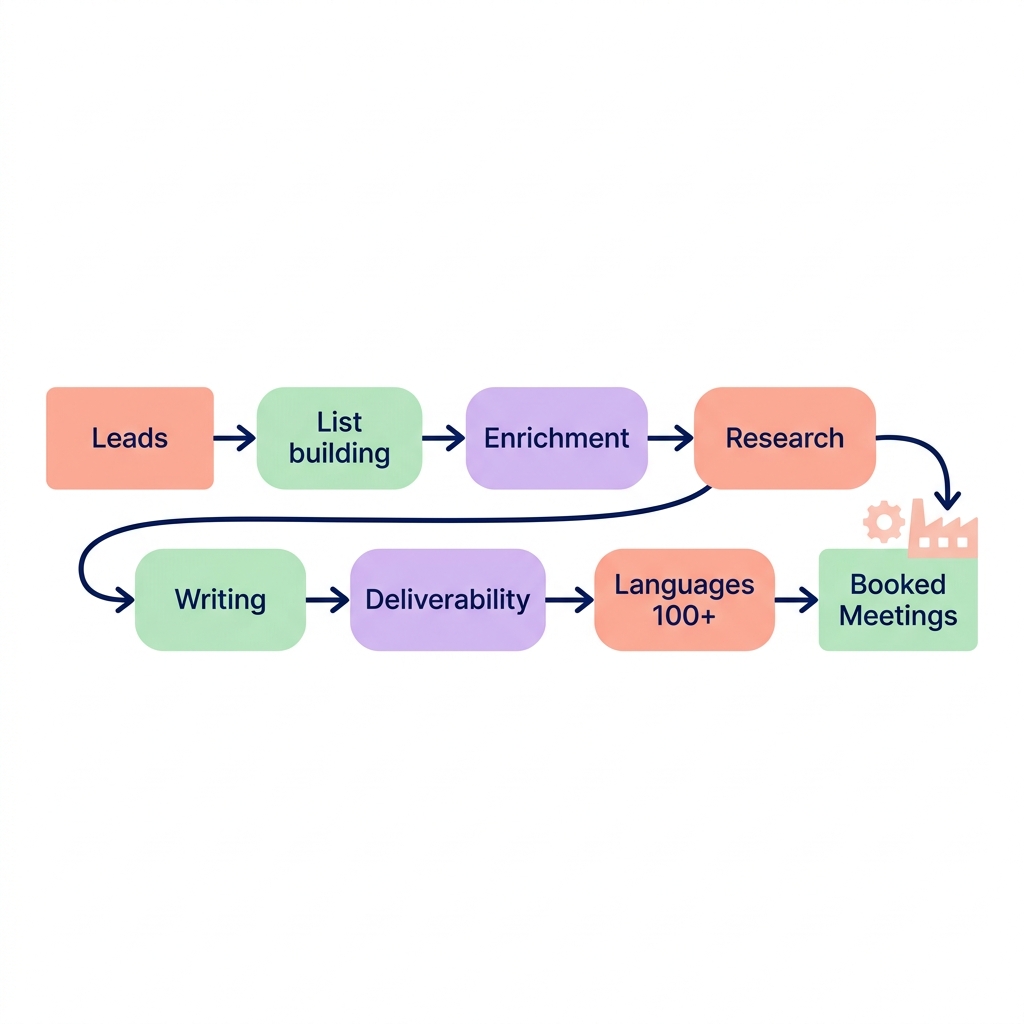
100% of AI-powered SDR users report time savings, with nearly 40% saving 4–7 hours weekly on prospecting tasks. That freed capacity goes toward relationship-building with qualified leads that AI surfaces and qualifies across languages. This is precisely the approach Sera was built to deliver. Six specialized AI agents handle the complete outreach workflow: building ultra-targeted lead lists from 300M+ companies and 1B+ professional profiles, enriching with firmographics and market intelligence, researching timing and relevance signals, identifying actual decision-makers, crafting human-sounding multilingual emails, and protecting deliverability through intelligent pacing and reputation monitoring.

The platform achieves 99% email deliverability and supports outreach in over 100 languages while maintaining GDPR compliance and cultural appropriateness. Clients report results like €290,000+ one-off deals and 1,000+ verified company connections from research-driven multilingual campaigns. But the real value is strategic: you’re no longer choosing between English-only scale or expensive multilingual hiring. You can test new markets quickly, expand into regions showing early traction, and build genuine relationships with decision-makers in their preferred language – all while your team focuses on closing deals rather than wrestling with translation tools and deliverability headaches.

Ready to expand your global reach?

The competitive advantage in B2B sales increasingly belongs to teams that can operate globally without geographic constraints. 60% of B2B marketers will use AI for lead scoring by 2025, and the gap between early adopters and laggards will only widen. The question isn’t whether to implement AI-powered multilingual outreach – it’s how quickly you can deploy it before competitors lock up relationships in your target markets.

Start by identifying your highest-opportunity languages, typically where you already see inbound interest or website traffic but lack outreach capability. Test with low-volume, high-quality campaigns that prioritize cultural relevance over message volume. Track regional performance separately to understand what resonates in each market. Most importantly, remember that properly localized emails drive 56% higher conversion rates not because prospects can read them, but because they feel understood. The best AI tools enable that authentic connection at scale.

Discover how Sera’s AI-powered platform can transform your global sales approach – research-driven prospecting, multilingual outreach, and deliverability safeguards that help you build relationships with decision-makers worldwide, in their language, on their terms.