


Did you know that 80% of sales require 5 to 12 follow-ups, but most reps stop after two? In manufacturing, generic outreach doesn’t just fail – it ruins your reputation with key Tier 1 suppliers. You need a systematic workflow that balances technical research with persistent, high-precision contact.
Identify your high-fit target accounts
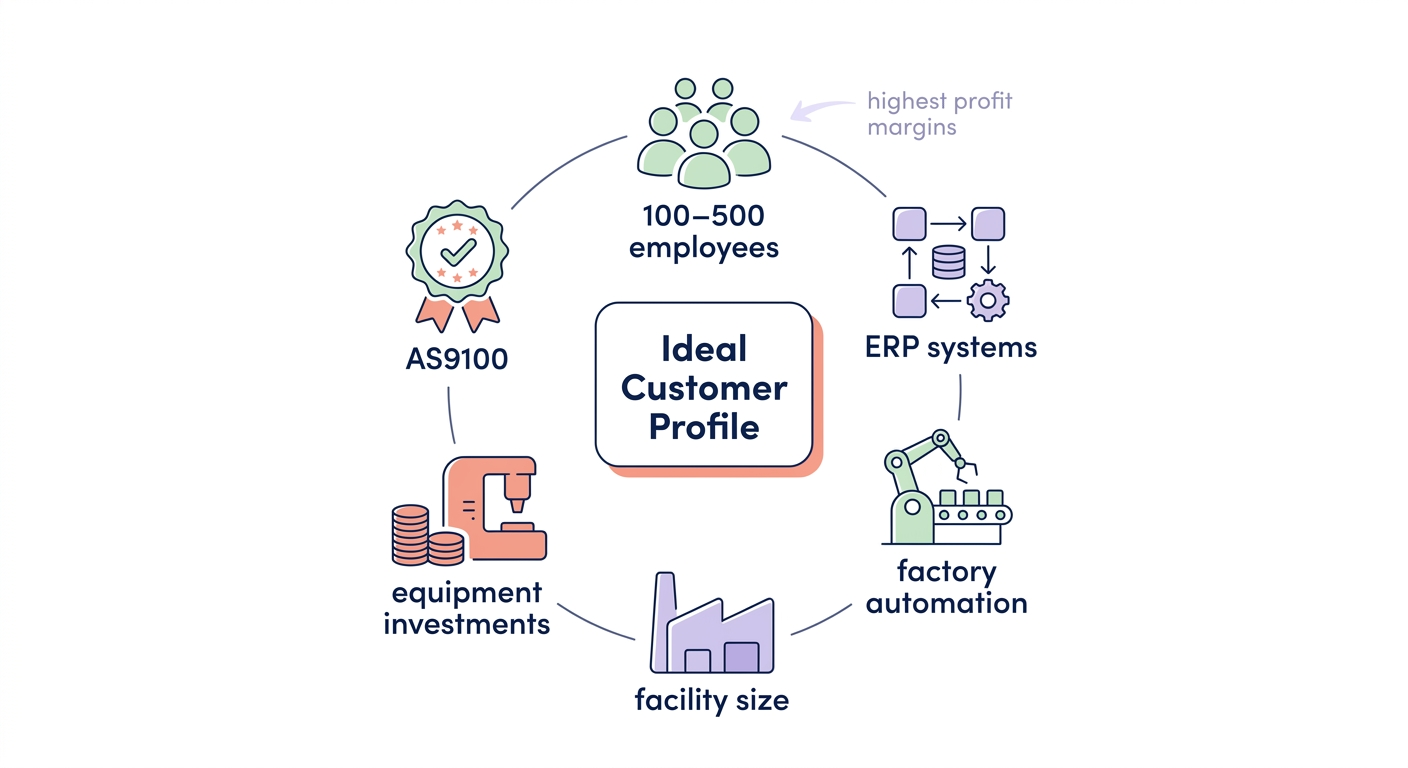
The foundation of any successful outbound campaign is a laser-focused Ideal Customer Profile (ICP). For manufacturers, firmographics like company size and location are only the beginning. You must also consider technographics, such as the ERP systems a facility uses or their current level of factory automation.
Data suggests that building a manufacturing ICP that targets mid-sized firms with 100 to 500 employees often yields the highest profit margins. You should look for specific production indicators like facility square footage, recent equipment investments, or quality certifications such as AS9100 to identify accounts with the right operational sophistication.
Research accounts for timing and relevance
Manufacturing buyers are naturally skeptical of generic pitches. They want to know you understand their floor-level challenges, such as high defect rates or equipment downtime. Timing is critical to overcoming this skepticism; for example, prospects researching energy efficiency during their budget cycles are 3.2x more likely to convert.
You can use specialized tools like the Sera AI agents to scan news and LinkedIn for “buying signals.” These include triggers such as a company securing a new Tier 1 contract, hiring for technical roles, or expanding a facility. Referencing these specifics in your initial message demonstrates that you have done your homework.
Locate and confirm your decision-makers
Industrial buying groups typically involve 6 to 10 stakeholders, ranging from plant managers to procurement directors. To build a predictable pipeline, you must identify the specific individual who has the authority to approve a new vendor.
While LinkedIn is a powerful tool for this, LinkedIn prospecting for industrial sales requires a different approach than standard B2B sales. Your profile should showcase industry-specific credentials and proof points rather than a typical sales pitch. Once you find the right contacts, ensure your data is clean to avoid wasting time on outdated or incorrect entries.
Craft personalized multichannel outreach
One-size-fits-all emails often land in the spam folder. An effective strategy uses “surround sound” outreach across multiple channels to stay top-of-mind. Personalizing these messages can lead to 26% higher open rates, and if you are targeting international markets, localizing your content is vital. In fact, email conversion is 56% higher when the content is written in the prospect’s native language.
A typical high-performance cadence might look like this:
- On Day 1, send a personalized email referencing a specific facility expansion or production challenge.
- On Day 3, send a LinkedIn connection request with a brief, value-driven note that avoids an immediate pitch.
- On Day 6, share a relevant case study showing how you reduced defect rates or changeover times for a similar manufacturer.
Execute a structured follow-up sequence
Many sales teams give up far too early in the process. An optimal cadence involves 8 to 12 touchpoints over a four-week period. Each touchpoint should add new value, such as a technical spec sheet or an industry insight, rather than just “checking in” on a previous message.
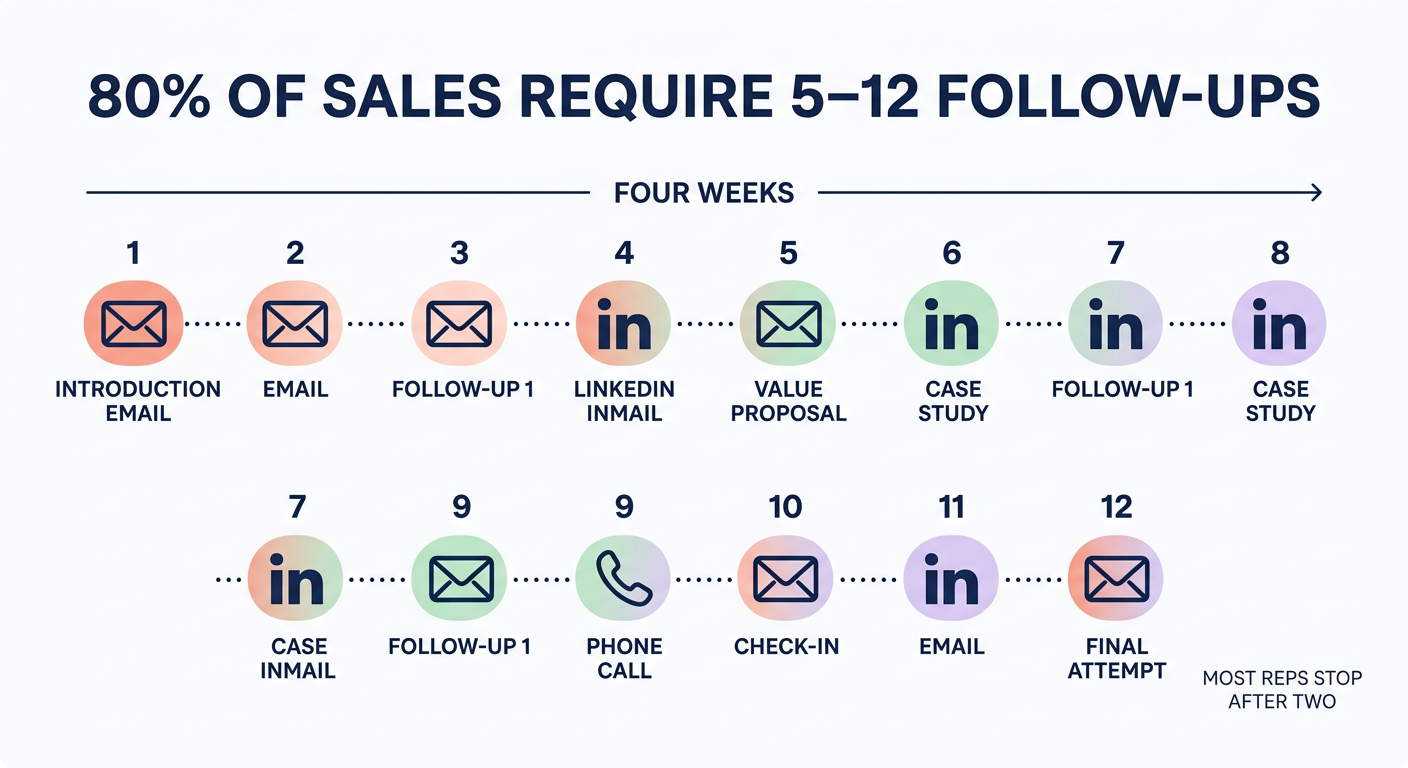
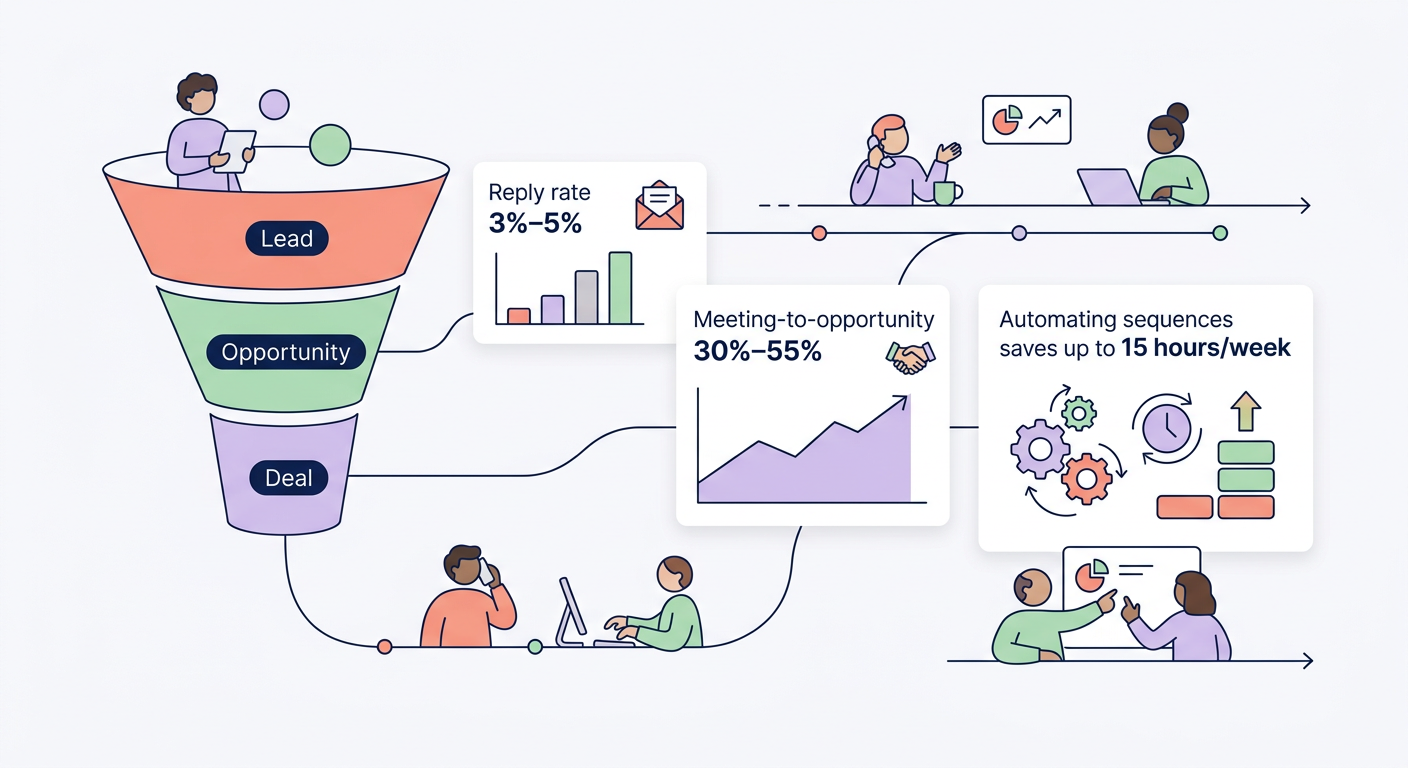
If you do not get a response initially, remain persistent. Using a follow-up strategy for industrial sales helps you maintain a professional presence without becoming a nuisance. Automating these sequences can reclaim up to 15 hours per week for your team, allowing them to focus on high-value closing activities and technical validations.
Measure performance and maintain your CRM
You cannot improve a process you do not measure. You should track key metrics such as reply rates, aiming for at least 3% to 5% for cold outreach. Additionally, monitor your meeting-to-opportunity ratio, where top performers typically see rates between 30% and 55%.
To keep your workflow efficient, ensure that your syncing LinkedIn with your CRM is seamless. For teams using platforms like HubSpot, tracking sales activities automatically ensures that every interaction is logged. This transparency prevents leads from falling through the cracks and helps you identify which messaging angles are driving the most revenue.
Managing a comprehensive outbound process manually is a significant undertaking. Sera’s AI Autopilot uses six specialized agents to handle the heavy lifting, from initial list building and deep research to writing natural, multilingual emails. This human-supervised system allows you to run high-precision, low-volume outreach that lands in inboxes and books consistent meetings.
Ready to see how AI-driven prospecting can transform your manufacturing pipeline? Get started with Sera today.