


Are your cold emails stuck at a 1% reply rate? Most B2B leaders struggle to balance deep research with the need for volume. Here is how to scale personalization effectively without spending hours on manual LinkedIn audits or sounding like a generic robot.
The dilemma of quality versus quantity
In the past, you had two choices: send thousands of generic “spray and pray” emails or spend all day researching five people. Neither approach scales effectively for a growing SaaS firm or a traditional manufacturing company. High-volume blasts often damage your domain reputation, while hyper-manual research limits your pipeline growth.
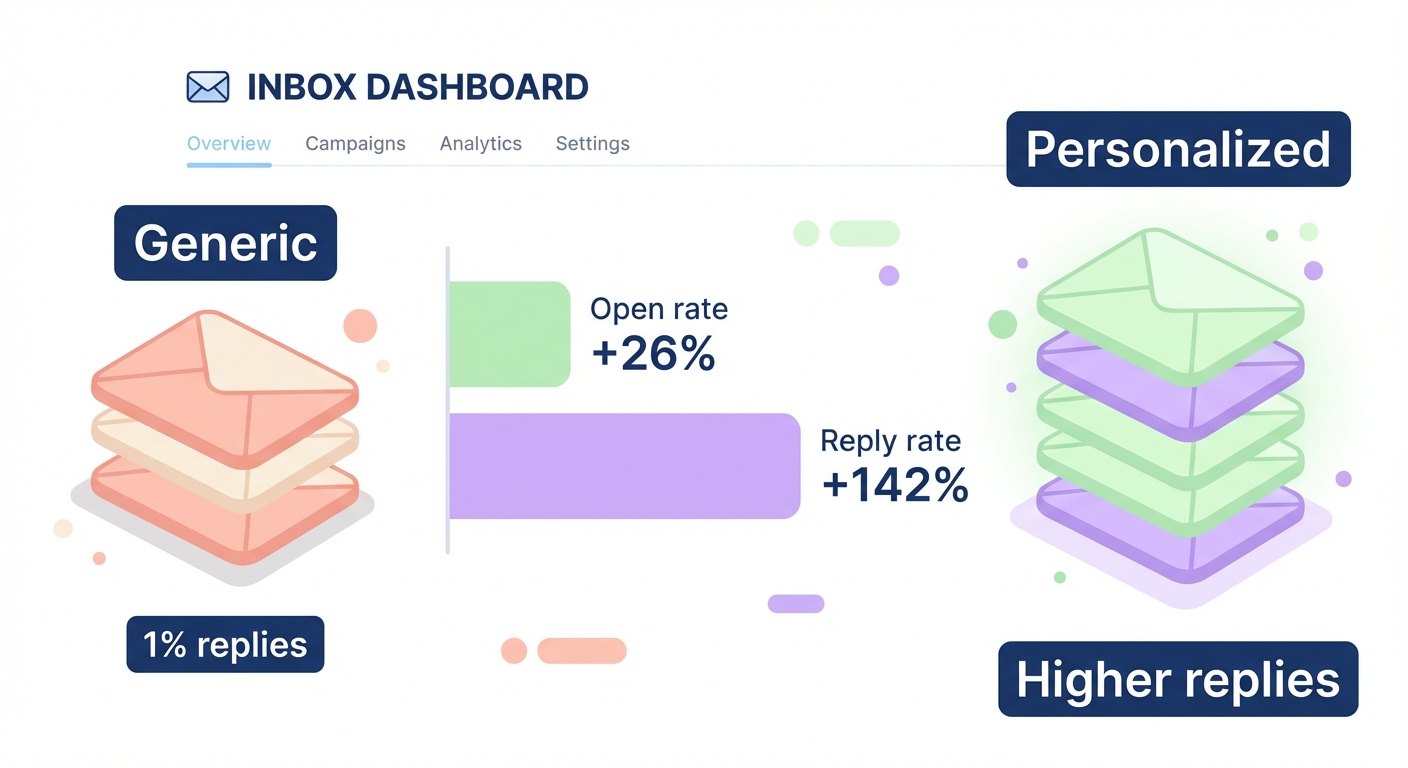
Research indicates that personalized emails achieve 26% higher open rates than generic messages. More importantly, advanced personalization using multiple custom data points can boost reply rates by 142%. To achieve this at scale, you need a framework that moves beyond simply inserting a basic “First Name” tag.
A three-layer framework for scalable relevance
To personalize for hundreds of leads simultaneously, you must categorize your research into three distinct layers. This structure allows you to use personalized email templates that feel unique to every recipient while maintaining speed.
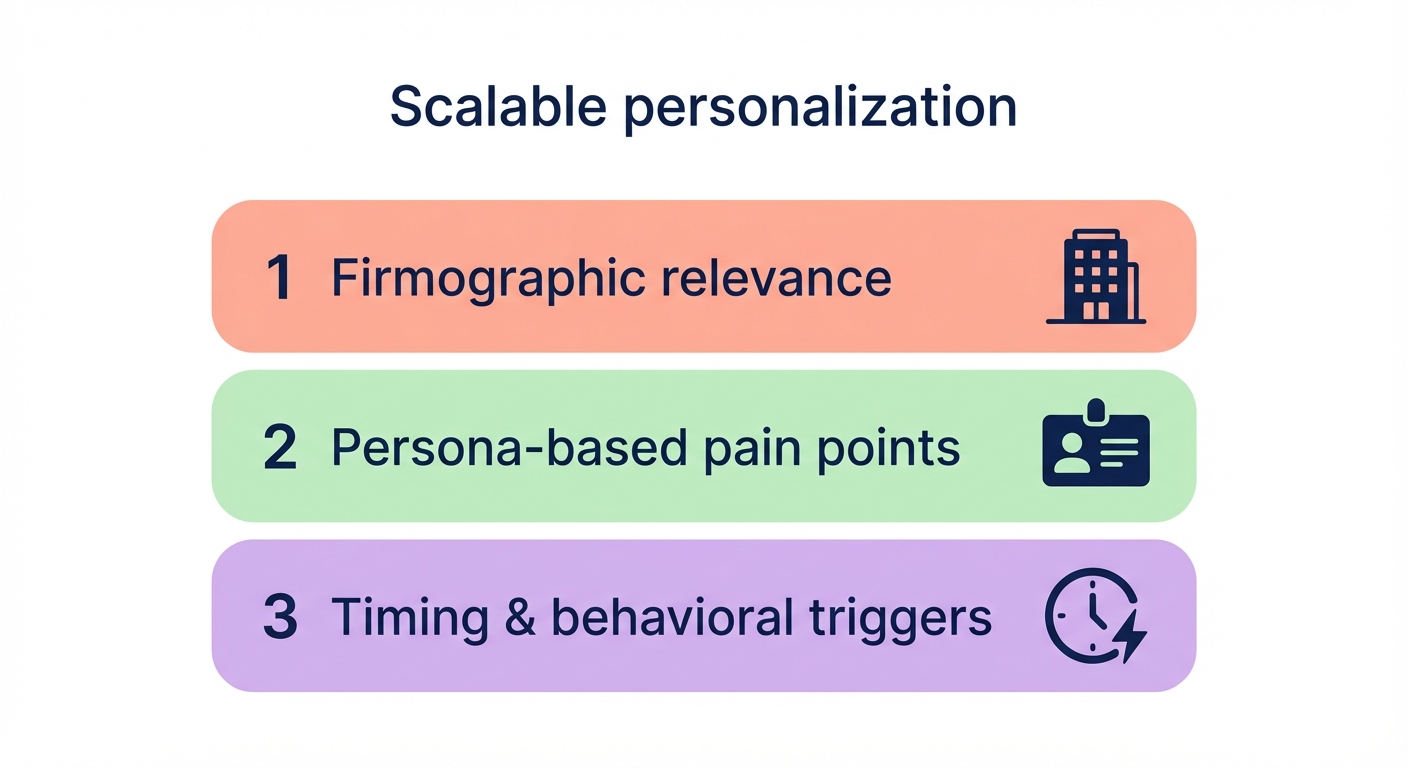
Firmographic relevance
This layer focuses on the “why them” aspect of your outreach. Instead of leading with your product features, you mention something specific to the company’s current situation. For a manufacturing executive, this might involve referencing a recent factory expansion or a shift in regional supply chains. For a SaaS founder, it could be a recent funding round or a new product launch. These details prove you have done your homework.
Persona-based pain points
Different roles within an organization care about different outcomes. A CTO typically prioritizes security and technical integration, whereas a Head of Sales focuses on pipeline velocity and revenue growth. By segmenting your audience by role and industry, you can automate messages that address specific departmental challenges. This ensures your outreach resonates with the prospect’s daily responsibilities without requiring a manual rewrite for every contact.
Timing and behavioral triggers
Outreach sent in response to a “trigger event” generates significantly higher engagement. Common triggers include job changes, company acquisitions, or specific digital behavior like a prospect visiting your pricing page. Reaching a decision-maker within their first 30 days in a new role is particularly effective, as they are often looking to implement new solutions. Learning how to personalize lead outreach with AI allows you to monitor these events across thousands of accounts automatically.
Using AI to automate the research loop
The primary bottleneck in personalization is the time required for research. This is where AI-powered tools like Sera’s Autopilot transform the sales workflow. Rather than a human spending fifteen minutes per lead, Sera’s six specialized AI agents work in sync to handle the heavy lifting:
- The Research Analyst scans the web, LinkedIn, and press releases for active buying signals.
- The Decision Maker Identifier confirms you are contacting the specific individual who has the authority to approve a deal.
- The Outreach Writer drafts researched, multilingual emails in over 100 languages that feel human and authentic.
This approach delivers measurable results. In one instance, a manufacturing company using research-driven personalization achieved a 0.84% positive reply rate. In another case, a B2B services firm doubled its reply rates from 2.73% to 5.87% by integrating personalized touches into their sequences.
Protect your deliverability while scaling
Scaling your outreach carries a significant risk of being flagged as spam. Roughly 17% of cold emails never reach the inbox due to poor domain reputation or generic content triggers. To prevent your messages from disappearing, you must measure email deliverability and adopt a “low volume, high precision” strategy.
Instead of sending hundreds of identical emails from a single account, AI agents pace your outreach to mimic human behavior. They validate every email address to keep bounce rates low and warm up new domains gradually. These safeguards ensure your personalized follow-up strategies actually land in the primary inbox rather than the promotions tab.
The power of the automated follow-up
Personalization should remain a priority throughout your entire sequence. Since 80% of sales require at least five follow-ups, but 44% of salespeople quit after the first attempt, automation provides a massive competitive advantage. By automating follow-up emails, you can save your sales representatives approximately 15 hours per week.
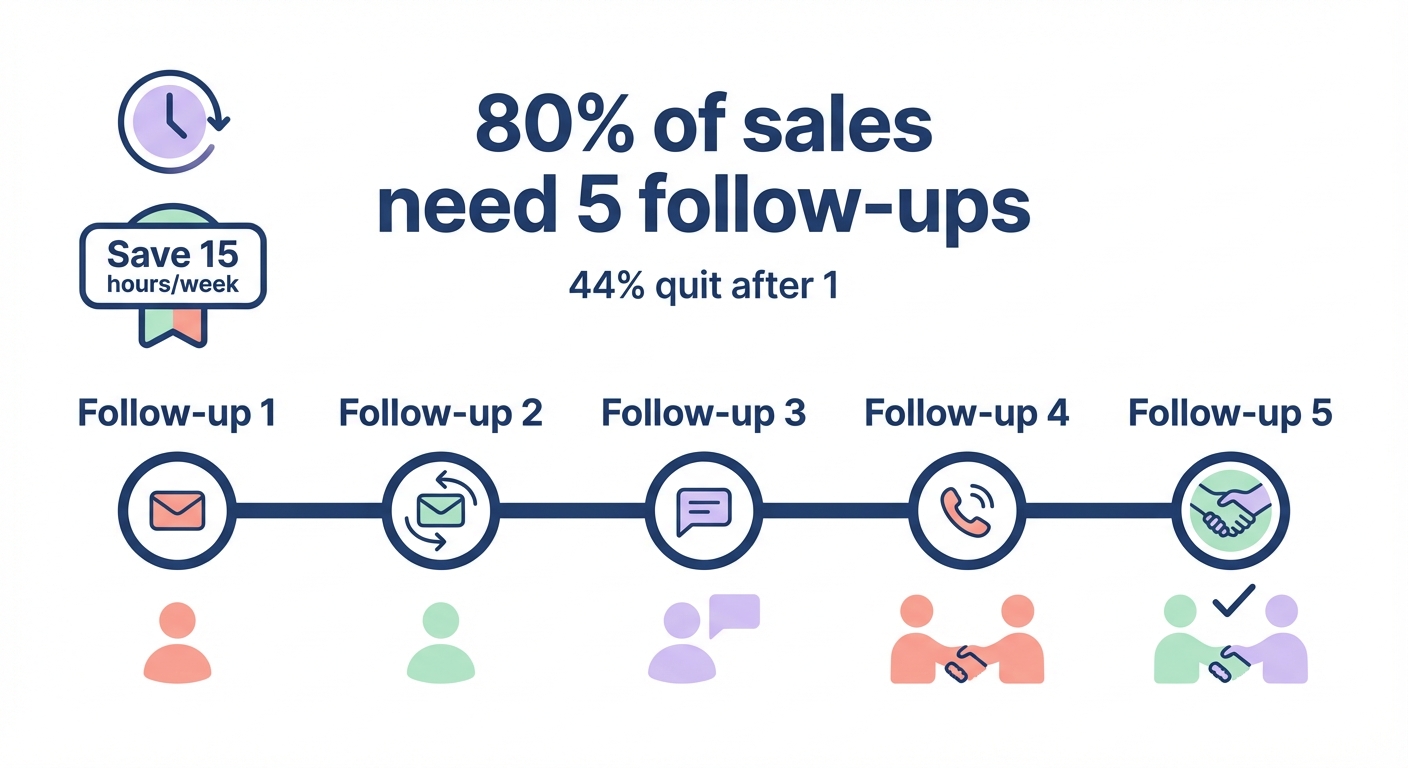
These automated touches should never feel like “checking in.” Each follow-up should offer new value, such as a case study specific to the prospect’s industry or an insight regarding their competitors. When you combine structured frameworks with AI research agents, you can treat every prospect like your only prospect. This precision reduces customer acquisition costs and builds the high-quality pipeline your GTM strategy requires.
Ready to see how AI can handle your prospect research and personalization? Book a discovery call with Sera to start generating more meetings on autopilot.