


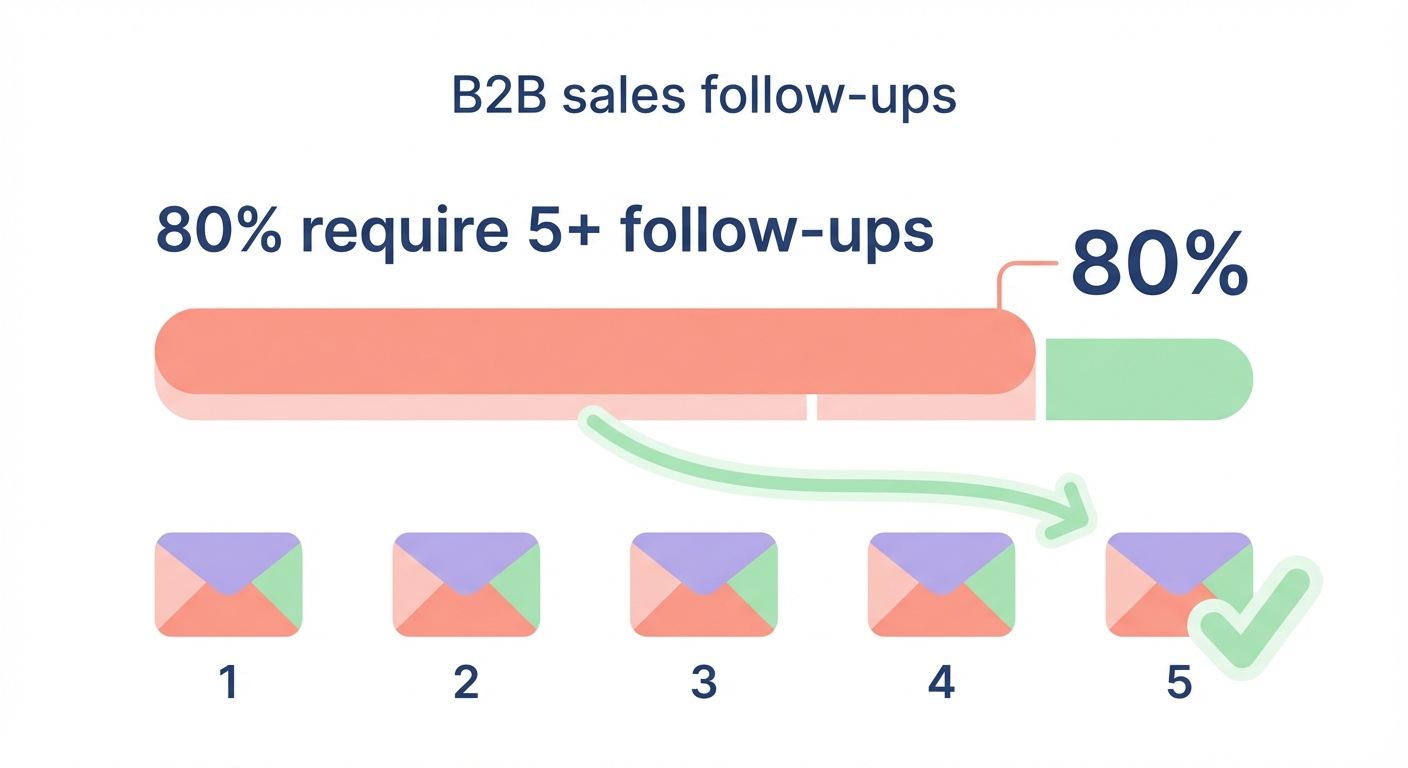
Did you know that 80% of B2B sales require at least five follow-ups to close? If you stop after the first silence, you are likely leaving the majority of your potential revenue on the table.
In the world of traditional manufacturing and industrial GTM, a “no response” rarely means “no interest.” It usually means your prospect is busy on the shop floor or managing a complex supply chain. Mastering the art of the follow-up is the fastest way to turn a cold thread into a signed contract.
The strategic timing of your follow-up
Timing is the difference between being a helpful partner and a persistent nuisance. Successful personalized follow-up strategies work best when they respect the prospect’s schedule and the natural rhythm of an industrial facility. For initial outreach, the 3-5 day rule is a reliable benchmark; it gives the recipient enough time to manage their daily operations without forgetting your previous message.
Persistence pays off because 80% of sales require 5 to 12 touches before a prospect responds, yet many representatives quit after just one or two attempts. If you are selling to international markets, you must also account for regional shifts. For example, contacting prospects between 4:00 PM and 5:00 PM their local time can increase success rates by 71%, as this is often when decision-makers are clearing their inboxes before the end of the day.
Subject lines that earn the open
Your subject line is your only chance to make a second impression. Since personalized subject lines are 26% more likely to be opened, you should avoid generic phrases like “Checking in” or “Just following up.” These look like automated spam and are quickly deleted by busy plant managers.
Instead, keep your text under 50 characters to ensure the full message is visible on mobile devices. Use action verbs that imply progress, or leverage urgency to catch their eye. Subject lines that create a fear of missing out can lead to 56% higher open rates. For a more personal touch, try a direct question about their specific location, such as “Question about your Coventry facility?” which feels more like a message from a colleague than a sales pitch.
Targeted follow-up templates for manufacturing
When drafting your messages, prioritize personalized outreach strategies that add concrete value to the prospect’s day. Each touchpoint should provide new information or solve a specific problem rather than simply “bumping” the email thread.
The value-add sales follow-up
Use this when a lead has gone quiet after an initial demo or a quote.
Subject: New technical specs for [Company Name]
Hi [First Name],
I was thinking about our conversation regarding [Specific Challenge]. I thought you might find this case study helpful – it shows how a similar manufacturer reduced defect rates by 34%.
Are you still looking to optimize your [Specific Process] this quarter?
Best, [Your Name]
The cold prospecting follow-up
Use this for the second or third touch in a cold sequence.
Subject: Thought about your [Department] goals
Hi [First Name],
I know things are likely busy at the [Location] plant.
I’m reaching out because we recently helped [Similar Company] solve [Pain Point]. I’d love to share the 2-minute version of how we did it.
Do you have 5 minutes on Thursday?
Best, [Your Name]
The trade show follow-up
Use this within 48 hours of meeting someone at an industry event to capitalize on the face-to-face connection.
Subject: Great connecting at [Event Name]
Hi [First Name],
It was a pleasure meeting you at [Booth Number] yesterday. I took a note that you were interested in our [Specific Product].
I’ve attached the technical data sheet we discussed. Let me know if you’d like a formal quote for your upcoming project.
Cheers, [Your Name]
For more specialized guidance on post-event communication, see our guide on how to follow up with trade show leads.
Protecting your deliverability and reputation
If you send too many follow-ups too quickly or use low-quality lists, your emails will eventually land in the spam folder. Ensuring email deliverability requires a solid technical foundation, including correctly configured SPF, DKIM, and DMARC records to verify your identity to email providers.
To maintain a positive sender reputation, you should aim to keep spam complaint rates under 0.1% and always include a clear, functional way for prospects to opt out of future communications. Following these standards ensures that your carefully crafted messages actually reach the inbox of the decision-maker.
Scaling your outreach with AI automation
Managing dozens of follow-up sequences manually is a recipe for burnout and human error. Many GTM teams are now automating follow-up emails in sales workflows to reclaim up to 15 hours of selling time per week. This allows sales representatives to focus on closing deals rather than managing administrative tasks.
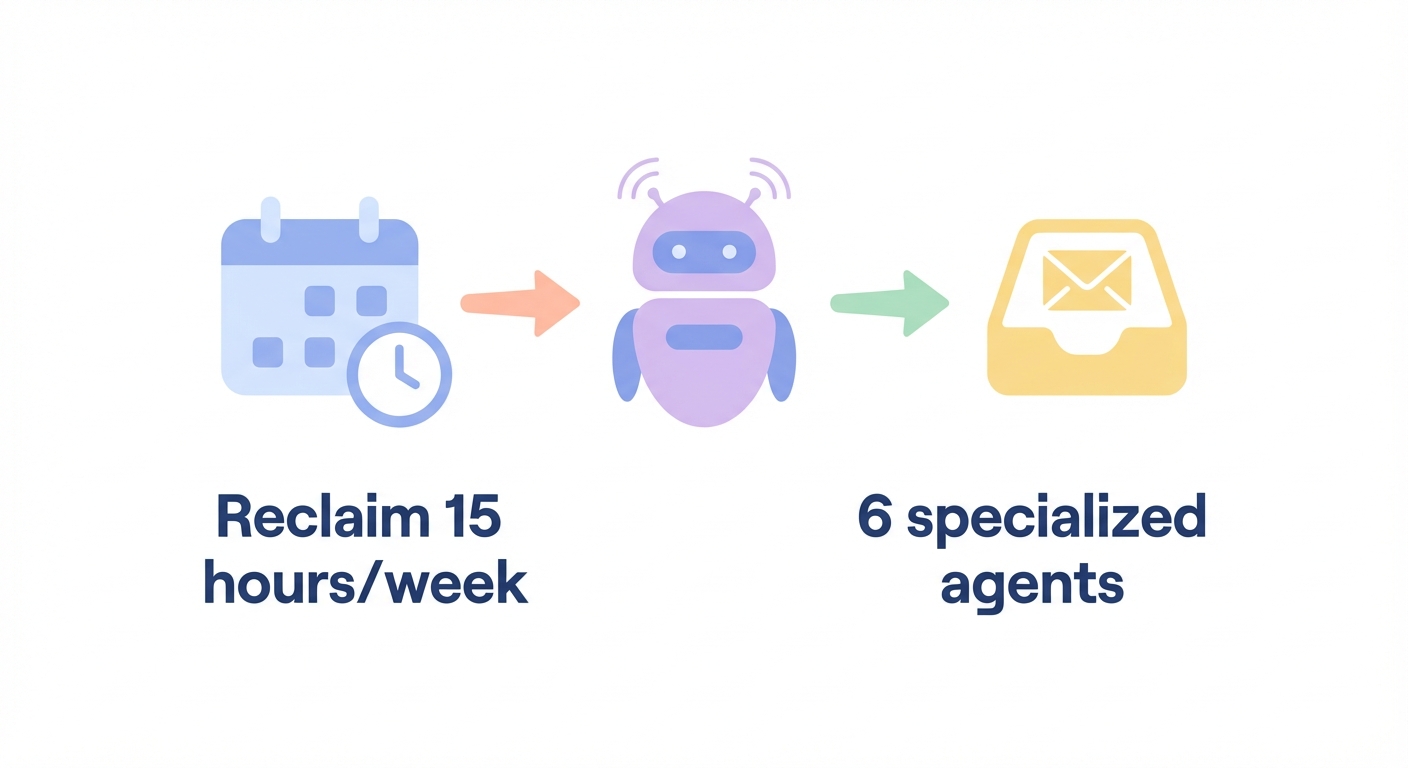
Sera’s AI-driven Autopilot takes this a step further by using six specialized agents to handle the heavy lifting:
- The Research Analyst scans the web and press data to find the specific buying signals for every follow-up.
- The Outreach Writer crafts natural, multilingual messages in over 100 languages, allowing you to enter new markets without language barriers.
- The Deliverability Guard monitors your sender reputation and warms up new domains to ensure high inbox placement.
Instead of sending mass “blast” emails, this approach focuses on ultra-targeted, low-volume outreach that builds real connections with industrial decision-makers. The secret to a high response rate isn’t the first email – it’s the persistence and relevance of the ones that follow. By combining strategic timing with deep personalization, you can transform silence into your next big contract.
To see how AI can automate your high-precision outreach and follow-ups, explore Sera’s AI agents today.