

Is your 2026 go-to-market budget ready for the shift from manual software seats to autonomous AI agents? Understanding the cost of tools like AiSDR is essential for planning a lead generation strategy that delivers actual meetings without the overhead of a full sales team.
How much does AiSDR cost in 2026?
AiSDR operates on a flat-rate pricing model that simplifies budget planning for growth leaders. In 2026, the entry-level pricing for the Explore plan starts at $900 per month. This tier typically allows for 1,200 messages sent across both LinkedIn and email. For companies with more aggressive expansion targets, the Grow tier and advanced custom implementations usually range between $3,000 and $5,000 per month. These premium plans often include dedicated support and features tailored for larger sales organizations with complex workflows.
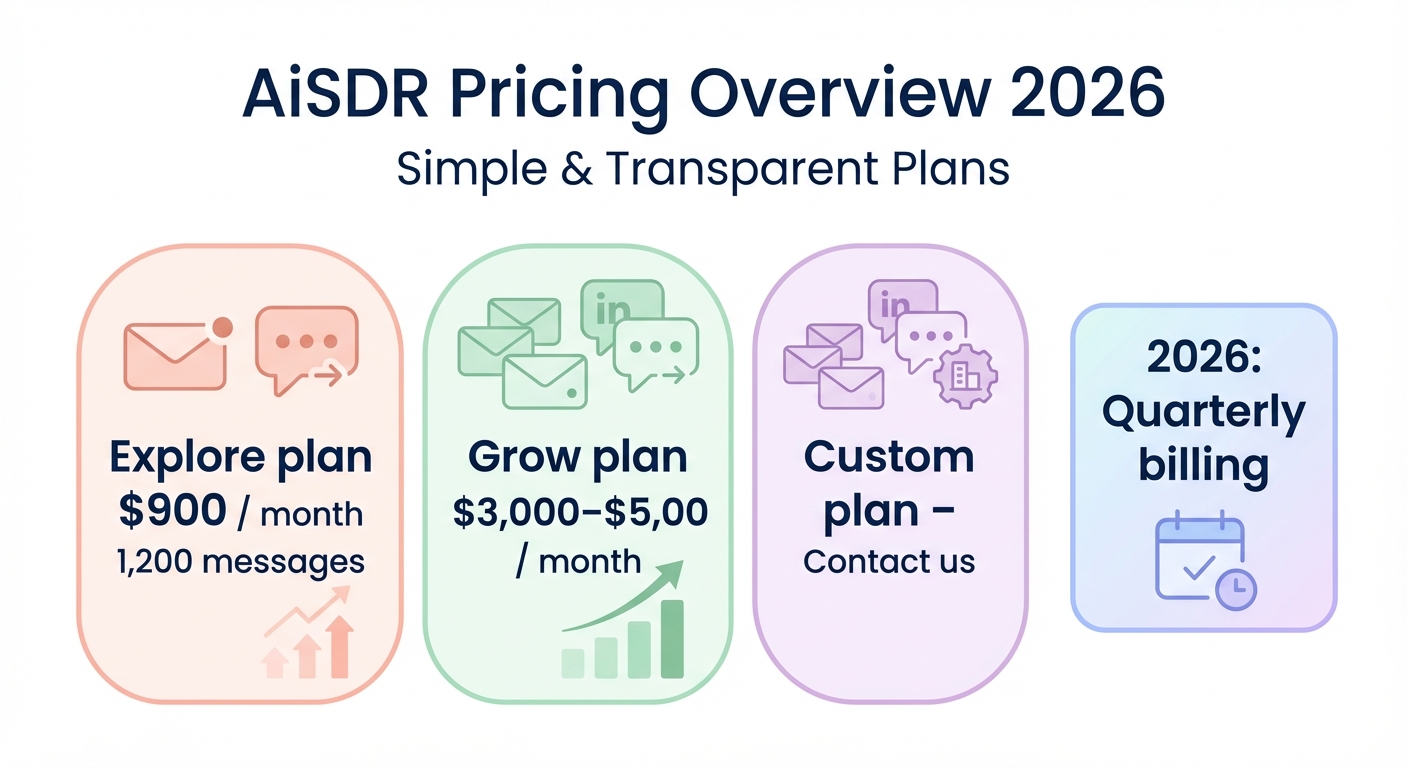
One significant shift for 2026 is the widespread move toward quarterly billing. Many AI SDR providers have adopted this model to ensure machine learning algorithms have sufficient time to optimize and deliver consistent results. After you confirm your payment, the setup time is remarkably fast, frequently allowing your campaigns to go live within a single business day.
ROI expectations for AI lead generation
When comparing the AI SDR vs human SDR: cost, speed, and conversion data, the financial case is clear for most B2B firms. A human SDR in the UK can cost between £60,000 and £110,000 annually when you include training and benefits. In contrast, an AI SDR setup costs roughly $7,000 to $45,000 per year. These systems handle the heavy lifting of prospecting and initial qualification, operating 24/7 without the risk of turnover.
Data suggests that virtual agents can process over 1,000 leads simultaneously, whereas a human representative typically manages only 250 to 300. Most businesses can expect a positive ROI of AI-based lead generation within two to three months. This timeline is driven by immediate efficiency gains and the elimination of recruitment fees, allowing your team to focus on closing deals rather than chasing cold leads.
AiSDR vs. Sera: choosing the right 2026 strategy
While AiSDR focuses on a high-volume model, Sera takes an approach designed specifically for executives managing high-value deals worth €10k or more. In 2026, you should not be spending your day clicking buttons in software; you need an AI employee that acts as a strategist.
Volume vs. precision
AiSDR’s model is built around a flat number of monthly messages, but the seven sales AI trends for 2026 show that inbox providers are becoming increasingly defensive. High-volume outreach often triggers sophisticated spam filters that block unfamiliar senders. Sera uses a Deliverability Guard to intentionally keep volume low and precision high. By sending fewer, better-researched emails, the system maintains a 99% deliverability rate to ensure your message actually reaches the decision-maker’s primary inbox.
Global expansion and languages
If your Go-To-Market strategy involves entering European or Asian markets, basic machine translation is no longer sufficient. Sera is fluent in over 100 languages, providing native-tone outreach that understands cultural nuances. This capability is a critical advantage for export-heavy manufacturers and SaaS and services companies looking to build trust in non-English speaking territories without hiring local staff for every region.
The human-in-the-loop factor
While AiSDR is primarily a tool you manage, Sera is a human-supervised AI outreach service. Six specialized agents handle roughly 93% of the manual labor, covering everything from automated lead sourcing to lead qualification with automation. However, human experts supervise the quality of every campaign. This hybrid approach ensures that every message reflects your brand’s voice and targets the specific decision-makers who have the authority to say “yes.”
Budgeting for 2026: tool vs. outcome
When evaluating AiSDR pricing, you must consider whether you are paying for message volume or for confirmed meetings. You can spend thousands on a ZoomInfo vs Cognism comparison to find data, but that data is worthless if your execution is manual and slow. The most successful teams are moving away from managing a “stack” of disconnected tools.
Instead, leaders are investing in autonomous systems that manage the entire funnel. This process includes finding the right contacts from a database of over 1 billion professionals and scanning LinkedIn or press releases for buying signals. These systems also craft personalized, human-sounding emails and focus on booking more sales meetings with AI directly into your calendar.
If your business relies on closing high-value contracts, the precision of a research-driven autopilot often delivers a much higher return than high-volume automated tools. You can start reclaiming nearly 40% of the time your team currently spends on administrative tasks by letting AI handle the groundwork.
Ready to see how an AI autopilot can fill your calendar with qualified meetings? Book a free 30-minute consultation with the Sera team to map out your 2026 outreach plan.