

Are you still paying your sales team to manually click through databases and manage endless email sequences? In 2026, the gap between simply having data and actually booking meetings has never been wider. While Apollo remains a dominant force, its value depends on your team’s bandwidth.
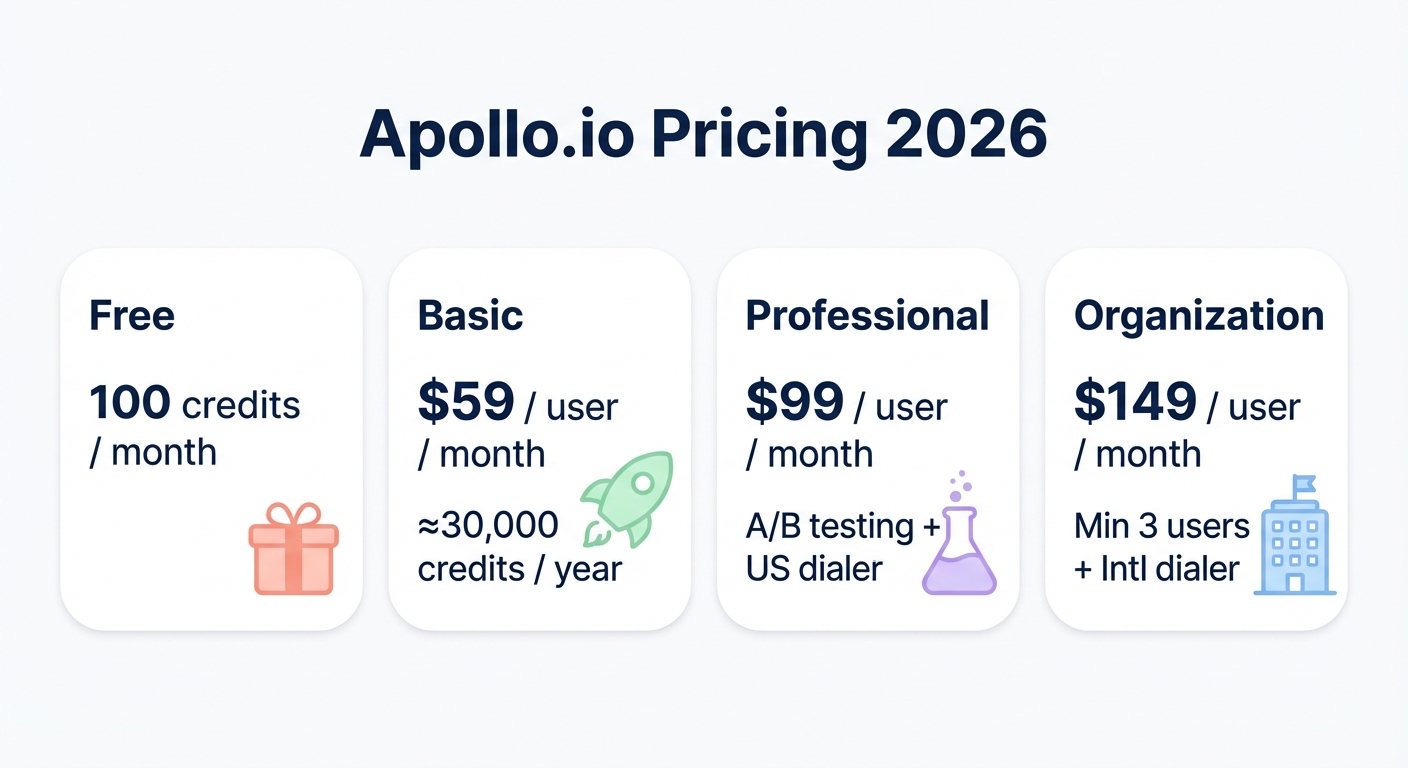
Apollo.io pricing and tiers for 2026
Apollo continues to position itself as an accessible all-in-one platform for prospecting and outreach. Its 2026 pricing reflects a tiered approach based on credits and advanced features. The Free plan provides a starting point with 100 credits per month and basic filters, which is useful for testing the database.
For teams ready to scale, the paid tiers offer more flexibility:
- The Basic plan costs $59 per user, per month, increasing credits to roughly 30,000 annually and allowing for unlimited sequences and CRM integrations.
- The Professional plan is priced at $99 per user, per month, adding A/B testing, a US dialer, and call recording with AI insights.
- The Organization plan costs $149 per user, per month, requiring a minimum of three users and including an international dialer and custom LLM API access.
While these entry points are more affordable than enterprise tools like ZoomInfo or Cognism, GTM leaders must account for the hidden labor of cleaning lists and managing deliverability, which can inflate the total cost of ownership.
The strengths and risks of the Apollo stack
For manufacturing and SaaS companies, Apollo offers a “cockpit” approach by combining a database of over 210 million contacts with the tools to message them in one place. This unified workflow means you do not need a separate tool for sales sequences or email warmup. The platform is easy for a new SDR to pick up, making it possible to start prospecting within an hour.
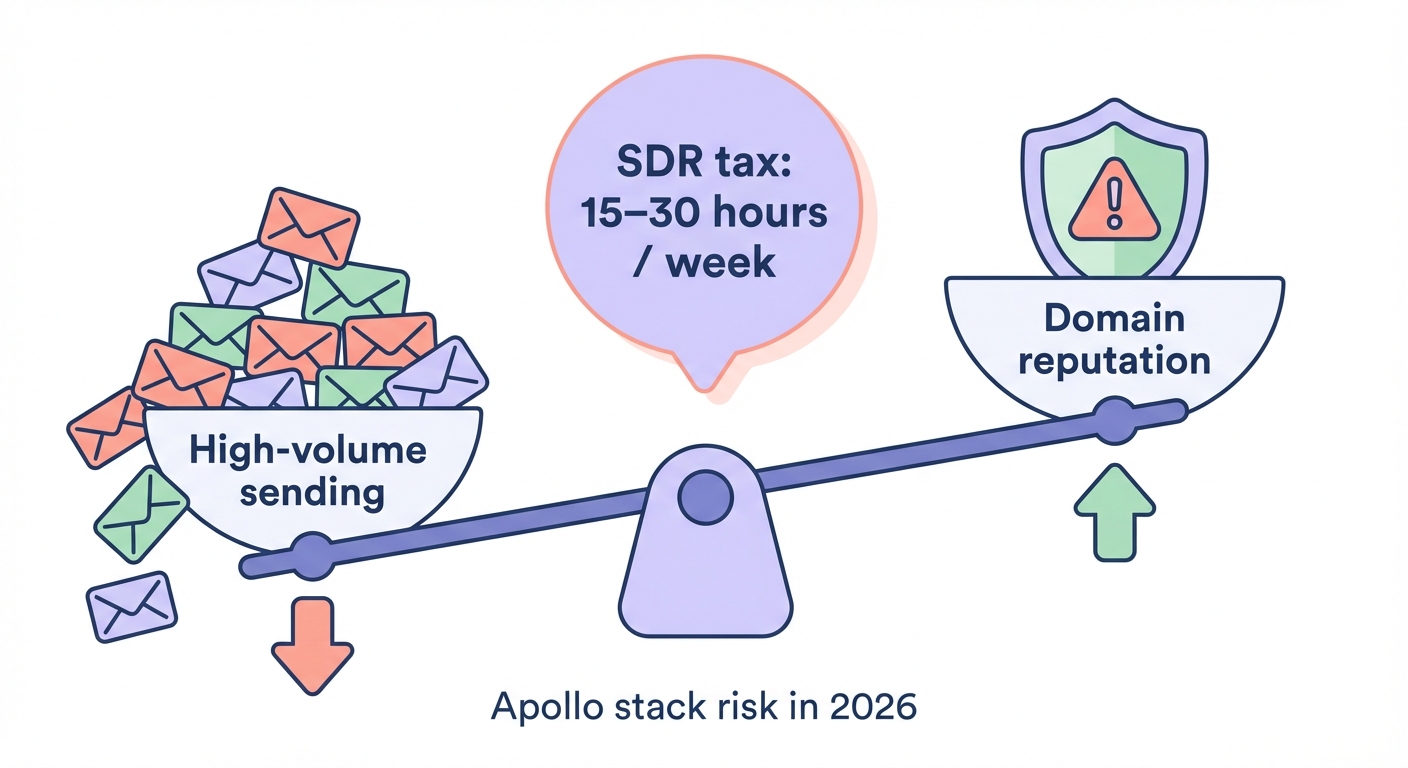
However, the “volume over value” philosophy presents significant risks in 2026. Apollo’s infrastructure often encourages high-volume sending, which can damage your domain reputation quickly as inbox providers deploy advanced defenses. Furthermore, the built-in AI writing tools often produce generic copy that rarely moves the needle for technical procurement officers or engineers. Many firms find they still face an “SDR tax,” where humans spend 15 to 30 hours a week building lists and updating CRMs rather than selling.
Comparing Apollo to 2026 alternatives
Choosing the right tool depends on your specific go-to-market strategy and how much manual work your team can handle.
- When looking at Apollo versus Lusha, Lusha is often the better choice for solo sellers needing quick contact lookups, though it lacks Apollo’s integrated execution layer.
- For manufacturing firms that need deep research, such as tracking factory expansions or specific technographics, Clay offers superior automation by aggregating multiple data sources, even though it requires more technical setup.
- If your primary goal is high-volume email sending with a flat-fee model, Instantly provides a cost-effective alternative for bulk outreach, though you lose the native database integration.
Why software operators are becoming obsolete
The most significant trend in 2026 is the shift from high-volume sequences toward lower-volume, research-driven outreach. Executives at manufacturing and services companies are no longer impressed by basic personalization. They want to know you understand their industry challenges, such as long industrial buying cycles that can last 6 to 18 months.
Apollo provides the data, but it does not provide the strategy. This is why many GTM leaders are looking toward “Autopilot” solutions. Instead of paying for a seat in a database and then paying a human to operate it, companies are using AI agents to handle the entire prospecting lifecycle.
Sera as a smarter alternative to manual prospecting
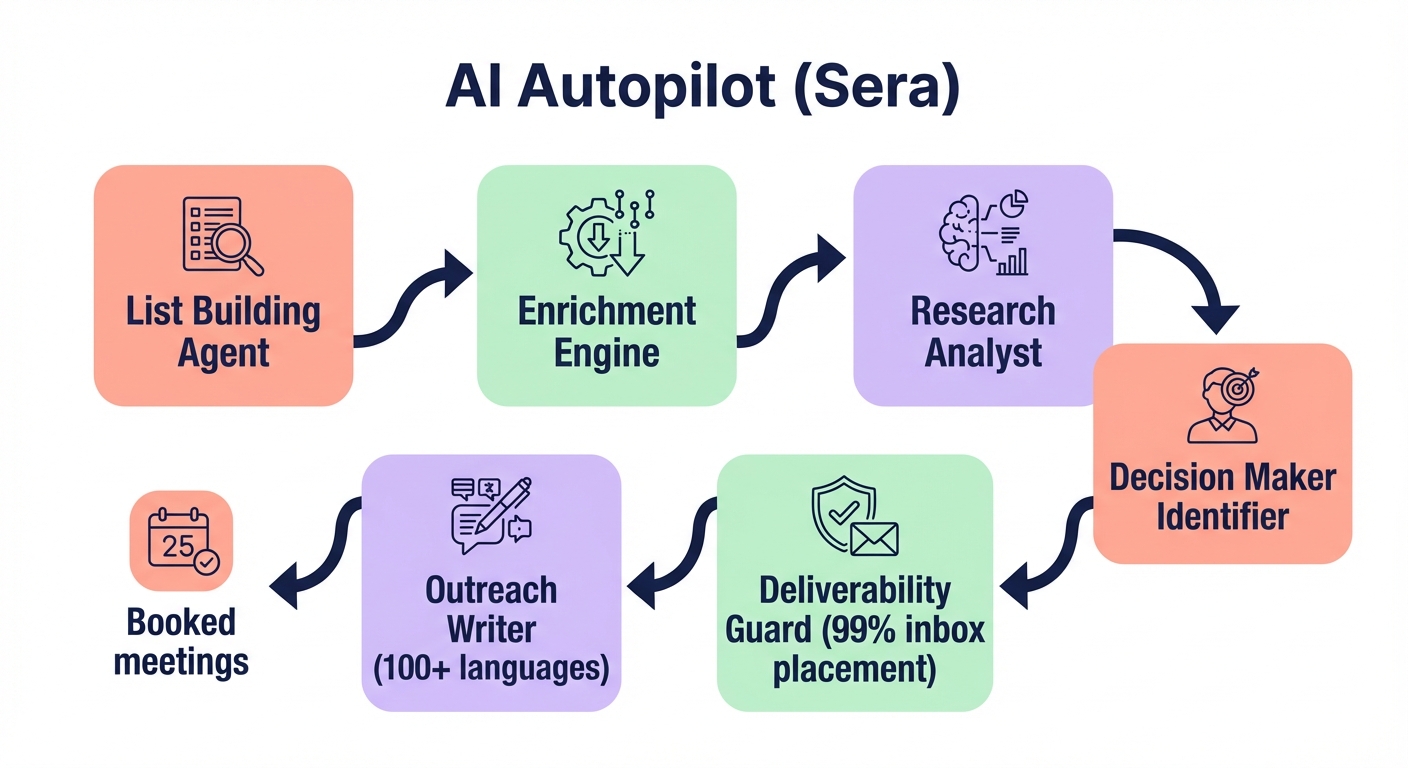
If your average deal size is over €10k, mass-volume tools might actually be hurting your brand reputation. Sera’s AI-driven Autopilot is designed for companies that prioritize quality and verified meetings over high-volume noise. It replaces the manual clicking and list-cleaning with six specialized AI agents working in sync:
- The List Building Agent and Enrichment Engine source verified decision-makers and add rich firmographics.
- The Research Analyst scans the web and LinkedIn for genuine buying signals and timing.
- The Decision Maker Identifier confirms the specific person with the authority to approve a contract.
- The Deliverability Guard maintains a 99% inbox placement rate by pacing outreach and warming domains.
- The Outreach Writer drafts human-sounding, multilingual emails in over 100 languages.
While Apollo requires you to manage the software, Sera acts as a human-supervised AI employee that learns your market and delivers booked meetings directly to your calendar. This allows your sales team to focus on closing deals rather than acting as operators for a Sales Engagement Platform.
Choosing the right path for your revenue goals
Apollo.io remains a solid choice for lean teams that need an affordable, all-in-one engagement tool and have the time to manage it manually. However, if you are looking to scale into new markets or target high-value accounts without increasing your headcount or “SDR tax,” a research-driven autopilot is the more efficient investment.
Stop managing databases and start having real conversations. To see how AI agents can fill your calendar with qualified meetings while protecting your reputation, book a free 30-minute consultation with Sera.