

Are you tired of your sales team spending more time managing spreadsheets than talking to prospects? In 2026, Clay offers powerful data orchestration, but its technical complexity might actually slow down traditional industrial firms.
What is Clay and how does it work?
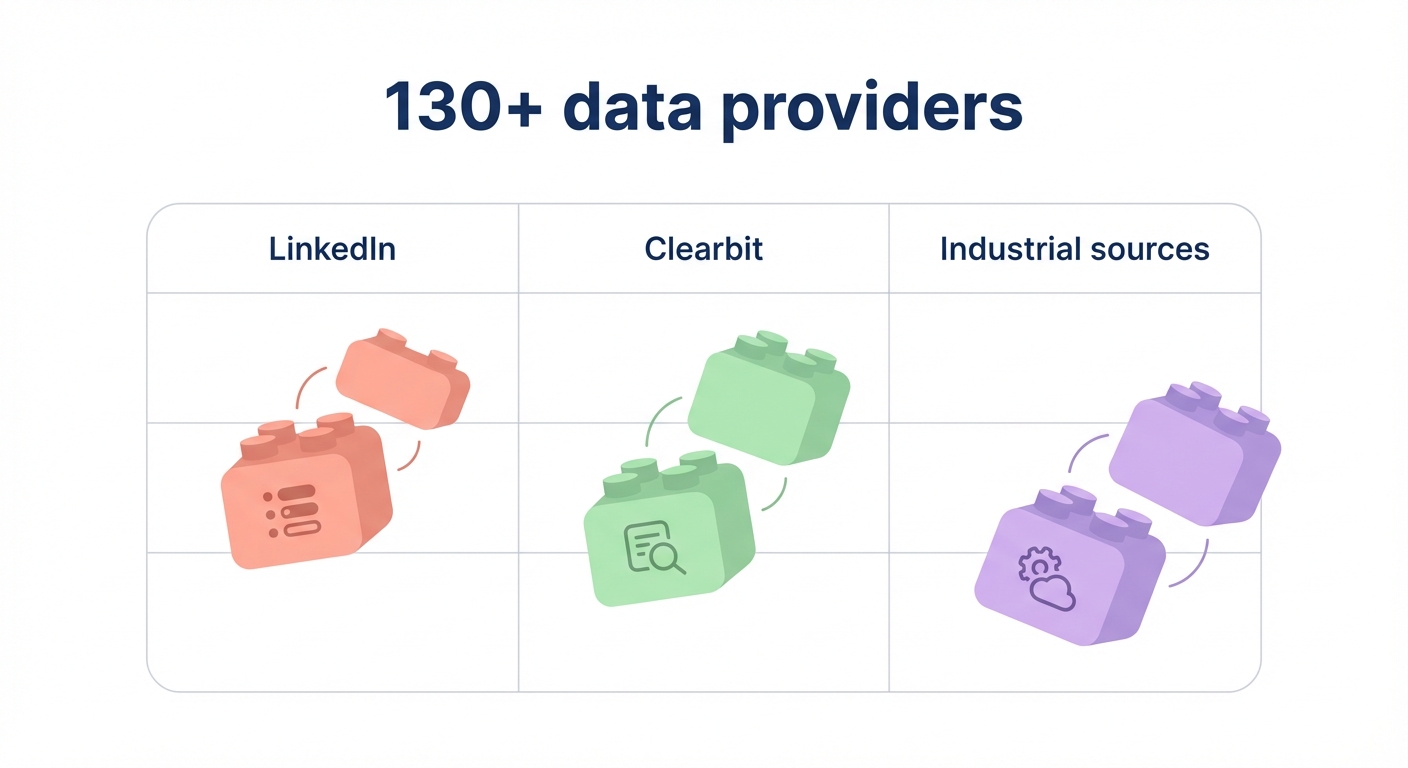
Clay is not a standard contact database like ZoomInfo or Apollo. Instead, it is a data orchestration platform that acts like a LEGO set for your sales operations. It allows you to pull information from over 130 different data providers – including LinkedIn, Clearbit, and specialized industrial sources – into a single table to build highly customized lists.
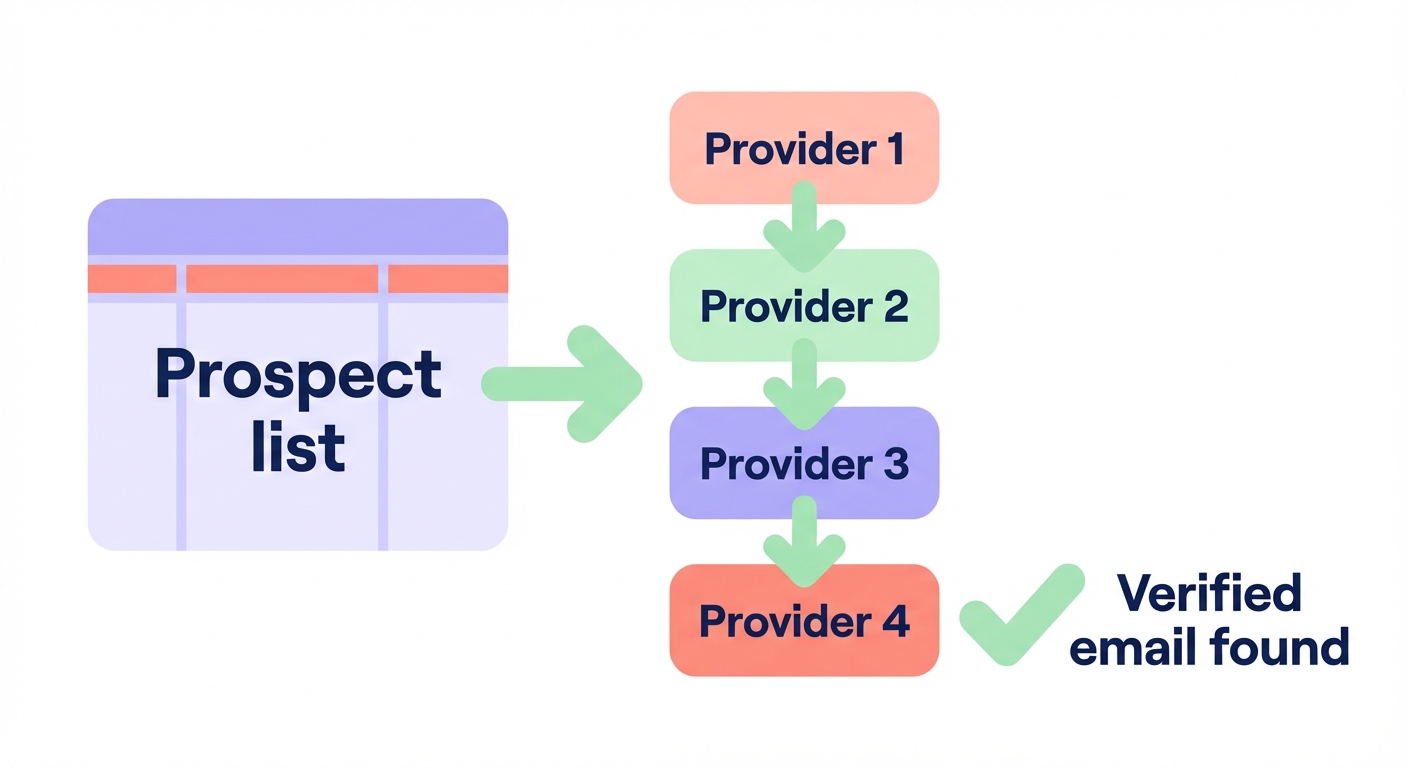
The core of its power lies in a concept called waterfall enrichment. If the first data source does not have a prospect’s email, Clay automatically moves to the second, third, and fourth providers until it finds a verified match. For manufacturing GTM leaders, this means fewer dead ends when trying to find decision-makers at niche fabrication plants or global distributors.
Key features for industrial prospecting in 2026
Clay provides multi-source enrichment that queries sequential data sources to find phone numbers and emails that single-provider tools often miss. It also includes an AI agent called Claygent, which can visit websites and extract specific information, such as whether a company recently invested in new production lines or machinery.
Furthermore, GTM leaders can use data enrichment for manufacturing signals to build custom account scoring. This allows you to orchestrate workflows that sync directly with your CRM, automatically flagging high-priority leads when specific buying triggers, like new facility openings or hiring trends, are detected.
The pricing reality for manufacturing teams
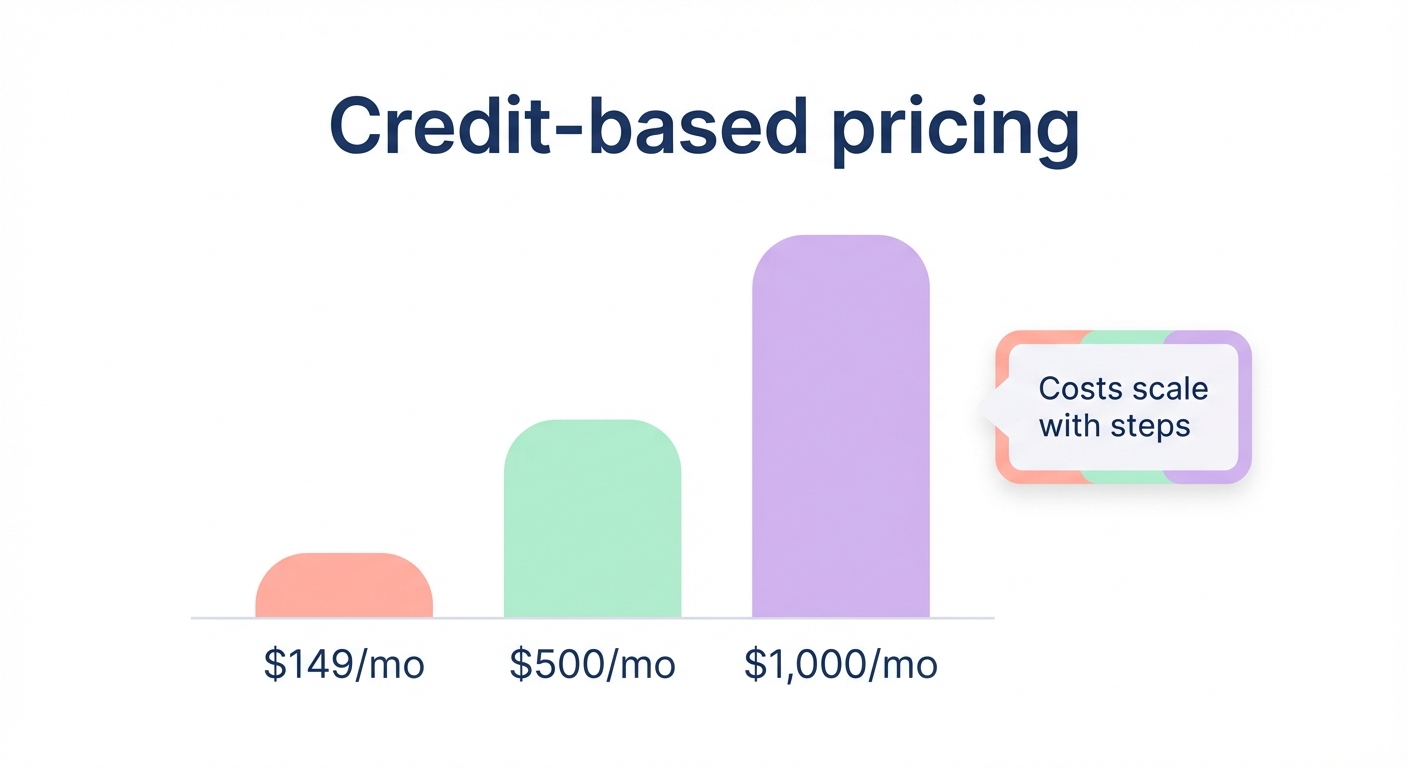
Clay operates on a credit-based pricing model. While plans often start around $149 per month, these costs can scale rapidly as you add more complex enrichment steps. For a mid-sized industrial firm, you may find yourself spending between $500 and $1,000 monthly on credits alone.
It is also important to remember that Clay is primarily an enrichment engine rather than a sending tool. To actually reach those prospects, you will still need to pay for separate email execution platforms like Saleshandy or Smartlead. This adds another layer of cost and management to your outbound stack.
Weighing the pros and cons of the Clay approach
One of the biggest advantages of Clay is its unmatched data depth. Because it aggregates over 130 sources, it offers better coverage than any single database. This high throughput allows teams to process 500 enriched prospects in the time it previously took to research 50, all while building a prospecting workflow unique to your niche industrial market.
However, there are significant drawbacks. Clay currently scores a 7.9 on G2 for ease of use, indicating a steep learning curve that requires a technical mindset to master. Even with automation, your team still pays an SDR tax in the form of clicking buttons, monitoring credits, and fixing broken workflows. Additionally, because the tool lacks native execution, you must export data elsewhere, which can lead to deliverability issues if the connection to your sending tool is not managed carefully.
Clay vs. alternatives: which fits your strategy?
For teams that prefer an all-in-one cockpit that is easier to use, Apollo.io remains a strong contender. It is better for those who want to start sending emails in minutes rather than building complex data chains. You can find more details in our Apollo vs. Lusha comparison regarding which platform delivers more meetings.
Meanwhile, ZoomInfo remains the standard for large enterprise teams needing deep North American firmographics and parent-subsidiary mapping across complex supply chains. Other emerging categories include AI BDRs like Artisan or AISDR, which focus on autonomous outreach but often lack the surgical precision required to close high-value industrial deals.
Moving from tools to an AI Autopilot
The biggest challenge with Clay is that it is still a tool that requires an operator. In 2026, the most efficient manufacturing GTM teams are moving away from manual software management and toward autonomous systems. If your goal is to book meetings for deals worth €10k or more, you should not be spending your day managing 130 different data providers.
Sera is a human-supervised AI outreach Autopilot designed to replace the need for multiple prospecting tools. Instead of you building the workflow, Sera uses six specialized AI agents to handle the entire process. A List Building Agent sources leads from a database of 1 billion professionals, while an Enrichment Engine adds industry-specific firmographics. A Research Analyst then scans the web for buying signals, and a Decision Maker Identifier confirms the person with budget authority.
To ensure your messages actually arrive, a Deliverability Guard protects your domain reputation. Finally, the Outreach Writer drafts natural, multilingual emails in over 100 languages. Because Sera handles roughly 93% of the manual work, your sales engineers can stop acting as data entry clerks and start focusing on closing deals. If you are ready to stop managing databases and start filling your calendar, book a free 30-minute consultation with Sera today.