


Are your sales reps spending more time managing software than closing contracts? In 2026, the gap between traditional industrial firms and tech-driven competitors is widening, making a high-velocity manufacturing sales funnel essential for maintaining your market share.
What is FuseAI?
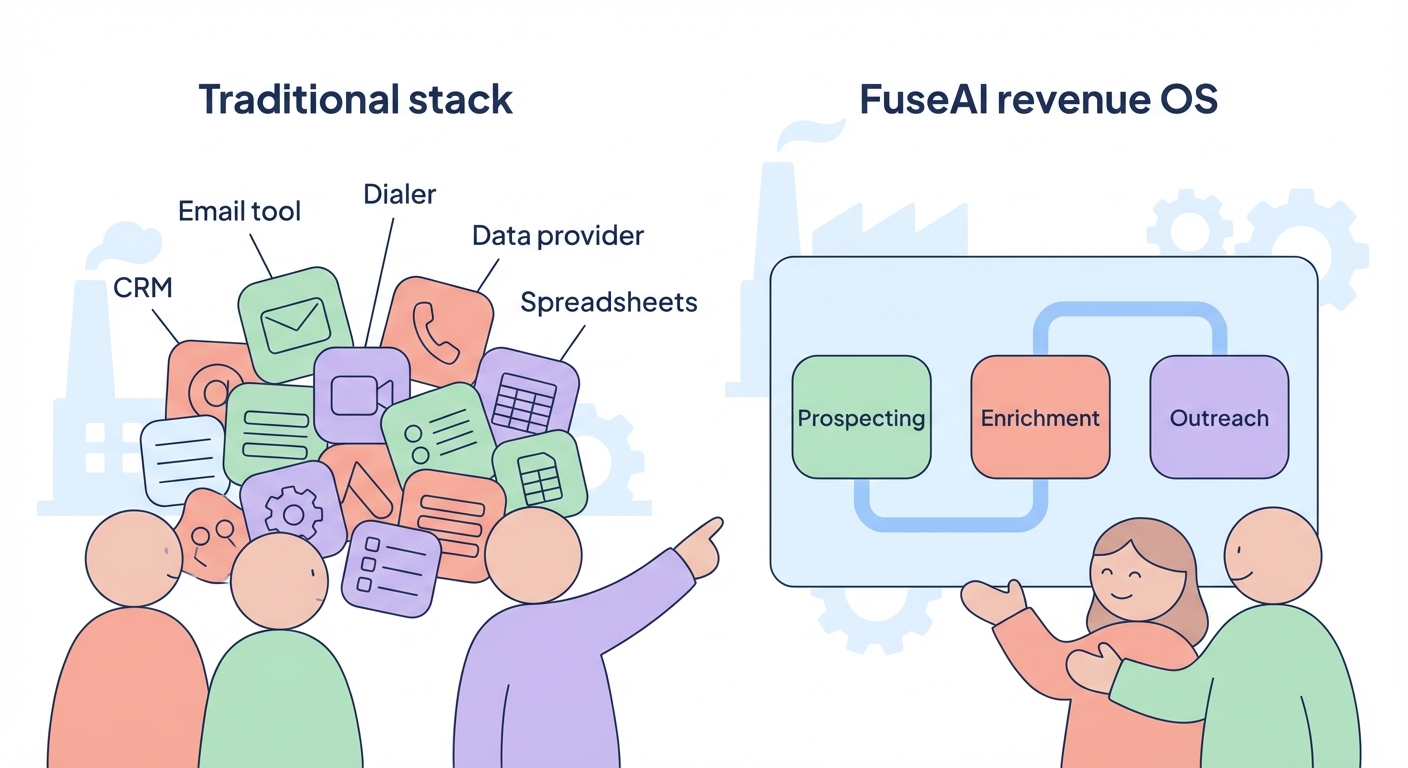
FuseAI positions itself as a next-gen operating system for revenue teams, specifically targeting B2B sales automation. Backed by $2.15 million in pre-seed funding from Y Combinator and Outbound Capital, the platform entered the market to help sales teams consolidate their fragmented tech stacks.
This consolidation is increasingly relevant as research suggests that by 2025, over 80% of UK sales interactions will involve AI or automation. FuseAI aims to be the central hub where prospecting, enrichment, and outreach happen simultaneously, reducing the friction of switching between multiple disconnected tools.
How it works for manufacturing sales teams
Industrial sales are notoriously complex, often involving technical validation and buying cycles that last from 6 to 18 months. FuseAI attempts to navigate this complexity by integrating multi-channel outbound features, including email, LinkedIn, and a power dialer. For manufacturers who still rely heavily on direct phone conversations to verify technical specifications, the inclusion of a dialer is a practical addition.
The platform also provides automated data enrichment by pulling from over 20 data providers to build manufacturer lead lists. This helps sales reps avoid the “garbage in, garbage out” problem common with static databases. Furthermore, its signal monitoring agents track buying triggers such as new facility announcements or leadership changes, which often signal a need for new equipment or industrial services.
The cost of industrial automation
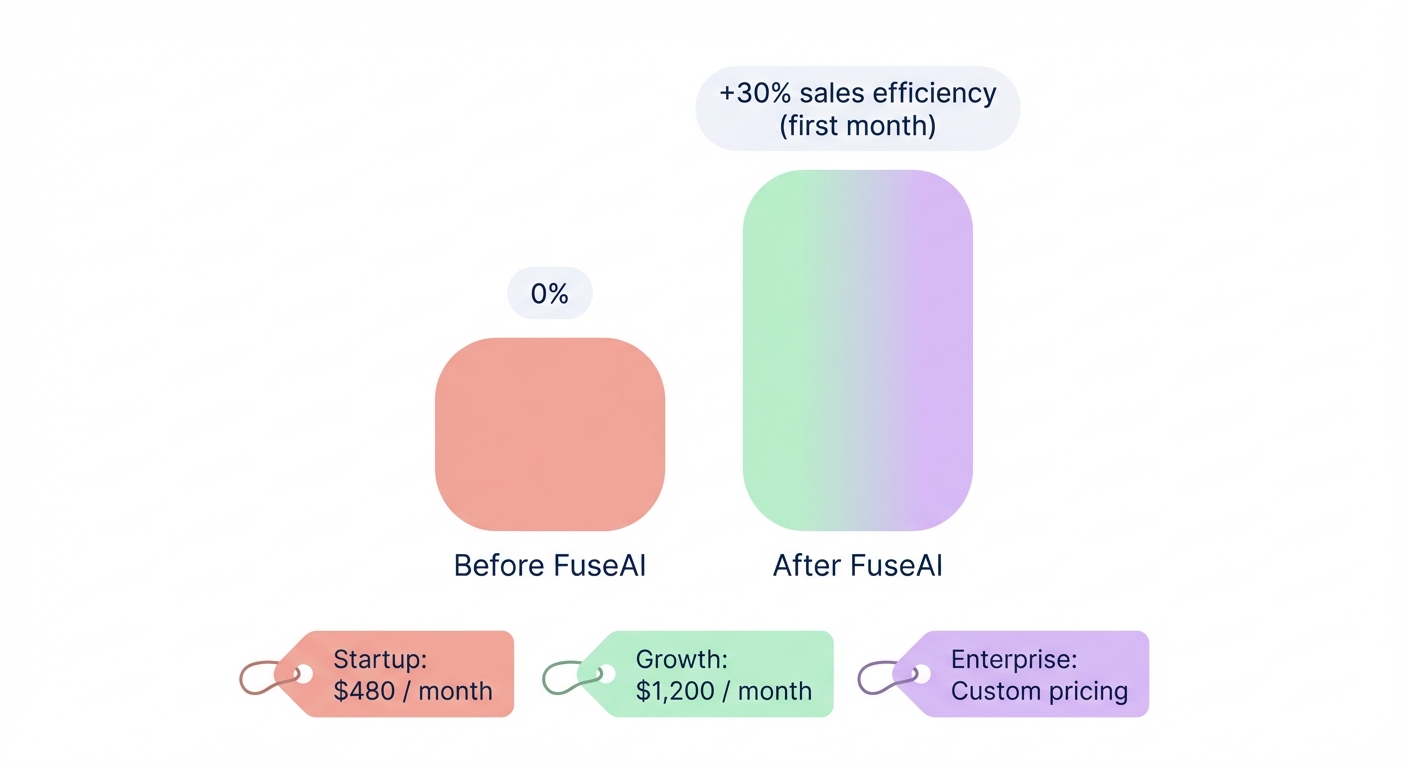
FuseAI follows a tiered pricing structure designed to scale with the size of your organization. The Startup tier begins at $480 per month, targeted at small teams or individual representatives looking to automate their basic outreach. For mid-sized industrial firms, the Growth tier is priced at $1,200 per month, while global manufacturing corporations must request custom pricing for Enterprise-level features.
Early performance data indicates that users typically see a 30% increase in sales efficiency within the first month of implementation. While these efficiency gains are impressive, manufacturers must ensure this speed does not come at the cost of lead quality. High-volume automation can sometimes backfire if the messaging feels impersonal or hits the wrong technical note.
Pros and cons for the industrial sector
One of the primary advantages of FuseAI is the consolidated stack, which replaces the need for separate tools for data, email sequencing, and calling. Its signal-based targeting is also highly relevant for manufacturers; knowing when a prospect is expanding production is far more valuable than simple job-title filters. Additionally, the inclusion of a power dialer recognizes that the phone remains a critical tool for industrial relationship-building.
However, there are notable drawbacks to consider. Like many outreach tools, FuseAI can inadvertently encourage a high-volume approach. In 2026, mass-produced outreach often leads to domain blacklisting and poor reply rates from savvy industrial buyers. There is also a lack of documented case studies specifically within heavy industry or specialized engineering, meaning the platform may require significant internal testing to find the right “voice.” Finally, the platform’s complexity as a full revenue OS creates a steep learning curve that requires dedicated management time.
FuseAI vs. Sera: tool vs. autopilot
By 2026, the distinction between a software tool and an autonomous service has become vital. FuseAI is a high-performance tool that still requires a human operator to manage the strategy and click the buttons. In contrast, Sera operates as an outreach autopilot. While FuseAI provides the engine, Sera acts as the driver by using six coordinated AI agents to handle the entire outreach process with minimal human supervision.
For companies looking to grow internationally, Sera’s multilingual AI writing, which supports over 100 languages, offers a distinct advantage over FuseAI’s English-centric approach. This is particularly effective when exporting to diverse markets where localized, nuanced communication is the difference between a booked meeting and a deleted email.
If your team has a dedicated sales operations person to fine-tune a complex platform, FuseAI offers a powerful way to modernize your sales stack. However, for executives who want to spend less time on software management and more time on closing deals, the “tool” model may no longer be the best fit. Successful industrial firms are increasingly moving toward AI-driven results that operate in the background.
Stop spending your day managing software and start filling your calendar with qualified meetings. Visit Sera today to see how our AI Autopilot can generate high-value industrial leads and grow your revenue.