


Is your sales team spending more time clicking “reveal” than actually talking to prospects? In 2026, the cost of B2B data isn’t just the subscription fee; it is the manual labor required to turn that information into a booked meeting.
Lusha pricing tiers for 2026
Lusha continues to operate on a seat-plus-credits model that appeals to various team sizes. While it remains an accessible tool for small SaaS and services teams, the costs scale quickly as your outreach volume grows.
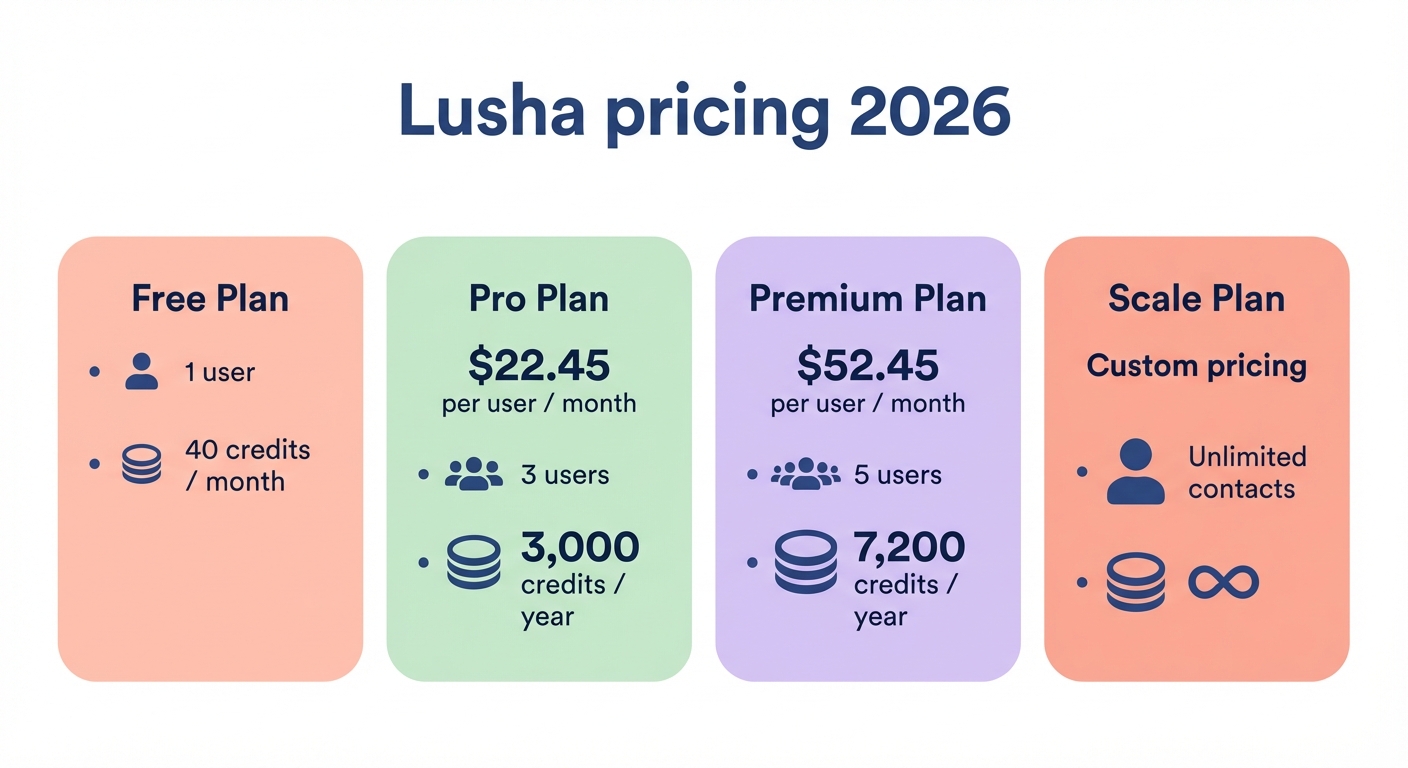
The 2026 pricing structure includes four distinct tiers:
- Free Plan: Includes 40 credits per month for one user to test data accuracy.
- Pro Plan: Starts at $22.45 per user per month (billed annually) for three users, providing 3,000 credits per year.
- Premium Plan: Priced at $52.45 per user per month (billed annually) for five users, providing 7,200 credits per year and advanced usage analytics.
- Scale Plan: A custom-priced enterprise tier that offers unlimited contacts and dedicated account management.
The credit system remains a primary bottleneck for many teams. Under current guidelines, one credit reveals a single email address, while five credits are required to reveal a mobile phone number. For high-growth companies, this rationed model often forces teams to buy more seats than they need just to access more data.
Core features and the manual reveal bottleneck
Lusha is primarily a data discovery tool designed to reveal contact details on LinkedIn or company websites. While it provides verified contact details and direct-dial phone numbers, it lacks the execution layer found in modern prospecting platforms.
One of Lusha’s greatest strengths is its data coverage in North America, with more than 60% of its database consisting of US contacts. The Chrome extension is user-friendly and allows solo sellers to find individual leads quickly.
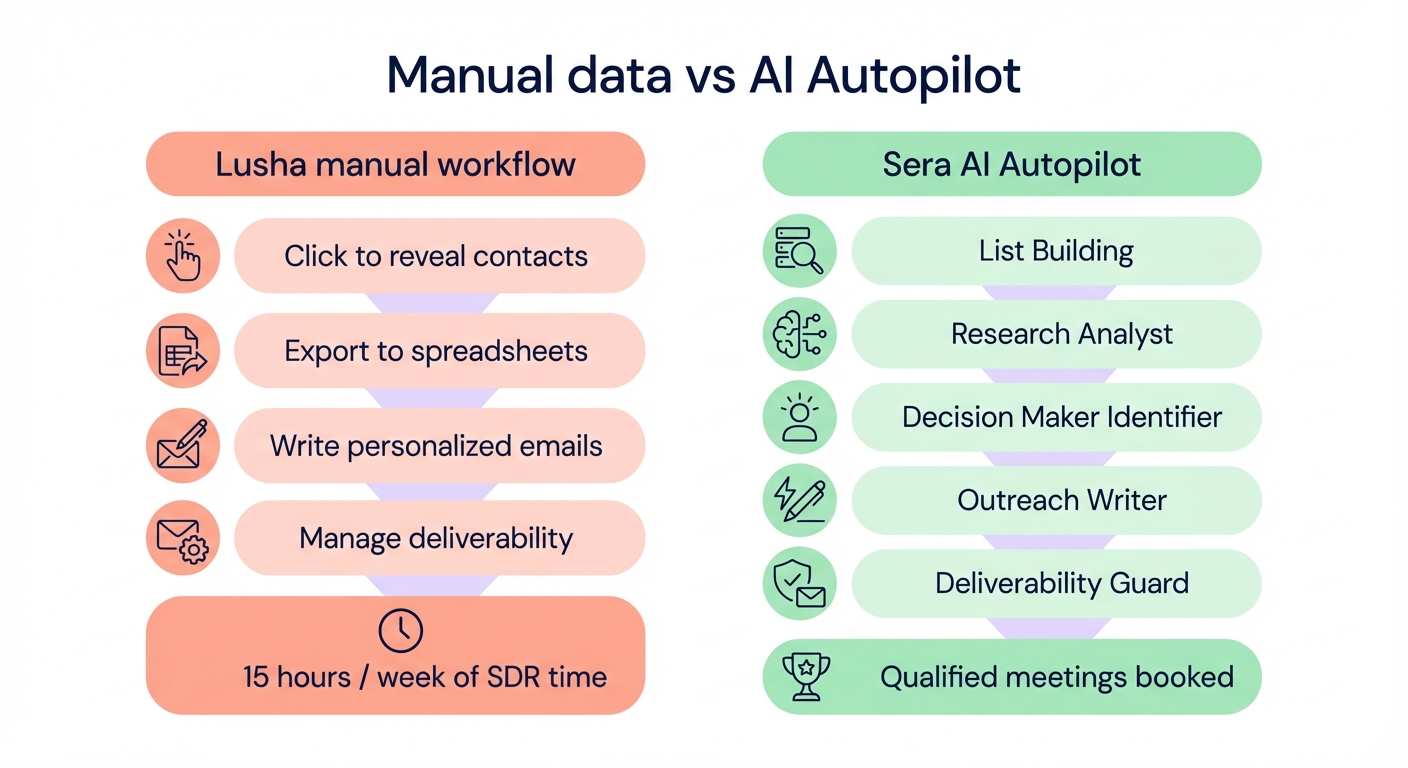
However, the tool requires significant manual effort. Reps must manually click to reveal contacts and export lists, which becomes a drain on productivity during global sales optimization. Furthermore, Lusha does not offer native email sequencing or inbox management. To send outreach, you must export your data to a third-party tool or compare options like Apollo or Cognism to find a platform with built-in engagement features.
Lusha vs Apollo: Which is more cost-effective?
For many B2B leaders, the decision often involves comparing Apollo.io vs Lusha. While Lusha has a lower entry price for micro-teams, its focus on data alone means you will likely pay for additional software to handle your outreach.
Lusha is often the better choice for industrial manufacturers or services firms that only need a few high-quality direct dials per day and handle their own research. However, if your goal is automated lead generation at scale, the manual labor involved with Lusha can result in a higher cost per acquisition. Apollo provides a full engagement suite, but Lusha is frequently cited for better mobile phone accuracy in the North American market.
The 2026 shift: Why buying data isn’t enough
In 2026, having a “verified” email address is no longer a competitive advantage. With roughly 45% of all email traffic classified as spam, simply having a contact’s data does not guarantee your message will ever be seen.
The true cost of using a data-only tool like Lusha is the SDR labor required to research each lead, verify their current role, write a personalized message, and manage deliverability. Many teams find their sales representatives spend nearly 15 hours weekly on these repetitive tasks rather than having meaningful conversations. Verification is no longer the bottleneck; the challenge is now the execution required to reach the inbox.
Moving beyond data with Sera’s AI Autopilot
Instead of paying for a static database and then paying humans to manually click buttons, forward-thinking companies are adopting Sera’s AI-driven Autopilot. Sera is not just a list of names; it is a human-supervised AI service that handles the entire outbound process from discovery to booking.
While Lusha leaves the research and writing to your team, Sera uses six specialized AI agents to manage the heavy lifting:
- List Building: Sources verified decision-makers from a database of 1 billion professional profiles.
- Research Analyst: Scans the web and LinkedIn for real buying signals and industry-specific timing.
- Decision Maker Identifier: Confirms the exact person who has the authority to approve €10k+ deals.
- Outreach Writer: Crafts human-sounding, multilingual outreach in over 100 languages.
- Deliverability Guard: Automatically warms up domains and monitors reputation to ensure 99% email deliverability.
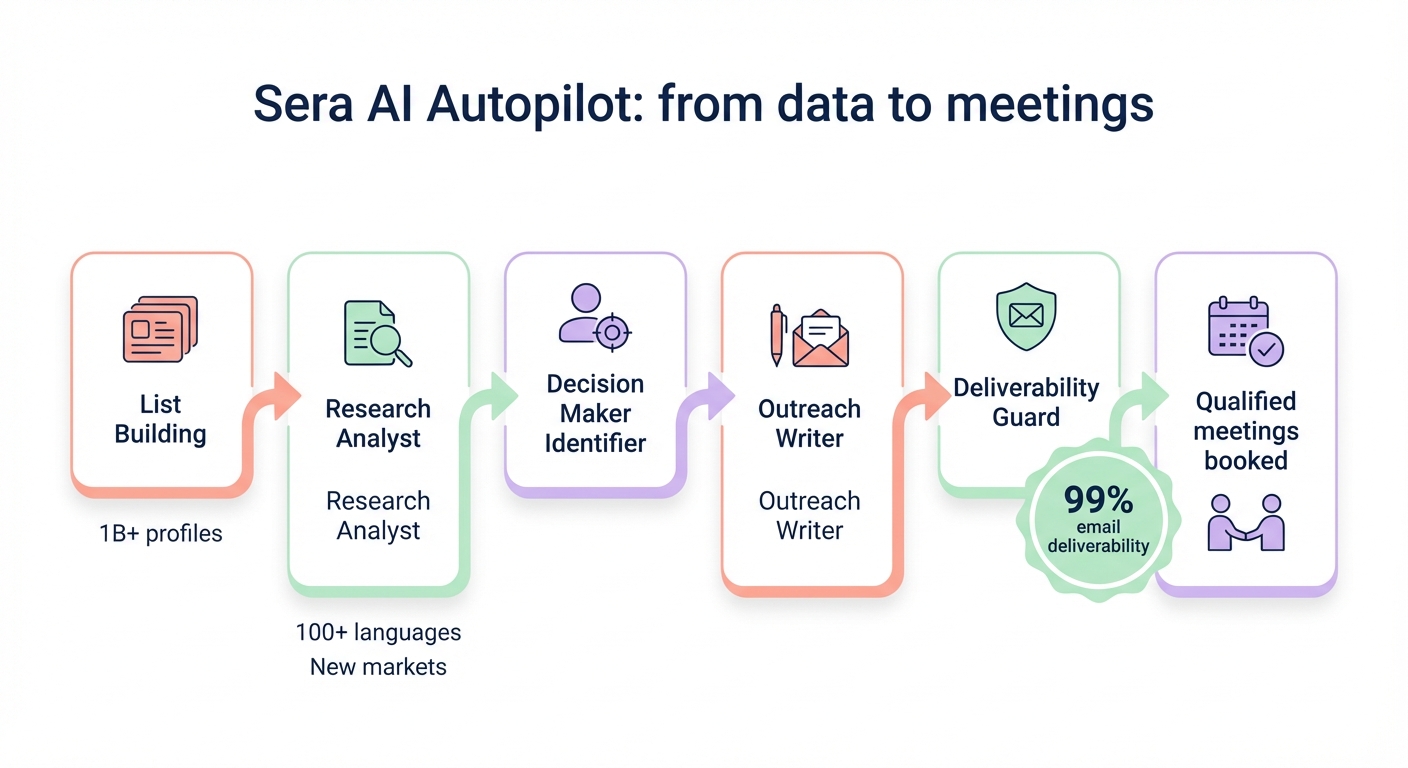
For manufacturers and SaaS firms looking to enter new markets, Sera provides native-level outreach without the overhead of a large sales team. You move from paying for “reveals” to investing in a system that delivers qualified meetings directly to your calendar.
Stop spending your budget on spreadsheets and start investing in revenue. If you are ready to move beyond manual data entry and scale your outreach with precision, book a free consultation with Sera today.