


Are you paying for a list of names or for booked meetings? For manufacturing executives, the choice between Lusha and ZoomInfo in 2026 depends on whether you need quick contact lookups or an enterprise database to map global industrial accounts.
ZoomInfo: the enterprise data warehouse
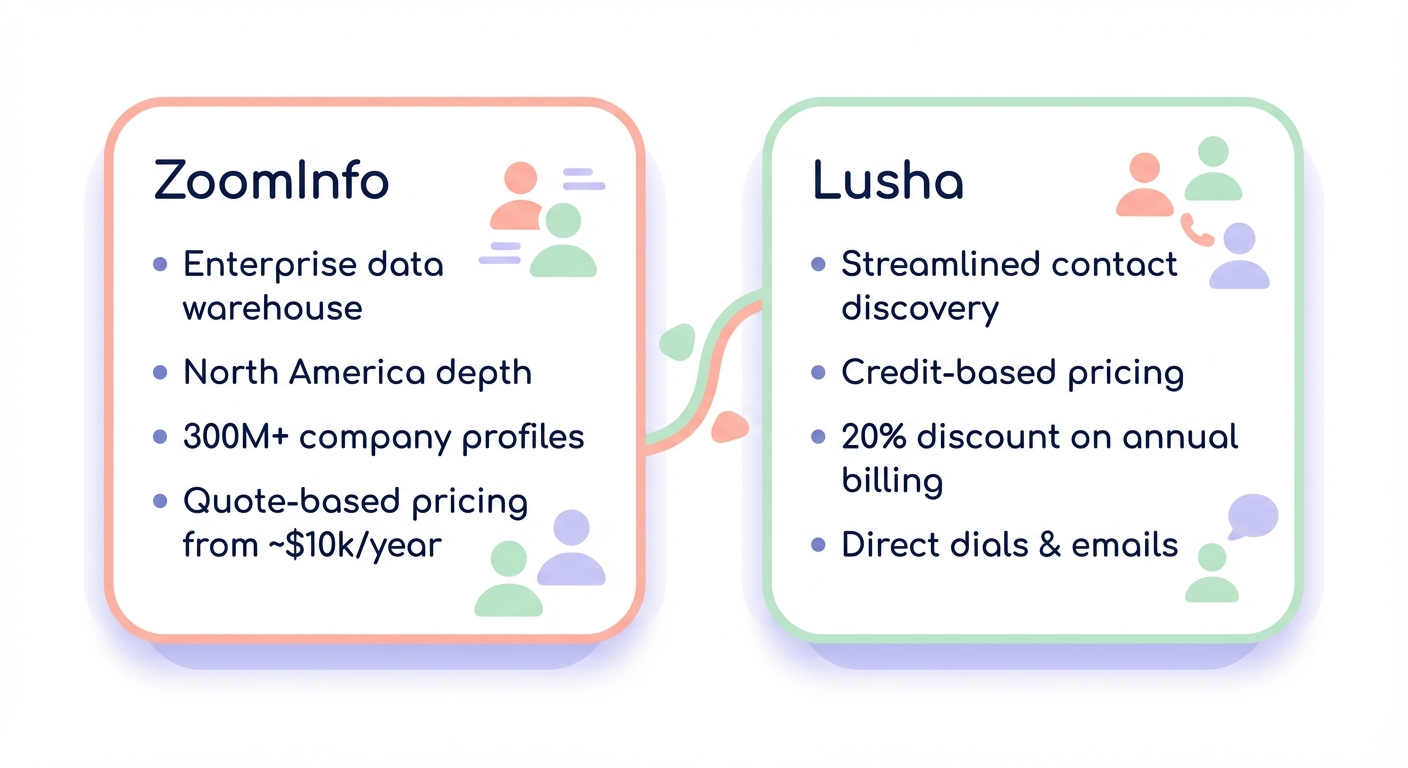
ZoomInfo remains the heavyweight champion for North American market depth. In 2026, it continues to serve large industrial firms that require high-level firmographics and data enrichment for manufacturing to map parent-subsidiary relationships across complex supply chains. The platform utilizes its Fuzion system to verify data from third-party providers and community contributions, ensuring that its database of over 300 million company profiles remains a robust resource for heavy industry.
The platform’s core strengths lie in its massive scale and advanced intent signals. If your manufacturing sales funnel relies on identifying companies currently researching specific machinery or raw materials, ZoomInfo’s behavioral data is a significant asset for timing your outreach. However, this level of intelligence comes with a steep enterprise-level investment. Quote-based pricing often starts at $10,000 annually, and it typically requires dedicated RevOps resources to manage. Furthermore, its European data has historically faced more friction than specialized alternatives, as noted in many ZoomInfo vs Cognism comparisons.
Lusha: streamlined contact discovery
Lusha is often the preferred choice for smaller sales teams or individual sellers who need to find a direct dial quickly without the complexity of an enterprise suite. It is built for speed and accessibility, allowing users to grab contact details in a single click while browsing professional social profiles. For identifying a qualified lead in manufacturing, Lusha provides high-accuracy mobile numbers and emails using a crowdsourced validation approach.
The platform uses a credit-based system that is much more accessible for mid-market companies than its competitors. It offers a 20% discount for annual billing, making it a cost-effective option for teams that prioritize contact accuracy over complex intent mapping. However, Lusha lacks a deep execution layer. While it provides the data, it does not assist with the actual research or outreach orchestration. As a result, users are left to handle sequences and deliverability monitoring on their own, which can become a bottleneck as prospecting volume increases.
The 2026 reality: data is no longer the bottleneck
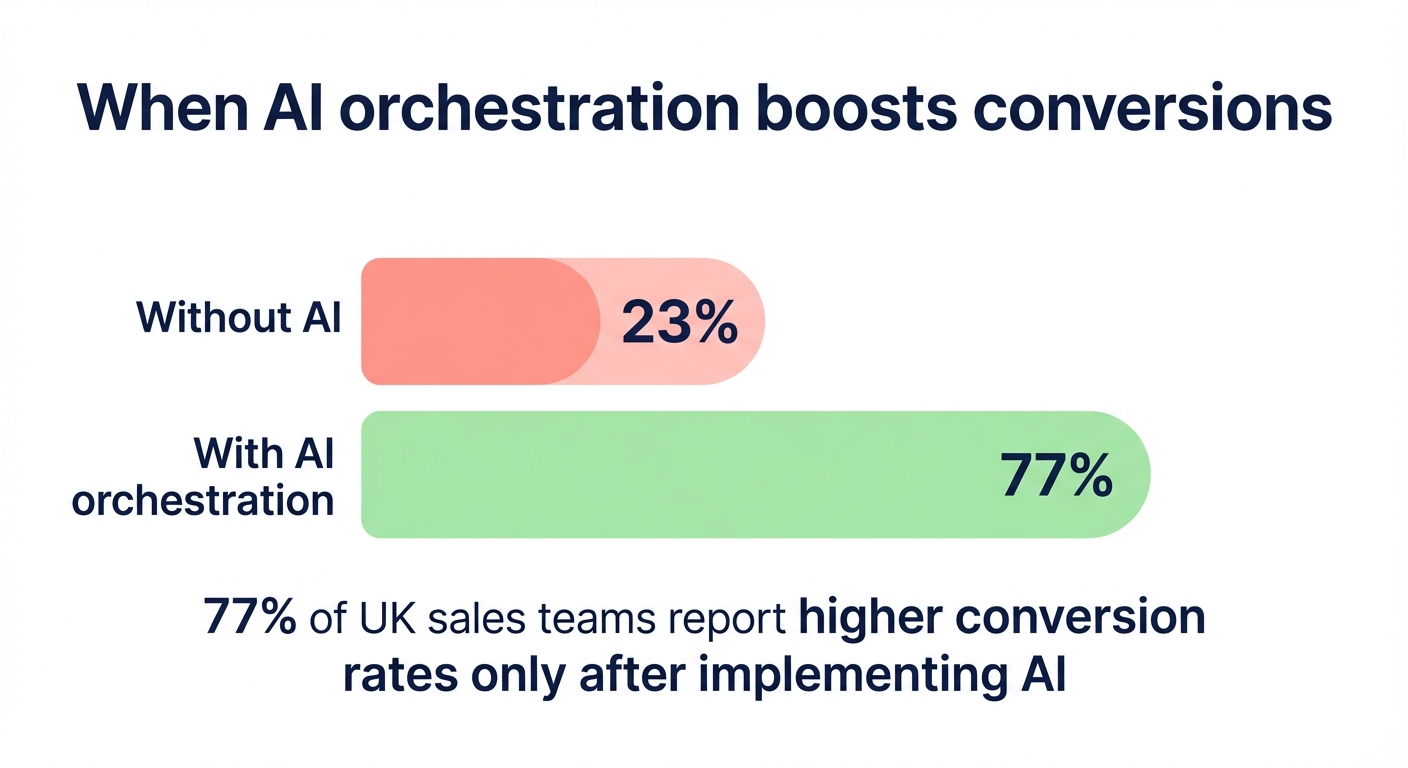
By 2026, simply owning a database has become the starting line rather than the finish line. Stricter inbox defenses and AI-driven spam filters mean that even “verified” emails often fail to land in the inbox if the outreach is not handled with extreme precision. Research shows that 77% of UK sales teams report higher conversion rates only after implementing AI to handle the manual orchestration of their sales process.
Manufacturing sales cycles are notoriously long, often spanning 90 to 180 days. Success in this environment requires more than just a phone number; it requires a deep understanding of the technical pain points of an operations manager or a procurement head. Whether you choose Lusha or ZoomInfo, you still face a “manual gap” where your team must spend hours researching, writing personalized sequences, and monitoring domain reputation.
Moving from databases to Autopilot with Sera
In the current landscape, the most efficient manufacturing teams are moving away from manual software management and toward autonomous AI agents. Current Seven sales AI trends to watch in 2026 highlight a significant shift toward agents that handle the heavy lifting of prospecting while humans focus on the final technical negotiations. Sera is not just a database; it is a human-supervised AI outreach Autopilot that handles the research, execution, and scheduling.
The platform operates through six specialized AI agents working in sync to fill your calendar:
- A List Building Agent that sources verified decision-makers from a database of over 1 billion professional profiles.
- An Enrichment Engine that adds firmographics, revenue data, and technical stack details to every contact.
- A Research Analyst that scans the web and press data for buying signals to ensure your message is timely.
- A Decision Maker Identifier that confirms you are reaching the person with the authority to sign a contract.
- A Deliverability Guard that warms up new domains and validates addresses to maintain a 99% deliverability rate.
- An Outreach Writer that crafts natural, researched emails in over 100 languages.
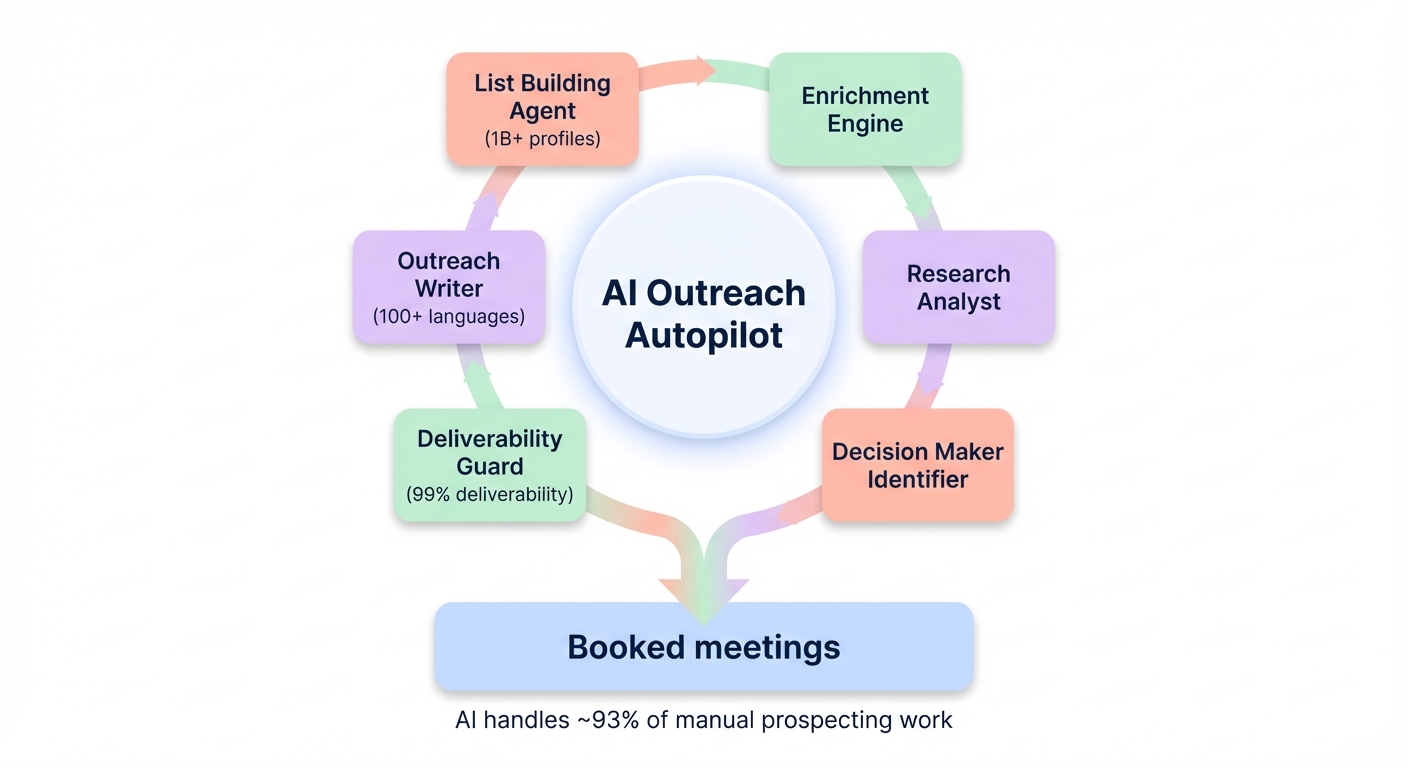
For manufacturers looking at scaling global lead generation, this approach allows you to enter new markets without hiring local staff. You maintain full control through a simple dashboard while the AI handles roughly 93% of the manual prospecting work.
Choose based on your growth strategy
If you have a massive RevOps team and need to map every subsidiary of a Fortune 500 conglomerate, ZoomInfo is a powerful tool despite its high cost and complexity. If you are a solo seller who simply needs a few phone numbers a day to fuel your cold calls, Lusha remains an excellent, agile choice.
However, if your primary goal is to generate revenue and book meetings without managing spreadsheets or a fleet of junior sales reps, the modern alternative is an AI Autopilot. By automating the research and outreach process, you allow your technical experts to focus on closing deals rather than hunting for contact data.
Stop managing databases and start booking meetings. Discover how Sera’s AI agents can automate your manufacturing outreach today.