


Are you tired of your outreach emails landing in spam folders instead of reaching the inboxes of busy plant managers? In 2026, choosing the right platform determines whether you build a pipeline or burn your domain reputation.
Navigating the 2026 deliverability landscape
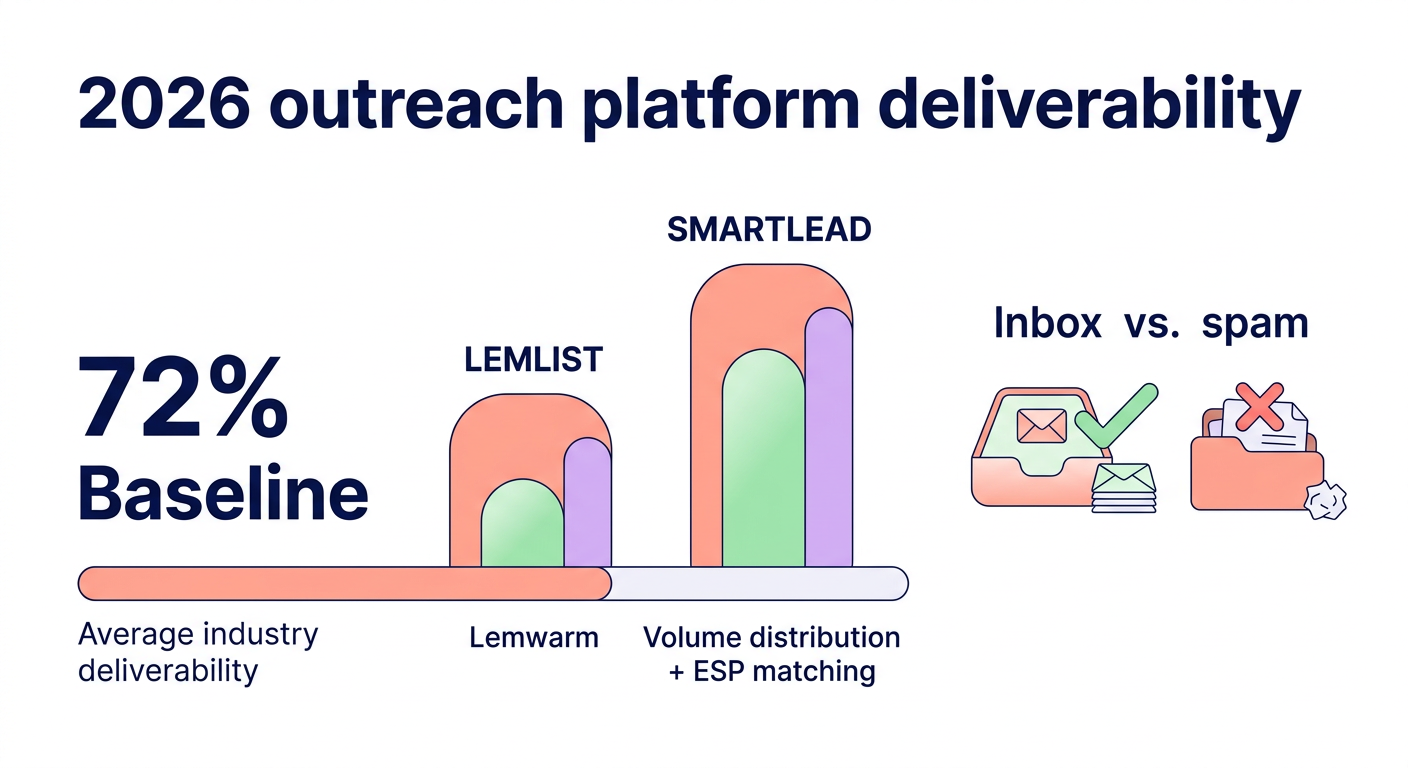
Reaching a decision-maker’s primary inbox is more challenging than ever because ISPs have become aggressive in filtering automated patterns. If you are operating at the 72% deliverability baseline common in the industry, nearly three out of every ten prospects never see your outreach. Both Smartlead and Lemlist have developed sophisticated defenses, but their technical philosophies differ.
Smartlead focuses on safety through volume distribution. It provides unlimited email accounts with strategic rotation, allowing you to spread your sending across dozens of mailboxes to protect your primary domain reputation. Their ESP matching feature ensures your Gmail accounts prioritize sending to Gmail recipients, which mimics natural human behavior and is a key factor when measuring the impact of email deliverability on your sales performance.
In contrast, Lemlist utilizes its proprietary Lemwarm service to maintain domain health. It creates a community-driven warm-up pool that generates engagement signals to keep your messages out of the “Promotions” tab. While Lemlist is effective for medium volumes, Smartlead is generally preferred by teams that need to scale rapidly without triggering spam filters through a single point of failure.
Creative personalization versus multi-channel efficiency
For B2B manufacturers with long sales cycles, a generic message is often a wasted opportunity. Standing out requires a level of relevance that goes beyond a simple first-name tag. Lemlist has built its reputation on creative personalization, allowing you to embed personalized images and videos directly into your sequences. This capability is particularly useful if your strategy involves showing a prospect a custom technical drawing or a personalized video tour of a facility, as personalized outreach strategies for cold email can significantly lift engagement.
Smartlead remains strictly focused on email-only efficiency. It lacks native video or image tools, but it is engineered for high-speed processing and managing vast lead databases without performance lag. While Lemlist offers a multi-channel approach that includes LinkedIn touches and phone calls within a single sequence, Smartlead doubles down on being the most robust email engine on the market. If your team relies on high-quality text-based templates and needs to reach thousands of prospects every month, Smartlead’s streamlined interface may be the more productive choice.
Analyzing the total cost of ownership
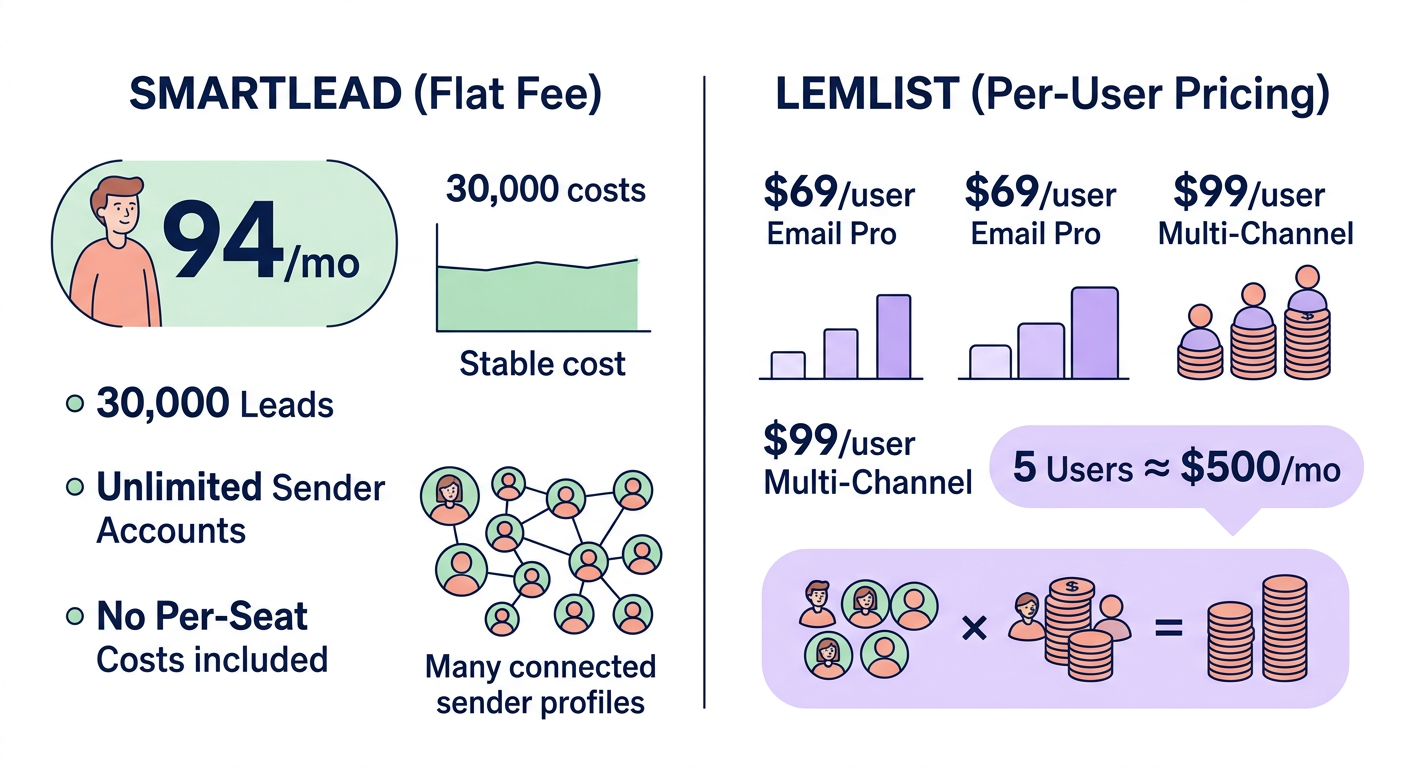
When evaluating these tools for a mid-sized manufacturing sales team, the financial structure is just as important as the feature set. Smartlead utilizes a flat-fee pricing model that is highly favorable for scaling teams. For approximately $94 per month, you can manage 30,000 leads and an unlimited number of sender accounts. This “no per-seat” approach makes it an attractive option for departments with multiple sales development representatives (SDRs) or agencies managing several brands.
Lemlist follows a per-user pricing structure that can escalate quickly. With the Email Pro plan starting at $69 per month per user and the Multi-Channel tier at $99 per user, a team of five people can easily spend $500 monthly. This does not include potential add-on costs for additional warm-up services or external lead databases. For executives, the choice often comes down to whether the multi-channel features of Lemlist justify the higher recurring overhead.
Moving from software management to sales outcomes
Regardless of which tool you choose, they both share a significant hidden cost: the manual labor required to operate them. In 2026, simply owning a subscription is not enough. A member of your team must still spend 15 to 30 hours per week cleaning lead lists, setting up technical DNS records, and writing copy. This administrative burden often distracts your best salespeople from their primary job of closing deals.
Many industrial firms are recognizing that the software itself is often the bottleneck. This realization is driving a shift toward modern alternatives to lemlist that prioritize automation over manual dashboard management. If your goal is to generate revenue rather than manage configurations, you might find that traditional self-serve tools are no longer the most efficient path forward.
Why manufacturers are choosing AI Autopilot
If you prefer to spend your time closing €10k+ deals rather than managing email warm-up schedules, there is an alternative to the traditional dashboard. The Sera AI outreach autopilot replaces the manual labor of Smartlead and Lemlist with a coordinated system of six specialized AI agents. This approach provides the “driver” for your outreach, rather than just the “car.”
The process begins with the List Building Agent and Decision Maker Identifier, which source and verify the right contacts from a database of over one billion professionals. While the Research Analyst scans the web and LinkedIn for genuine buying signals, the Outreach Writer crafts human-sounding, multilingual emails in over 100 languages. Everything is overseen by a Deliverability Guard that maintains a 99% inbox placement rate, ensuring your messages actually reach your prospects.
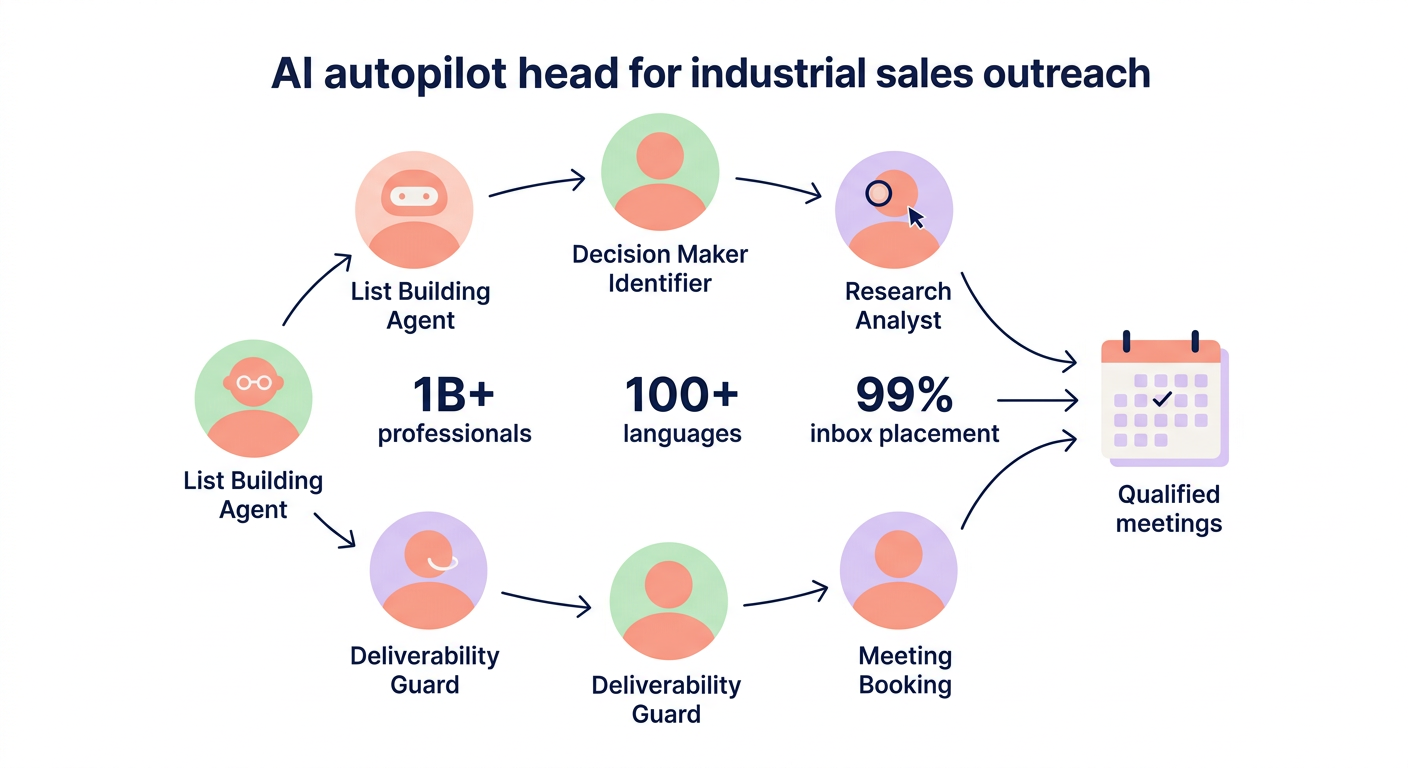
This human-supervised AI service delivers qualified meetings directly to your calendar, removing the need for your team to handle list enrichment or technical deliverability monitoring. If you are ready to stop managing software and start generating revenue on autopilot, you can book a free strategy call with the Sera team today to see how we would approach your specific market.